


Published : 26 Dec 2020, 11:12 PM
Updated : 03 Aug 2022, 02:45 PM


While there were murmurs of concern over a novel strain of a coronavirus reported in China's Wuhan in December 2019, it soon reached a crescendo as the virus, SARS-CoV-2, began to spread and wreak havoc around the globe.
Three months into the outbreak in China, the first cases of the coronavirus were detected in Bangladesh on Mar 8, bringing the country's healthcare system into sharp focus as it braced for its most significant test yet.
With the emphasis turning to protecting lives while at the same time, ensuring that the healthcare system was not overburdened, various measures, including a nationwide lockdown, were taken to keep the virus at bay
But in the nine months of the pandemic, over 500,000 cases of the virus have been recorded with a death toll of 7,428 as of Dec 26, according to government data.
As the coronavirus outbreak began to intensify, the country's healthcare system was facing a shortage of personal protective equipment or PPE, ICU beds, oxygen cylinders and other life-saving medical equipment.
While some of these problems were gradually redressed, a disconnect between different authorities in the implementation of the measures to contain the COVID-19 epidemic also became evident.
Meanwhile, many have also sought to capitalise on the pandemic as a raft of irregularities and scandals, involving the distribution of protective equipment for frontline workers and a COVID-19 testing scam, marred the health sector in 2020.
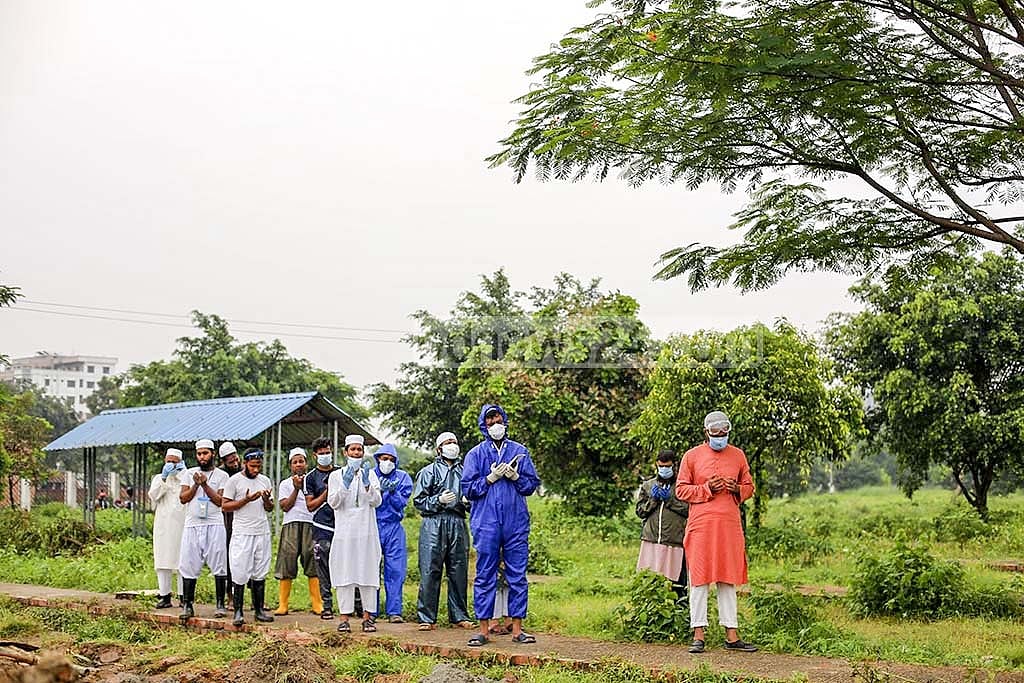
Relatives offering prayers after the burial of a patient who died from COVID-19. Photo: Mahmud Zaman Ovi
As the coronavirus pandemic continues to take a heavy toll on lives and livelihoods across the country, experts differed on their assessment of the government's response to the calamity.
While some believe that the steps taken so far to combat the disease have been positive on the whole, others bemoaned the authorities' failure to implement preventive measures in a timelier manner.
Delays in the testing procedure and a lack of preparation on the part of many hospitals to treat coronavirus patients also hampered the efforts to curb the pandemic at the outset, according to Dr Md Nazrul Islam, former vice-chancellor of Bangabandhu Sheikh Mujib Medical University.
He also pointed out that not enough samples were collected and tested in the beginning, while the ambit of testing was also inadequate as it did not cover many parts of the country until much later.
“It would have been easier to take the necessary actions by analysing the results had enough samples been tested. We couldn’t even ensure enough ICU beds while non-COVID patients were also deprived of treatment in many instances,” he said.
Dr Islam also lamented the lack of widespread compliance with health and safety protocols as a key component of the efforts to curtail the outbreak.
“It may be that the people never wanted to follow the health protocols. We fought for nine months and achieved the independence of our country. But we couldn’t make a habit of wearing a mask over the past nine months,” he said.
“It shows a lack of organisational quality. We also couldn’t provide necessary treatment to patients who weren’t suffering from the coronavirus infection.”
But Prof Ahmedul Kabir of Dhaka Medical College Hospital, also the member secretary of the Treatment Protocol Committee on COVID-19, believes the entire world -- and not just Bangladesh -- was caught off guard by the coronavirus outbreak.
The measures taken by Bangladesh to limit the spread of the virus have been ‘good enough’, he said, but warned that everyone should continue to exercise caution even as developed countries begin rolling out vaccines.
“There’s no treatment for this disease as of now while there are uncertainties of the arrival of a vaccine as well. Therefore, we must focus on prevention. We must create awareness among the people.”
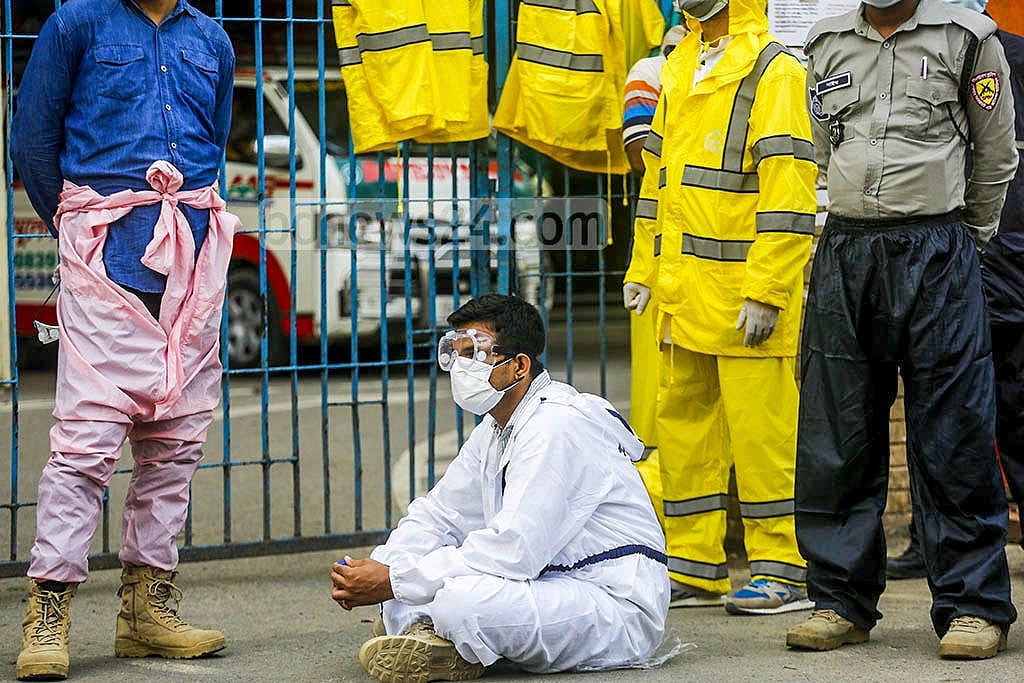
Some policemen wait in queue at the BSMMU in Dhaka for coronavirus test as the police account for a large portion of the COVID-19 patients in Bangladesh. Photo: Mahmud Zaman Ovi
As part of the battle against the coronavirus infection, Bangladesh introduced mandatory temperature screenings initially for all passengers arriving from China in January, before expanding it to cover all inbound travellers at airports and other points of entry on Feb 7.
On Jan 21, the Institute of Epidemiology, Disease Control and Research ran its first tests for the coronavirus on the sample of two passengers coming from Wuhan, the epicentre of the outbreak in China, at Dhaka’s Hazrat Shahjalal International Airport. Both passengers, however, tested negative.
Between Jan 31 and Mar 7, the IEDCR tested 116 samples without any positive result.
But IEDCR Director Meerjady Sabrina Flora confirmed the first three cases of the coronavirus infection in the country at a media briefing on Mar 8. Of the first cases, two were men and one was a woman. Two of them returned from Italy while the other was a family member of one of the returnees.
The first death from COVID-19 was reported on Mar 18. The patient, a 70-year-old, was also suffering from a combination of diabetes, hypertension, and kidney and lung ailments, the disease control agency said. The person was infected after meeting an overseas returnee.
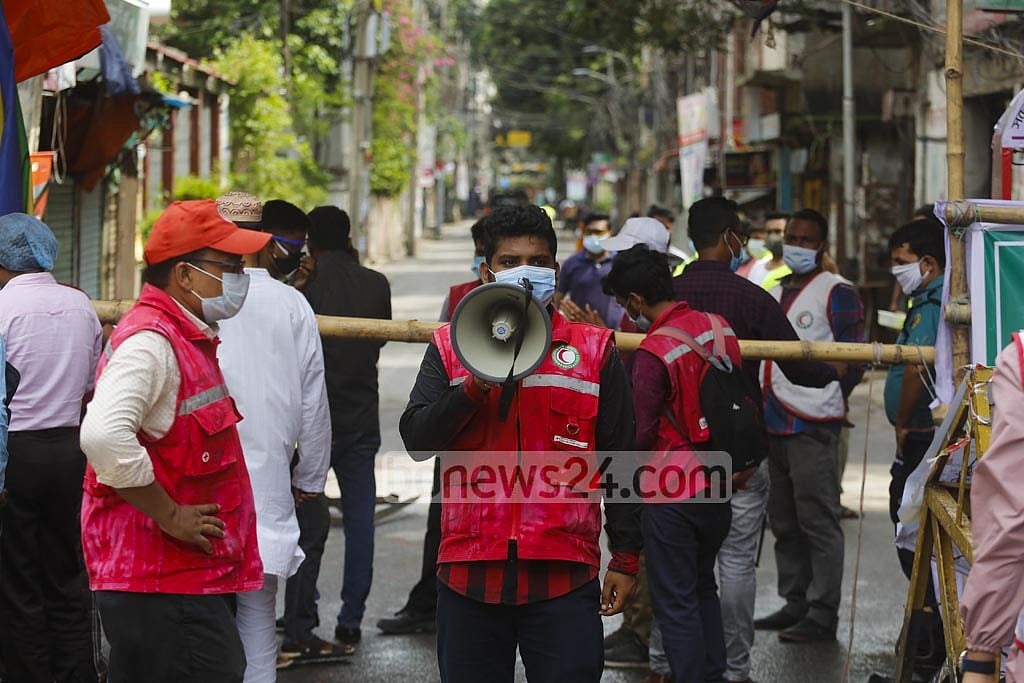
A volunteer urging residents not to crowd by using a loudhailer at an end of Chandicharan Bose Street, the only point for entry into or exit from several coronavirus hotspots locked down in Dhaka's Wari. Photo: Mahmud Zaman Ovi
As the coronavirus crisis began to escalate, many doctors began to raise questions about the ‘low quality’ of the PPE and masks that were being supplied to hospitals, leaving many health workers on the frontline exposed to the disease in the course of treating COVID-19 patients.
JMI Group, a DGHS-certified Bangladeshi company that manufactures medical equipment, had been supplying gloves, sanitisers and masks to the government’s Central Medical Stores Depot or CMSD.
The company soon came under the scanner for supplying the ‘wrong’ masks to doctors at Mugda General Hospital at the end of March, having provided common surgical masks instead of the ‘N-95’ masks to health professionals.
Saber Hossain Chowdhury, the chairman of Mugda General Hospital’s governing body, subsequently sent a letter to the health directorate and CMSD director, questioning the quality of the masks.
When Mugda General Hospital reported the issue to the authorities, the then CMSD director Brig Gen Md Brig Gen Shahidullah in a media briefing on Apr 2 admitted that the delivered masks were ordinary surgical masks and said the packets were labelled N95 “by mistake”.
Over two weeks later, Shahidullah threatened to sue news publishers for “wrongly” naming Health Minister Zahid Maleque, his son, the then health services secretary Md Ashadul Islam, and health services DG Abul Kalam Azad in reports on the masks.
The fiasco also drew the ire of Prime Minister Sheikh Hasina, who ordered the Directorate General of Health Services and CMSD to carefully monitor the supplies of protective equipment to hospitals.
The government subsequently launched an investigation into the matter while removing the director of Dhaka Mugda Medical College Hospital from active duty seven months before the end of his term.
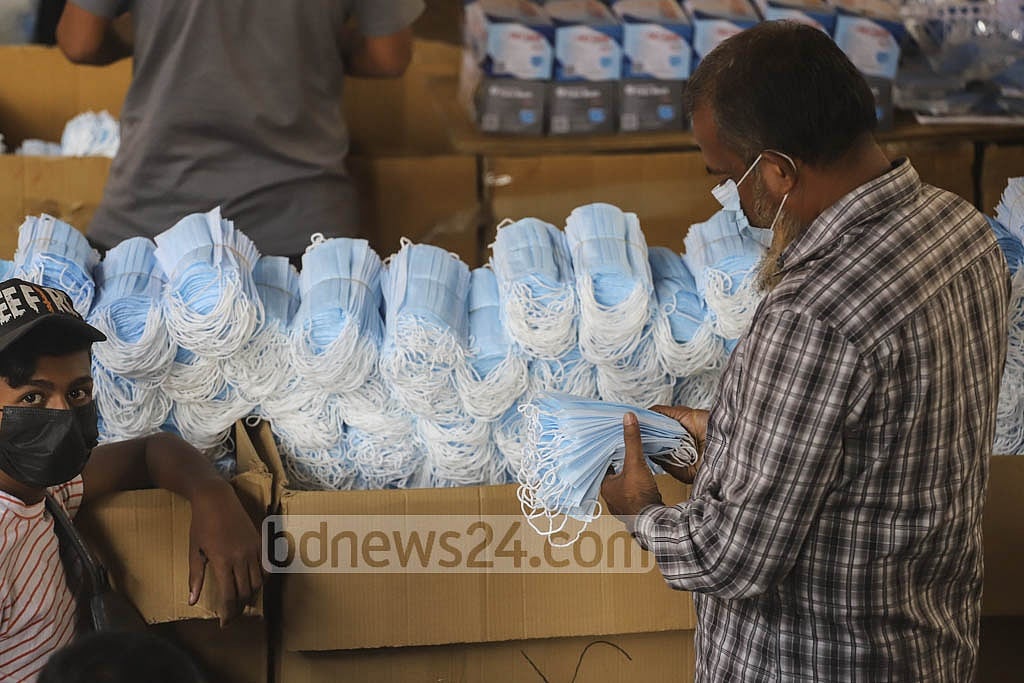
Buyers are checking the quality of masks in the wholesale market under Babubazar Bridge in Old Dhaka on Tuesday, Nov 24, 2020. Photo: Asif Mahmud Ove
The authorities also arrested JMI Group founder and Managing Director Abdur Razzaq in a case started by the Anti-Corruption Commission on charges of supplying “low-quality” masks, PPEs and other health equipment to the government amid the coronavirus crisis. He is now in jail.
On Jul 21, doctors of Bangabandhu Sheikh Mujib Medical University complained that the hospital was supplied with ‘fake N95 masks’ by Aparajita Trade International, owned by former Chhatra League leader and Dhaka University’s assistant registrar Sharmin Jahan.
Sharmin was later arrested in a case started by BSMMU, alleging the quality of the masks fell short of the specifications. While the masks supplied in the first and second lots were flawless, those in the third and fourth batches were found to be faulty when distributed and used.
Users found some masks with torn straps, while misspelt English words were printed on some of them. Later, Dhaka University said in a statement suspending her that Sharmin tarnished the image of the institution
While the debacle over the supply of masks had undoubtedly cast a pall over the management of health services in the country, it was perhaps outstripped by the COVID-19 testing scam perpetrated by Regent Hospital and JKG Health Care during the pandemic.
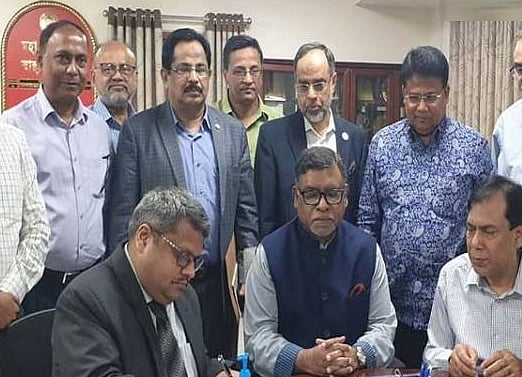
On Mar 21, the Directorate General of Health Services signed a contract with the privately-owned Regent Hospital to provide treatment to COVID-19 patients. Health Minister Zahid Maleque and other high-ups in the ministry and the DGHS were present at the signing ceremony.
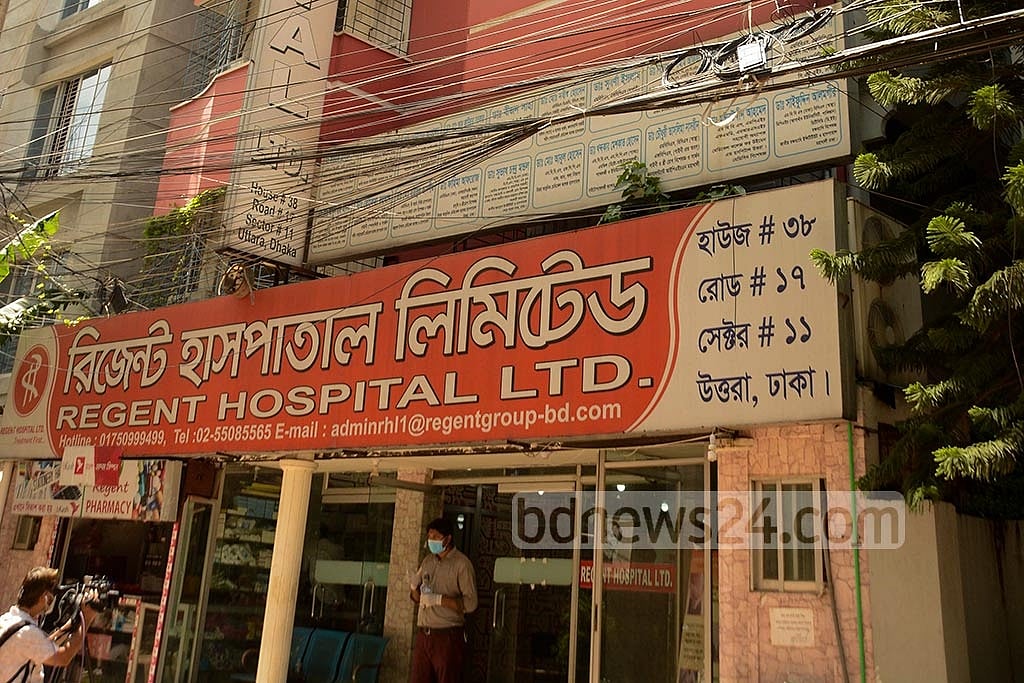
But the Rapid Action Battalion or RAB later raided the headquarters and a branch of Regent Hospital in Dhaka’s Uttara on Jul 7 and 8, amid allegations that the hospitals swindled thousands of unsuspecting patients out of millions of takas on the pretext of providing coronavirus treatment.
The hospitals were also found to have faked COVID-19 test reports, prompting the authorities to shut down operations at the hospital’s branches in Uttara and Mirpur.
It later emerged that DGHS signed the MoU with Regent Hospital as a ‘dedicated COVID-19’ hospital, authorising it to conduct tests for the virus, despite knowing that the hospital’s licence had expired.
Shahed Karim, chairman of Regent Group, was later arrested on Jul 15 on charges of issuing fake COVID-19 test reports and a series of other irregularities. Shahed and other officials of the hospital are currently behind bars.
Asked why the authorities made the deal with Regent Hospital even though it lacked a licence to operate, Aminul Hasan, director (hospitals and clinics) of DGHS, said they were ‘compelled’ to enter into the contract, which was given on condition that the hospital gets its licence renewed.
The swabs collected at the walk-in kiosk at Dhaka’s Khilgaon Girls School and College are sent to government-authorised laboratories for testing. Photo: Mahmud Zaman Ovi
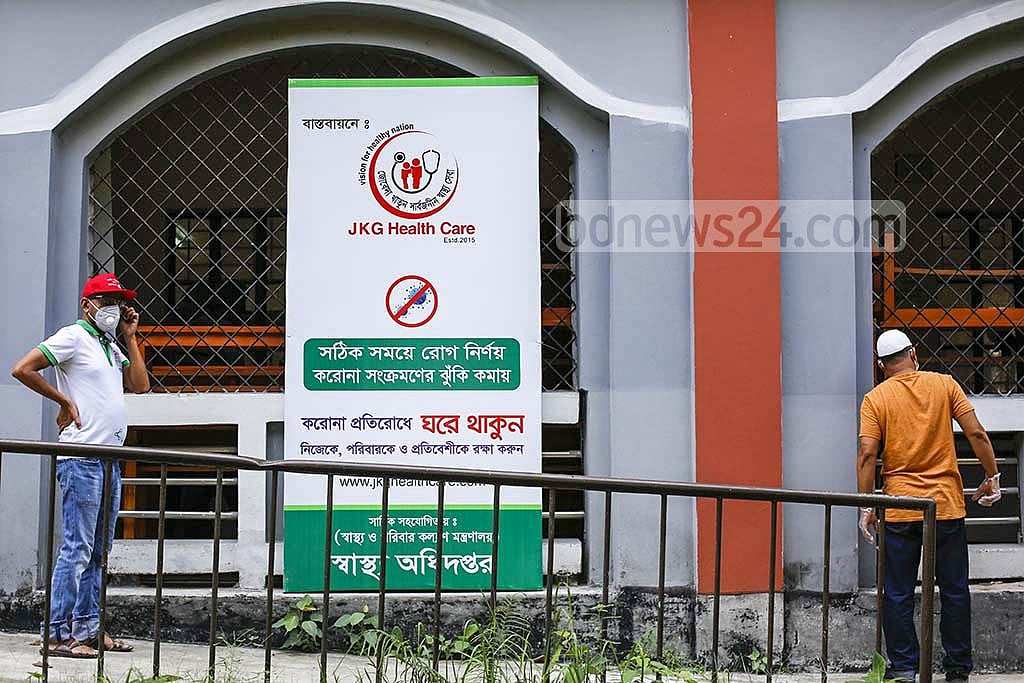
JKG had set up 44 booths in six areas in Dhaka and Narayanganj to collect samples free of cost. They used to collect around 350 samples each day in these areas, which were then supposed to be sent to the authorised labs for testing.
Police brought charges against JKG Health Care for providing false reports without testing the swabs collected from the people for COVID-19 tests.
Law enforcers arrested JKG Healthcare CEO Ariful Chowdhury on Jun 23 and later on Jul 12, his wife Dr Sabrina Sharmeen Husain aka Sabrina A Chaudhury, was also apprehended over her involvement in the scam.
Sabrina, a government cardiac surgeon, was suspended by the health ministry for violating service rules by holding the post of chairman in a private organisation without permission.
A large number of fabricated COVID-19 test reports, written on the official pads of the health directorate and the IEDCR, were found on the laptops of JKG Health Care graphic designer Humayun Kabir Hiru.
On Jun 22, police arrested Humayun Kabir Hiru and his wife Tanzina Patwari following a complaint filed by Kamal Hossain, a caretaker of a house in Dhaka’s Kalyanpur.
Ariful and two other employees were arrested based on the information they divulged.
In the wake of the scandal, the government barred JKG from collecting samples of suspected virus patients.
With the healthcare sector becoming mired in irregularities, a number of questions were raised against the authorities, leading to probes being opened by the Anti-Corruption Commission.
On Jun 4, the government transferred Md Ashadul Islam, former secretary to the Health Services Division to the Planning Division, amid questions over the handling of the mask scam during the coronavirus crisis.
The government also transferred additional secretaries Md Sirajul Islam, (hospital division) and Md Ismail Hossain (drug administration division) on Jun 8 and Additional Secretary Md Habibur Rahman Khan, chief of COVID-19 Media Cell of the health ministry on Jun 18.
The ministry and the DGHS had locked horns following a press statement issued on Jul 11, in which the directorate said that “it had signed a contract with Regent Hospital for treatment of COVID-19 patients on orders from the ministry ‘high-ups.’”
The health ministry then demanded an explanation from the DGHS over the comments.
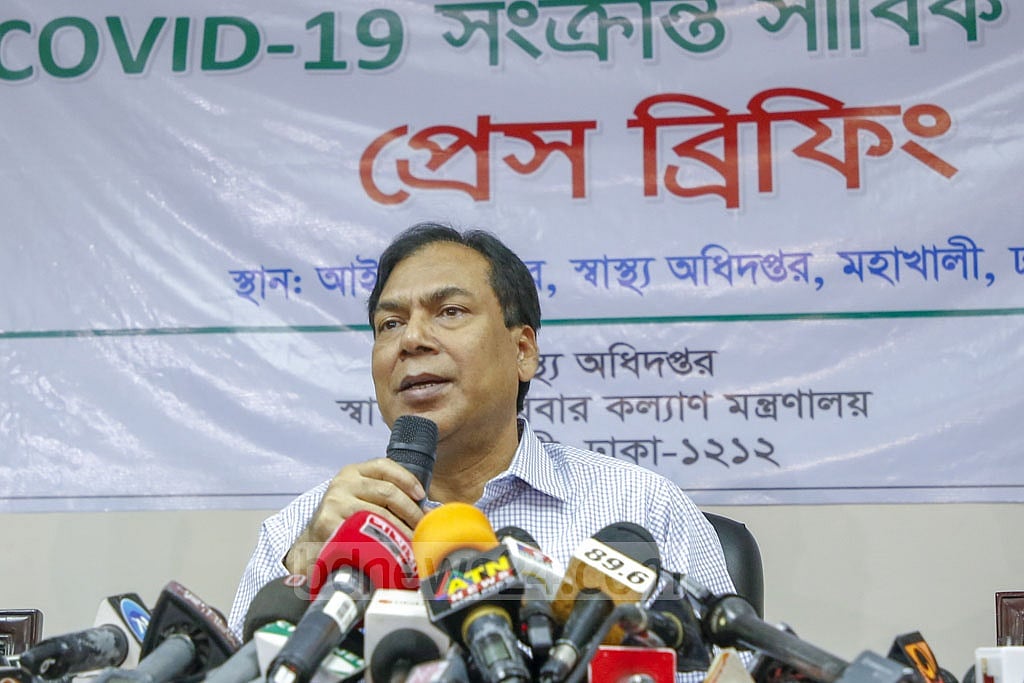
Three new cases of coronavirus, all from the same family who contracted the virus from an Italy returnee, have taken the tally to 17. Prof Abul Kalam Azad, the director general of Directorate General of Health Services, confirmed the information at a media briefing on Thursday. Photo: Mahmud Zaman Ovi
Six days later, Azad tendered his resignation to the public administration ministry. The government accepted the resignation and cancelled his contractual appointment on Jul 23.
Dr Aminul Hasan, director (hospitals and clinics) of DGHS, was also transferred on the same day.
Written in English by Sabrina Karim Murshed. Edited by Turaj Ahmad.













