Published : 28 Oct 2026, 12:46 AM
Updated : 28 Oct 2026, 12:46 AM


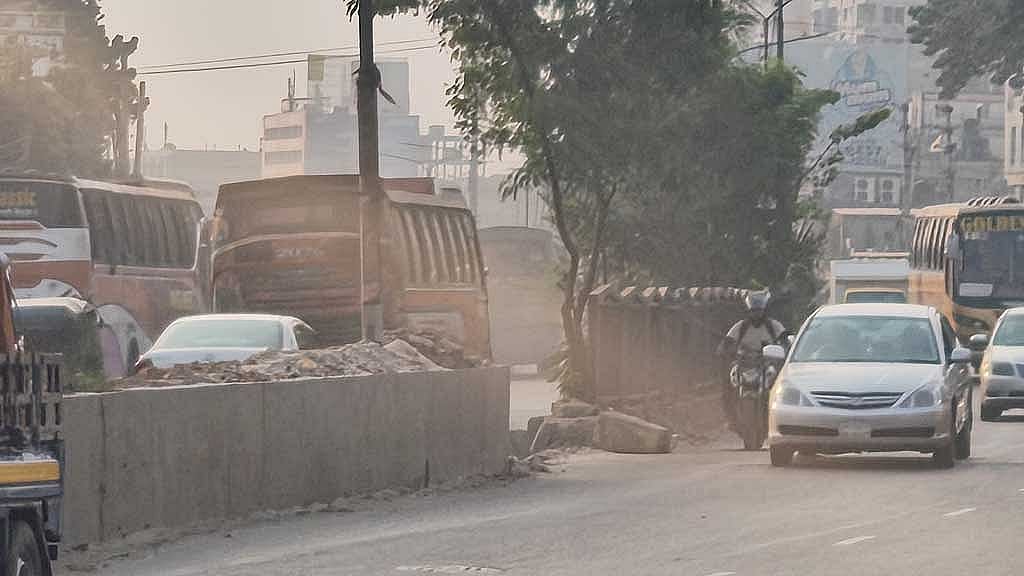
Dust clouds are making life miserable along the road from Gabtoli to Kalyanpur, where rubbish and sand trucks and piles of construction materials leave the route coated in grit.
The road carries inter-district buses and other traffic. People cover their noses and mouths.
Dhaka North City Corporation plans to spray water, but fuel costs pose a challenge. Urban planners say authorities must tackle pollution at its source.
‘Every Passing Vehicle Sends Dust into the Air’
Rickshaw driver Rafiqul Islam spends most of his day on the road in Gabtoli.
“Dust flies whenever a vehicle passes. Sometimes I struggle to breathe and start coughing. But if I stop driving my rickshaw, I earn nothing,” he told bdnews24.com.
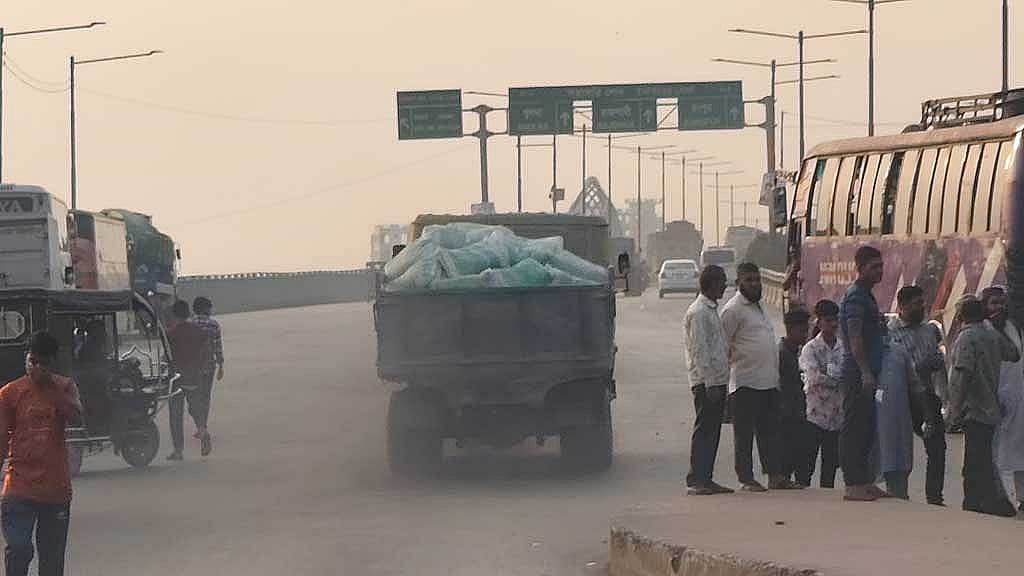
Abdul Haque, over 60, said dust makes breathing difficult when he walks near Technical intersection.
Shopkeeper Abdul Quader said dust-covered goods deter customers. Nasrin Akter, a private company employee, said even a mask offered little relief during her commute.
Dhaka ranks among the world’s most polluted cities during the dry season. Its Air Quality Index score was 176 on Sunday morning, third globally, and 168 on Monday, ranking fourth. Both readings indicated “unhealthy” air.
‘Regular Cleaning Difficult’
DNCC Chief Waste Management Officer Captain Ikhtiar Uddin Ahmed said road sweepers cannot keep the route clean because trucks drop rubbish and sand daily.
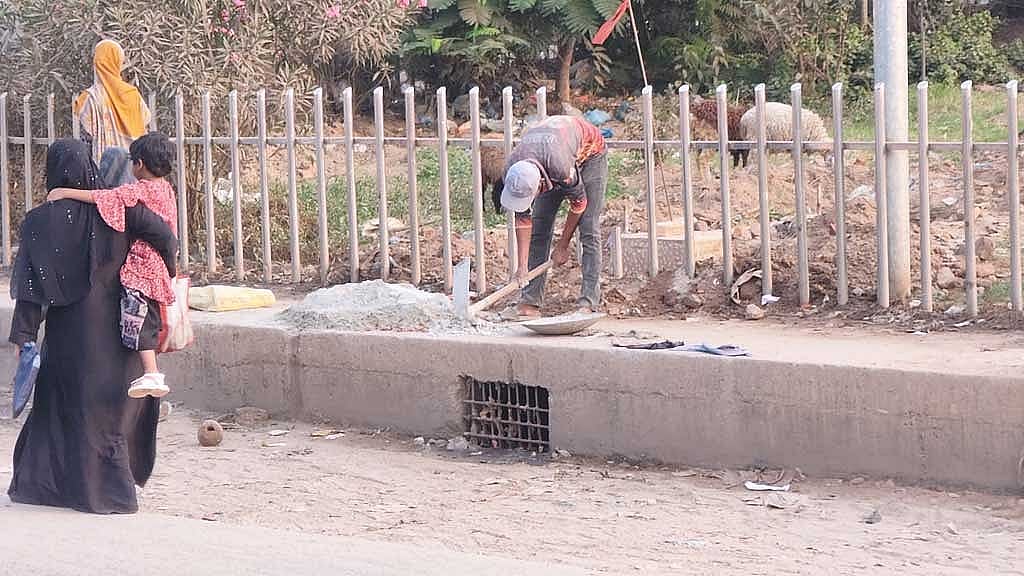
The corporation plans to use sweepers and spray water every two or three days.
A DNCC official said frequent spraying would consume substantial fuel, leaving uncertainty over how much of the plan can be implemented.
Environmental campaigner and urban planner Iqbal Habib said construction is a major source of air pollution, with the government itself a major contributor.
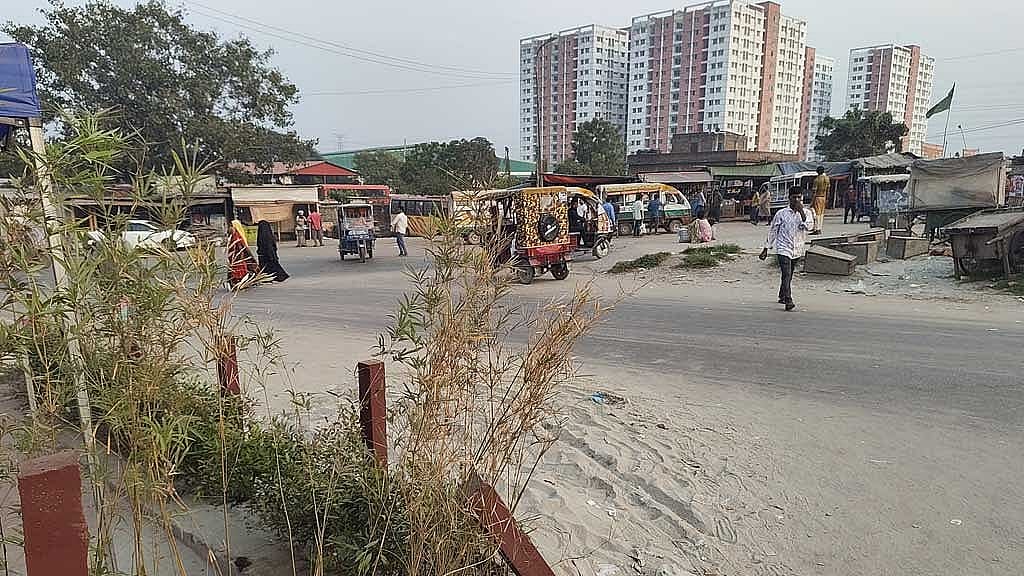
Contractors and authorities must be held responsible when construction harms public health, he said.
Jahangirnagar University environmental science’s Prof Md Mostafizur Rahman said spraying water or switching to electric cleaning equipment would not be enough.
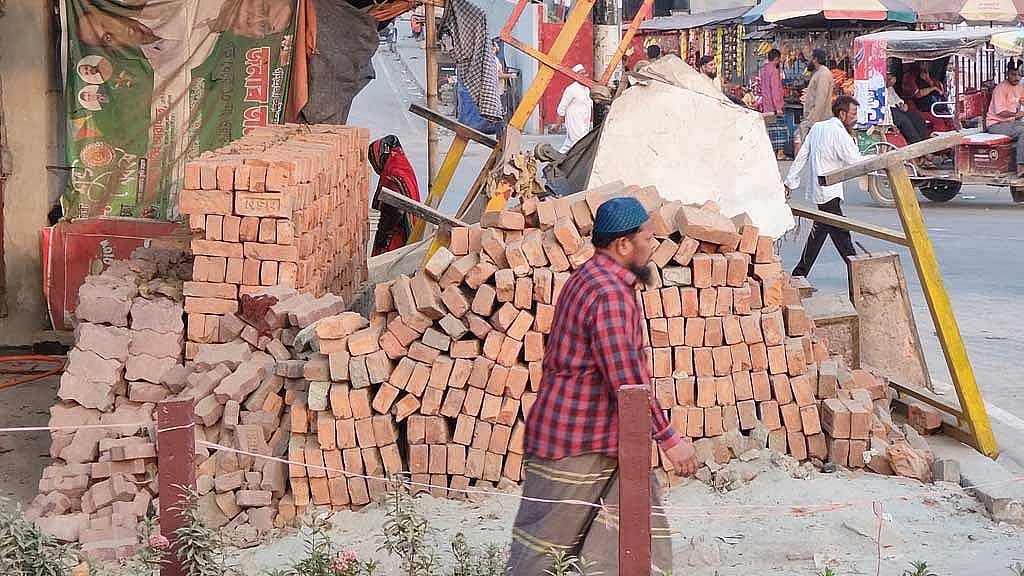
Authorities must control scattered sand, brick dust and construction materials, reduce pollution at its sources and assess equipment performance, maintenance and lifespan before buying it.
Cleaner technology and source control must proceed together for a solution, he said.