


Published : 10 Dec 2021, 03:54 PM
Updated : 14 Oct 2022, 07:03 PM


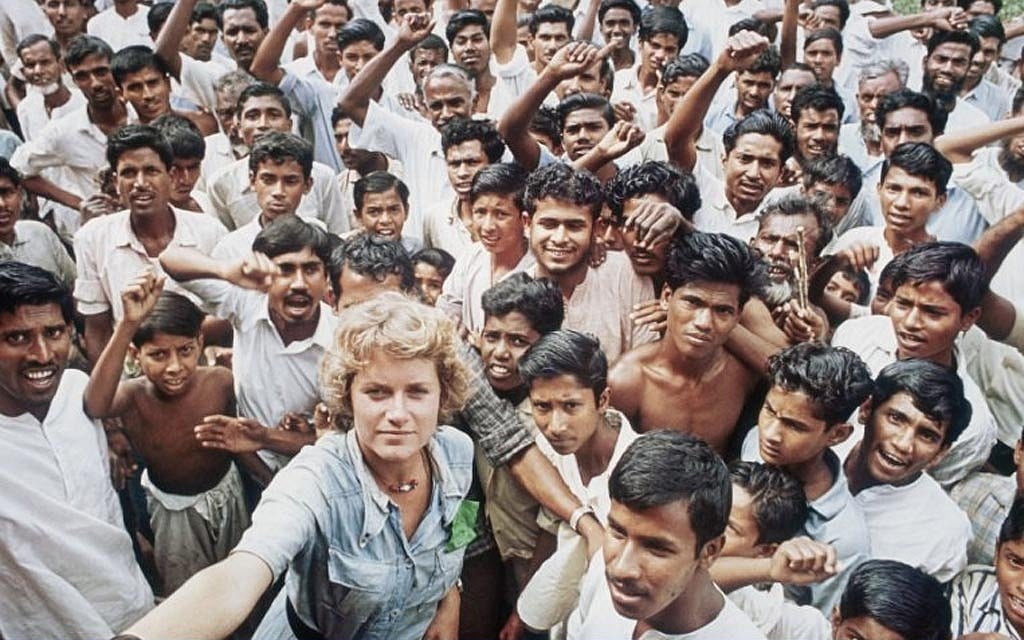
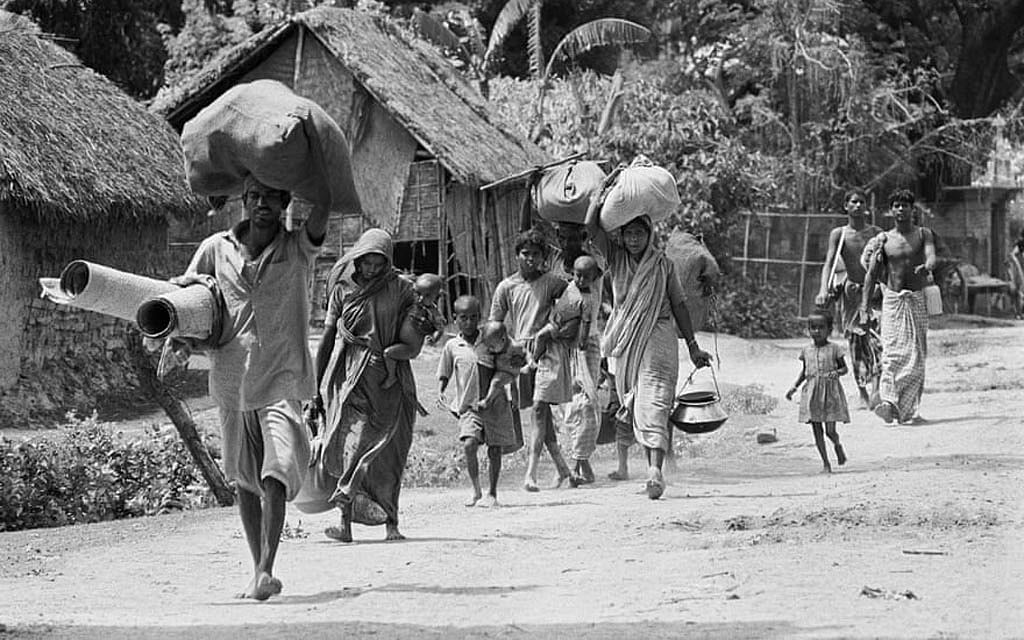
Pakistan was not allowing foreign journalists to enter Dhaka at that time as the war unfolded. Braving those odds, Henning moved across the country capturing the brutal reality of the war.
In her personal archive, she preserved some photos of refugees, including women and children taking the trains to flee the atrocities of the Pakistan army. Those photos are the glimpses of Bangladesh’s emergence as a sovereign country.
Some unpublished photographs of the liberation war, taken byHenning in 1971 and 1972, will be exhibited in Dhaka as part of the celebration of the birth centenary of Bangabandhu Sheikh Mujibur Rahman and the golden jubilee of the nation’s independence.
State Minister for Cultural Affairs KM Khalid is scheduled to inaugurate the exhibition at Bangladesh Shilpakala Academy on Friday. Liaquat Ali Lucky, the academy’s director general, will be present in the event.
“I saw a few young men coming out of the makeshift Muktibahini camp and the green and red flag of Bangladesh hoisted high on a bamboo pole,” Henning said as she recalled her first meeting with the freedom fighters.
“They smiled and welcomed me, saying ‘you’re now in an independent Bangladesh!’”
The exhibition co-organised by the Centre for Research and Information, the research wing of Bangladesh Awami League, and Samdani Art Foundation will continue until Dec 31.
CRI trustee Nasrul Hamid and Samdani Art Foundation President Nadia Samdani will be present at the inaugural ceremony.
The exhibition, curated by Ruxmini Reckvana Q Choudhury, will be open to all.
Henning visited Bangladesh a second time in 1972, when some of her photographs were shown to Bangabandhu Sheikh Mujibur Rahman. She met Bangabandhu before he delivered his speech to the Awami League’s first council meeting that year. She told Bangabandhu that she came to Dhaka from Kolkata only to take photos of the event.
Many photos of Bangabandhu were destroyed in a planned way, after he and most of his family were killed in 1975. Some photos, however, remained with a few collectors, and Henning is one of them.
Besides the photos of Bangladesh’s liberation war, the exhibition will showcase some photos of the Vietnam war from Henning’s archive.
Henning began her career as a photojournalist in the late 1960s. At age 23, she embarked on the Trans-Siberian Railway on her way to Vietnam, according to her website. Crossing the Taiga forest blanketed in deep snow, she made a stop at Irkoutsk to walk on the ice-covered Baikal lake. After a stay in Japan and Hong Kong, she arrived in Vietnam where she photographed the war with the US Army.













