Published : 06 Jan 2016, 08:34 PM
Updated : 11 Apr 2022, 09:33 PM


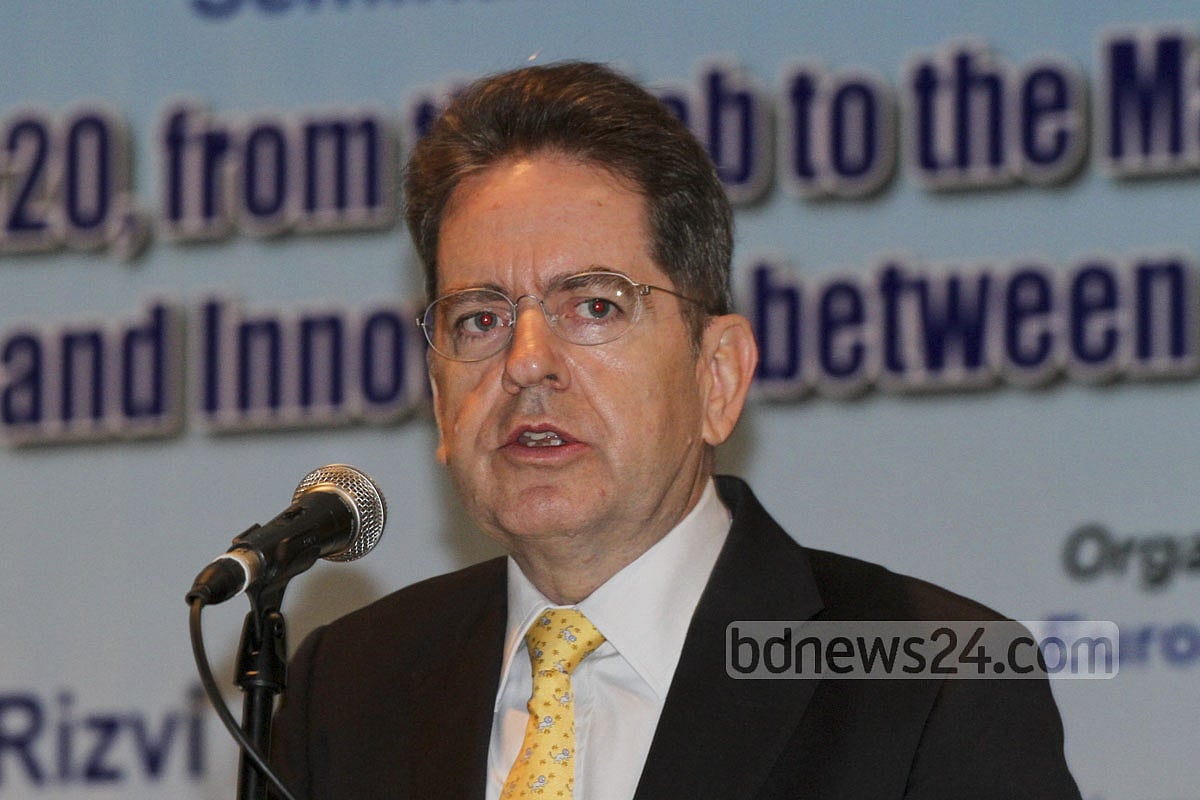
Head of EU Delegation in Dhaka Ambassador Pierre Mayaudon said the ambition of those activities would be “to contribute to eradicating poverty and building a more inclusive society” in Bangladesh as per the government’s ongoing five-year development plan.
“The people of Bangladesh are at the heart of these interventions, with particular attention to women, girls, youth and most vulnerable groups,” he said in a statement.
The EU Development Cooperation Multiannual Indicative Programme (MIP) 2014-2020 aims at assisting Bangladesh in promoting a more equitable growth and improving democratic governance.
Three programmes were adopted under the grants:
“Platforms for Dialogue Project - Strengthening Inclusion and Participation in Decision Making and Accountability Mechanisms in Bangladesh”,
"Food and Nutrition Security for Bangladesh 2015",
and "Skills 21 - Empowering citizens for inclusive and sustainable growth".
The first programme will assist the government and NGOs in their “mutual efforts to achieve a more inclusive, transparent and accountable system of governance in the country”.
The second programme will improve maternal and child nutrition with three main pillars.
The pillars are: consolidating a national nutrition-sensitive policy framework, addressing stunting in two districts of Sylhet Division - one of the most critical undernutrition areas in the country - and developing replicable solutions to deliver nutrition services and mobilise communities in other parts of the country.
The third programme will support an overall reform of the Technical and Vocational Education Training (TVET) sector.
This reform will allow “a comprehensive and coherent” policy framework and improve employment opportunities according to the labour market's needs.