


Published : 01 Jun 2022, 01:22 AM
Updated : 25 Oct 2022, 09:53 AM


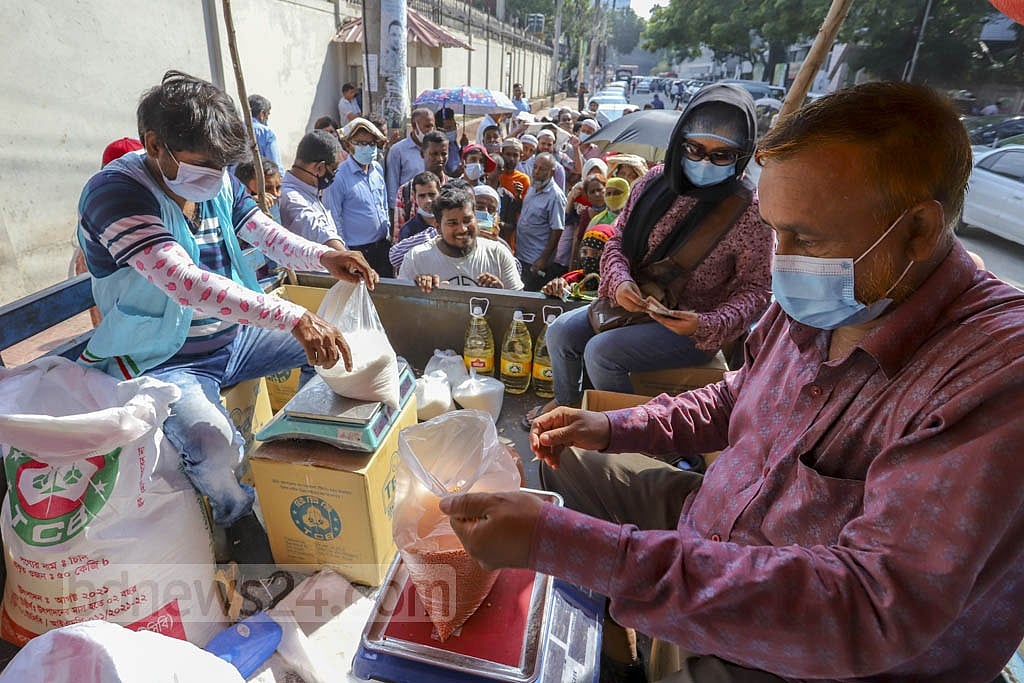
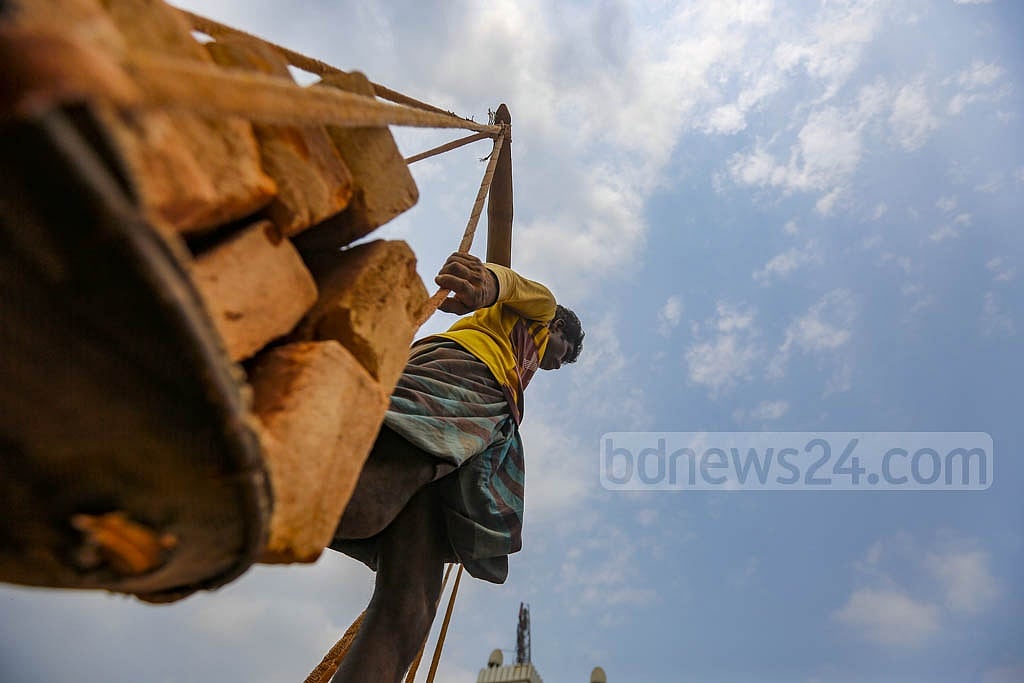
The Finance Division has proposed measures to rein in import spending in the budget amid Bangladesh’s ongoing foreign currency reserves crisis.
Officials from the division say it is in the process of hashing out a Tk 7 trillion budget, listing the government’s income and expenditure, for the upcoming fiscal year.
According to Dr Selim Raihan, executive director of the South Asian Network on Economic Modelling (SANEM), imports in the current fiscal year may pass $80 billion. He was in favour of the government’s measures to reduce import spending.
Raihan also believes the government should discourage imports of non-essential items in order to prevent the import bill from putting pressure on foreign reserves in the upcoming fiscal year.
A proposal has been made to increase the size of the FY23 budget by 12 percent from the current one in order to tackle rising inflation and keep the balance of payments in check.
Accordingly, the budget deficit also promises to be massive. The government is considering taking out foreign loans in order to meet a deficit close to Tk 2.4 trillion.
A proposal has also been made to borrow over Tk 1 trillion from domestic banks, an increase of about 33 percent. In the current fiscal year, the government targeted loans of Tk 764.25 billion to meet the needs of its Tk 6.36 trillion budget.
The upcoming budget, which Finance Minister AHM Mustafa Kamal is to present in parliament on Jun 9, will propose an increase in farm subsidies to shore up food security and additional incentives to bring in remittances and encourage exports.
Social security is also likely to see a larger allocation this year in light of recent inflationary pressure.
The allocation for social security will see a proposed 5 percent increase to Tk 1.76 trillion in this current fiscal year, but will take up a smaller portion of the total budget. The sector will be allocated 17.82 percent of the upcoming budget, down a little over a percentage point from the allocation in the current one.
Economists have suggested increasing social security stipends in line with rising commodity prices and inflation. They also expect import spending to decrease on its own given the current trends in the world market.
They agreed with the government’s plans to set a lower target for import spending, but urged them to ensure that the import of necessities and goods related to investment was not hampered.
“We must keep in mind that there should be no disruptions to the import of necessary commodities, capital machinery and raw materials for industries,” said Mohammed Farashuddin, former governor of Bangladesh Bank.
WILL IMPORT SPENDING FALL?
The draft budget being used by the Finance Division estimates a 30 percent growth in import spending. The import target for the upcoming budget is 12 percent.
Though it is larger than the 11 percent in the current budget, it is significantly lower than the current rate.
The increase in import spending is putting pressure on Bangladesh’s import-export businesses. As the pandemic situation has eased, imports have risen dramatically over the previous fiscal year.
The value of the dollar also hit a record high against the taka only a few days ago. This means that Bangladesh has to spend even more in order to pay off its import bill.
Under these circumstances, the country’s foreign reserves are feeling the strain.
The Bangladesh Bank has instituted several measures, including raising the letter of credit margin, or LC margin, in order to discourage imports.
The government also raised customs duties and tariffs on imports of non-essential and luxury goods to try and restrict imports.
In light of these measures, economists say the proposed target of reduced imports is acceptable.
“Import spending will drop in the coming fiscal year as forecasts suggest the price of cooking oil and other goods on the world market will decrease significantly,” said Farashuddin.
But the former Bangladesh Bank governor still sees the government’s import restriction measures as significant.
“We import a lot of goods from abroad that aren’t really necessary. We also import products that are also available from domestic producers. The government’s decision to restrict imports will have a notable impact on our domestic industries as well.”
Professor Mustafizur Rahman, a distinguished fellow at the Centre for Policy Dialogue, believes the pressure created by imports may not persist next year. He suggested raising taxes on luxurious foreign products to discourage imports of these commodities and increase government revenue.
Economist Selim Raihan urged the government to be careful about its decisions so that foreign investments do not get hurt.
He also suggested monitoring to stop money laundering by declaring extra price of imported goods.
The Finance Division is thinking about cutting export target in the next fiscal year due to inflation in the West and elsewhere in the world.
Exports in the first 10 months of the current fiscal year suggest a 30 percent year-on-year increase. Bangladesh exported goods worth around $43.35 billion in this period with an over 35 percent year-on-year increase.
Officials said the export growth target might be cut by 10 percent in the new budget.
This will eventually cut imports, some analysts think.
Imports grew by nearly 38 percent to around $72.4 billion in the July-April period against a fiscal target of 11 percent growth. Finally, imports are estimated to reach $75 billion this financial year. The government may want to keep annual imports within $83 billion next fiscal.
The huge difference between exports and imports has led to a $14.07 billion deficit in balance of payments in June-March period, 25 times higher than the same period last fiscal year.
The Finance Division estimates the deficit in balance of payments will reach 2.5 percent of Bangladesh’s GDP this fiscal year.
The government is thinking about keeping the deficit within 1 percent of GDP next financial year by controlling imports.
Despite sluggish remittances, the growth target will be set at over 15 percent, according to officials.
BILLIONS OF BANK LOANS
The Finance Division has proposed a Tk 7 trillion budget for the upcoming fiscal year which will be little more than 15 percent of the total national GDP. After calculation, the authorities found the deficit in the huge budget could stand at Tk 2.4 trillion, almost 5.5 percent of the GDP.
The second budget amid the coronavirus pandemic in 2021-22 fiscal had a deficit of 6.2 percent or Tk 2.1 trillion. As usual, revenue earnings will be the key source of the budget. The upcoming budget proposed an 11 percent increase in revenue targets than the current budget.
The 2021-22 budget targeted a total income of Tk 3.8 trillion, while the revenue target in the upcoming budget is only 9.8 percent.
The revenue target under the National Board of Revenue has been proposed to increase Tk 400 billion than the amount in the current fiscal year. It is 12 percent higher than the target in the current fiscal.
The current budget has an income target of Tk 1.12 trillion from foreign sources. To fill the huge deficit in the proposed budget, however, the government targeted around Tk 40 billion more from foreign sources. This is equivalent to 2.6 percent of the GDP. It shows a 5 percent raise, but according to the GDP it dropped.
As foreign loan has been a burning question in recent time, the government is not willing to opt for it.
Dr Raihan of SANEM, however, suggested the government opt for more foreign loans after analysing the current circumstances.
On the other hand, the upcoming budget proposes to add loans of Tk 300 million more to Tk 1.13 trillion mentioned in the current budget.
The bank loan target, which stands at Tk 764.52 billion in the current budget, has been proposed to rise 33 percent to Tk 1 trillion in the next budget.
The finance ministry has proposed Tk 1.5 trillion this year to provide subsidies, incentives and cash loans.
SOCIAL SAFETY NET INCREASES
The draft budget proposed an increase of Tk 50 billion in some sectors of the social safety net for providing security to the people from the marginal groups. The current budget has an allocation of Tk 1 trillion in this sector.
Economists and other experts have recommended widening the scope of the sector and increasing allowances under the current socio-economic situation.
The government proposed a top-up of Tk 60 billion in the social welfare sector on the current allocation of Tk 327.6 billion.
This segment is used for providing allowances to the disabled service centres nomads, people from the third gender group, and the marginal groups.
Proposals include a raise of allocation in food security, food for work, employment-generating programmes, human resource development and microcredit running projects, but the amount is very little.
Despite the ongoing criticism of it, the government continued to portray the pension and family allowances provided to its employees as part of the social security sector. There is an increase of Tk 266.9 billion proposed for this sector as well.
Former Bangladesh Bank governor Farashuddin also suggested putting the expenditure under another segment.
“It is important to note that the government employees’ pension and interests of savings certificates are being portrayed as part of the social safety net. But the government should clarify their plan to support the people from the marginal groups and should not show other allocations in this sector,” he said adding it was Prime Minister Sheikh Hasina who initiated a big allocation for social security for the first time in 2009.
Economist Selim Raihan said the government should increase the allowances for people as the high inflation has pushed down the income for the people of marginal groups.
The next budget should have a bigger deficit budget, suggested Prof Mostafizur Rahman. “This is because we’re yet to overcome the ill impact of the COVID-19 pandemic. The economy has just begun to turn around. The next budget should have more allocation for the industrial sector and social security for the people of marginal groups.”













