Published : 04 Oct 2017, 01:19 PM
Updated : 19 Oct 2022, 03:48 PM


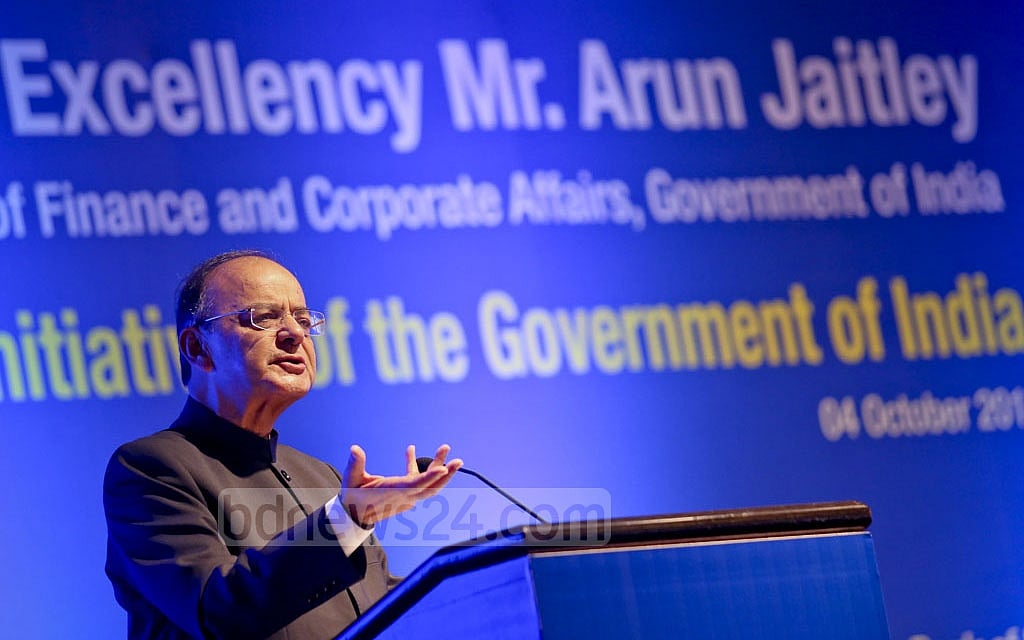
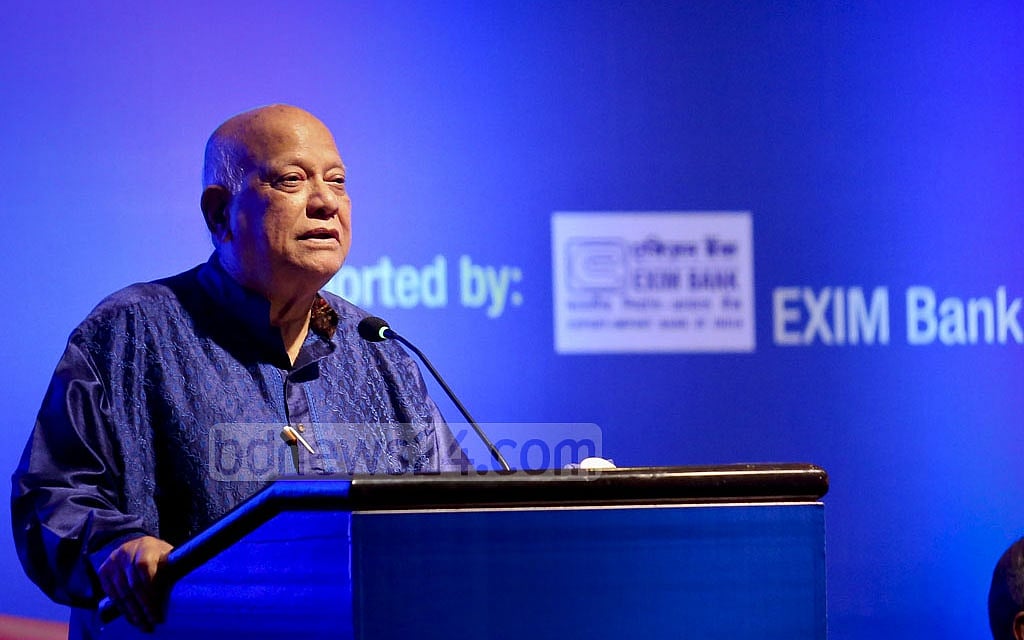
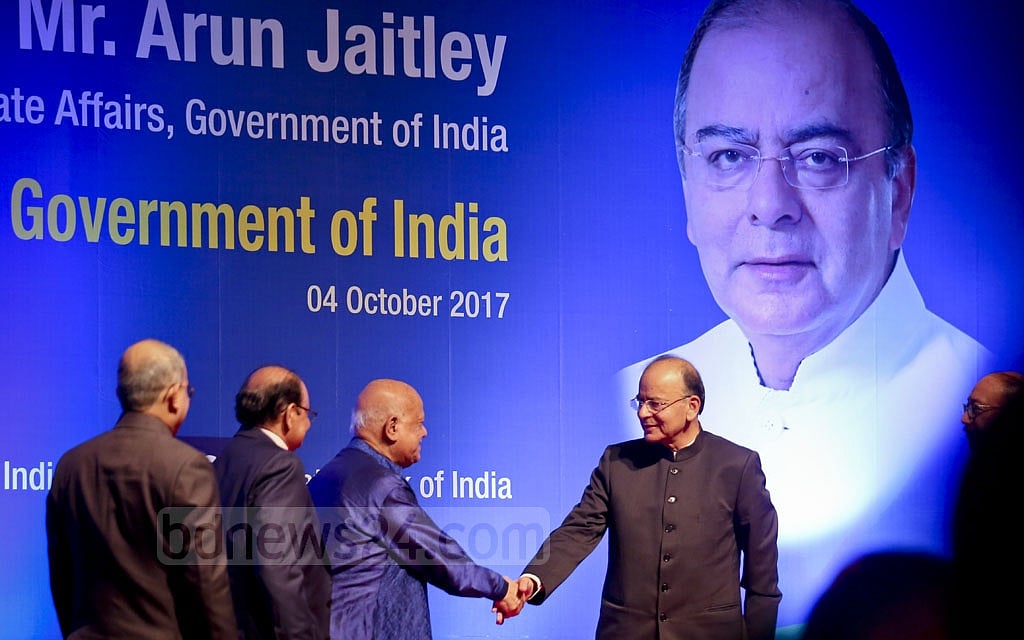
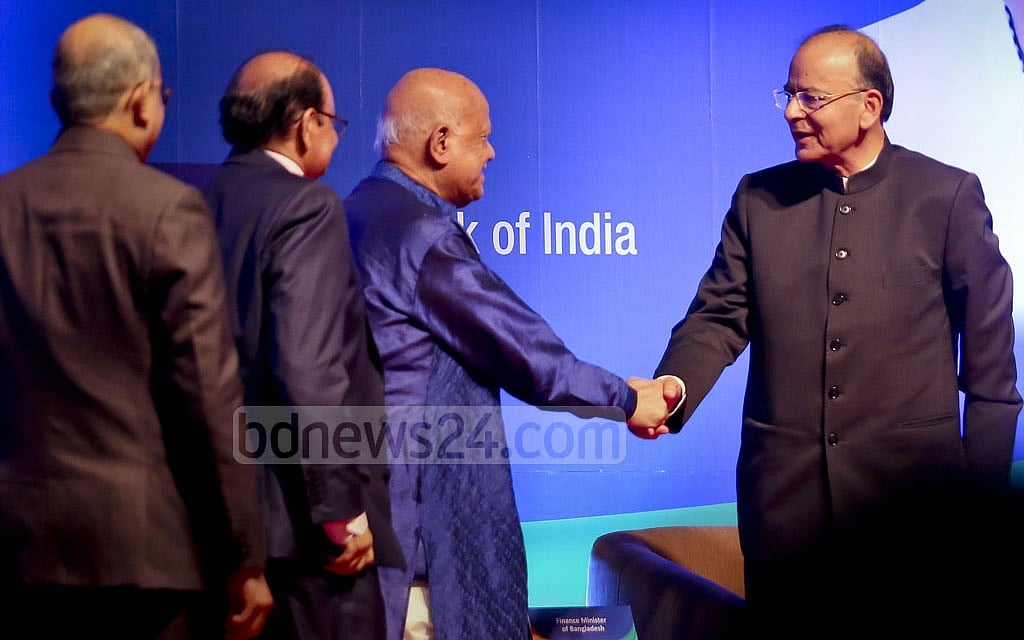
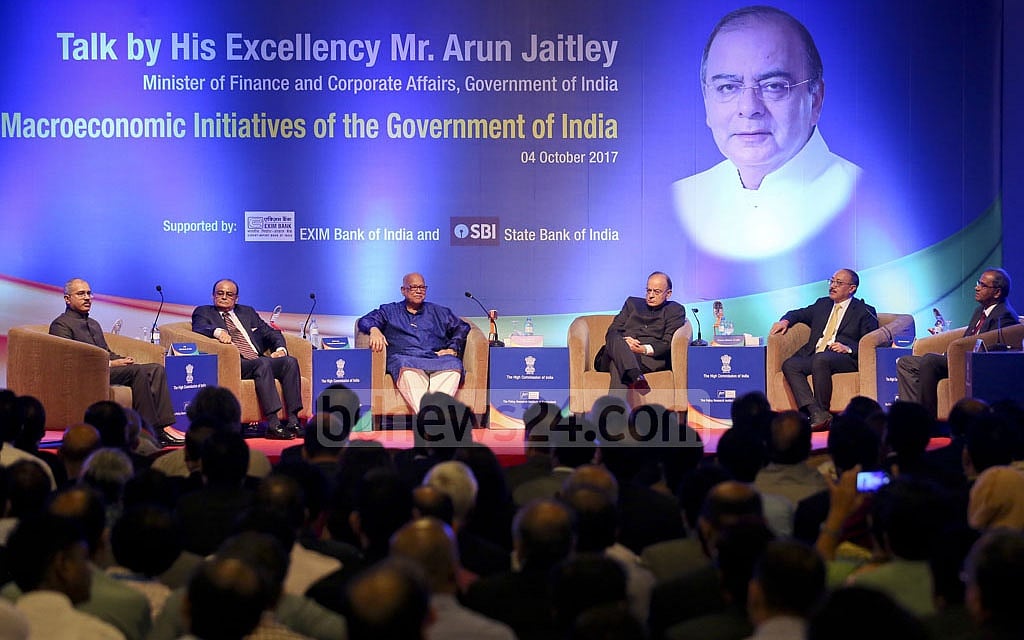
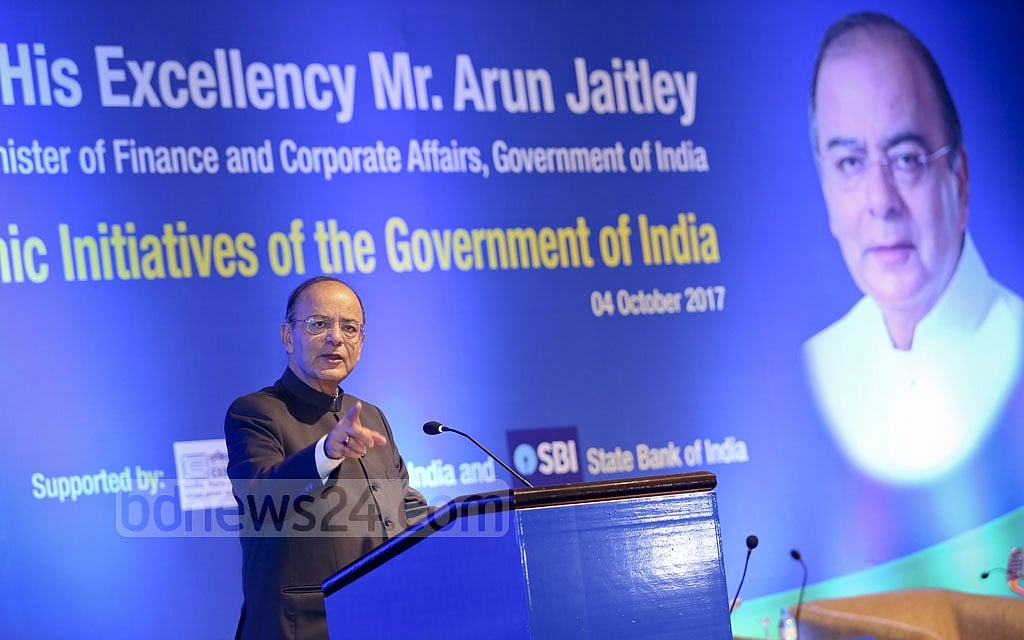
Indian Finance Minister Arun Jaitley, known for his battle against cash-based crime, corruption and terrorism, brought a strong message for his Dhaka audience on Wednesday.
An economy overly dependent on cash harms the poor and supports corruption as it allows people to live in anonymity and stay beyond the tax net. It means the poor are deprived of benefits generated by high net-worth taxpayers.
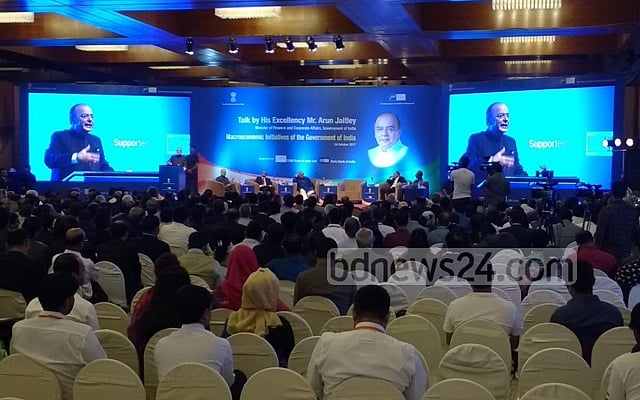
"If the economy depends mostly on cash, the curse of cash hits you,” Jaitley said during a talk on the Indian government’s macroeconomic initiatives and cashless society, at Dhaka’s Hotel Sonargaon.
“Cash leads to corruption and tax evasion. Excessive cash operates against the poor. A lot of terror activity thrives on cash.”
Before Jaitley spoke on his favourite topic, he inaugurated cashless services at India’s visa application centres in Dhaka’s Shyamoli and Sylhet and later announced that it would now be available at all 12 Indian visa application centres across the country.
The State Bank of India is introducing special travel cards, which tourists and others can carry from Bangladesh to India and use them. These five-year travel cards are part of India's drive for a cashless economy and society.
Almost a year on, many economists see India's ban on large-denomination bills as a failure. India failed to flush out tax cheats. But its secondary goal -- to move toward the cashless society, as Jaitley put it, has real promise. Bangladesh could learn a lot from this experiment.
Jaitley encouraged the rest of the world to follow in India’s footsteps. “Our roots are of common origin and so a lot of challenges are common in nature,” Jaitley said referring to Bangladesh, India’s next-door neighbour.
Financial inclusion
To the Dhaka audience, Jaitley narrated a story of success -- Prime Minister Narendra Modi’s flagship project on financial inclusion: Pradhan Mantri Jan Dhan Yojana.
When Modi took over as the helmsman of the government in 2014, one of his major tasks was how to bring a large swathe of unbanked population into the banking system.
“One of the great challenges the Indian economy always faced was that it was cash-centric,” Jaitley said.
“In 2014, we discovered that although we had a very large banking network in India, only 58 percent of Indians or Indian families are connected to the banking system,” he said.
It means 42 percent of the population was completely outside financial inclusion.
“Therefore, the very first challenge before the government was how to bring them into the banking network.”
“These are the people in rural areas, these are the people in tribal areas, these are the people in geographically remote areas. There were people who came from parts of central India which were impacted by left-wing extremism.”
In the days that followed, the Modi administration launched a mission to visit every house, every family. Banking correspondents and representatives visited every home, enabling India to open 300 million bank accounts in both rural and urban areas in three years.
The progress was impressive, but a new challenge loomed: the majority of the accounts had zero balance. “So the rules were amended to allow account holders to have zero balance,” Jaitley said.
India also incentivised people to keep holding these bank accounts. Zero balance accounts have declined from 76.8 percent in September 2014 to 21.4 percent by August 23, 2017, according to a report by the Wire.