Published : 07 Jul 2023, 02:01 AM
Updated : 07 Jul 2023, 02:01 AM


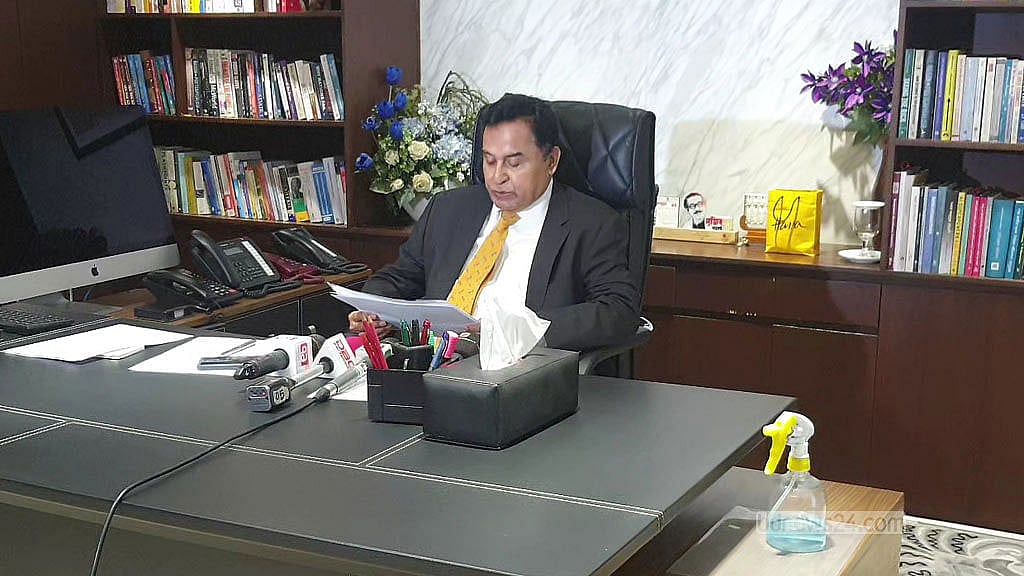
Bangladesh’s economy is doing better now after passing a “frightening” period some months ago, Finance Minister AHM Mustafa Kamal has said.
He spoke to reporters about the state of the economy after a meeting with a delegation of Japan International Cooperation Agency in Dhaka on Thursday as Bangladesh’s gross foreign currency reserves slipped below the $30 billion mark again.
The reserves fell below the mark for the first time in seven years in May following a gradual decline after rising above $48 billion in August 2021.
The Bangladesh Bank, however, continued to sell dollars to the banks to clear import bills, which ballooned the balance of payment deficit. To tackle the pressure, the government has signed a $4.7 billion loan programme with the International Monetary Fund.
The actual reserves now stand at around $23 billion if calculated in line with the latest IMF system. Bangladesh now follows the system under the deal with the global lender, but the data is not revealed.
Kamal said the impact of the Russia-Ukraine war on the global economy worsened the situation for Bangladesh.
“We couldn’t guess how long the war would continue. Our [dollar reserves] were falling at such a rate that we became afraid. Our fears were over when we started the war [against economic challenges]. Now everything is alright.”
The minister said the loan from the IMF was not a big one. “It’s equal to the inward remittances we receive in two months.”
Asked how long the economic pressure may continue, the finance minister said: “Where are we doing bad? When one of our banks failed, they [IMF] said it shouldn’t have failed. Now three of their [United States] banks have failed this year.”
“If you put our economy into a global context, you must say that our performance is better than the others’,” he said.
Kamal reiterated his claim that the pressure of inflation is not so high despite the key indicator of the economy increasing at a decade-high rate of around 10 percent. “It was 12.3 percent when we took charge,” he said.
“And is anyone going hungry? We’re not just working to control inflation, we’ve also allocated Tk 1.26 trillion for social safety net programmes. Ten million people are getting food aid through family cards. This is the biggest weapon to tackle inflation.”
“The government is cutting taxes for the insolvent people, providing food to those who don’t have it, and giving food at lower prices to those who have a low income,” he said.
The minister said ordinary people across the globe are suffering because of inflation. “Bangladesh is not out of the world. We’re doing whatever we can within our capacity, and we’re doing it well. But we'd be happier if we were in a better position.”
The JICA delegation came to visit the projects Bangladesh is implementing with Japan’s help, Kamal said.
He said JICA can extend assistance to Bangladesh through some new technology-based projects announced in the national budget for FY24.
When a reporter asked the finance minister about his long absence from the media, which triggered speculations in Bangladesh’s politics and financial sector, Kamal cited physical illness as the reason. “I’m still on the path of recovery.”
Kamal regularly briefed the media after weekly meetings of a cabinet committee on financial affairs. When the coronavirus struck the world, he used to meet the press online and continued the briefings over the Internet after the pandemic eased.
But he stopped appearing before the media after a briefing on the IMF’s loan at the beginning of 2023. He said on Thursday that officials were tasked with briefing the media about the cabinet committee meeting and they will continue doing the job.