Published : 19 Jul 2022, 12:39 AM
Updated : 25 Oct 2022, 09:59 AM


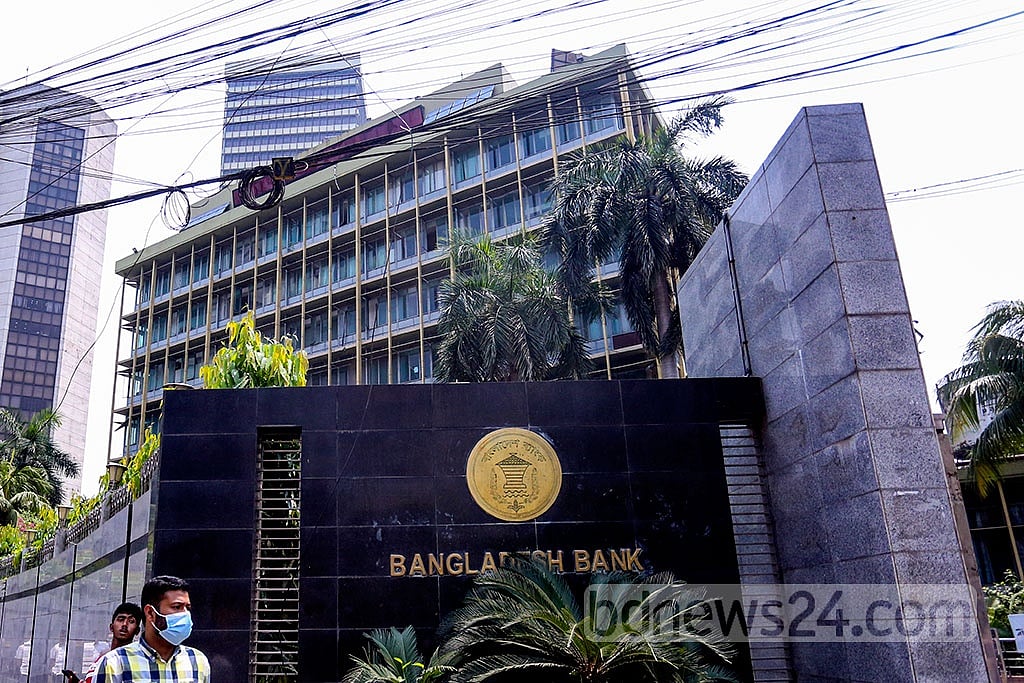
The Bangladesh Bank on Monday announced the new loan rescheduling policy after nine years to “reduce the pressure on the economy”.
The new policy, introduced at a time when a team of the International Monetary Fund is visiting Dhaka to discuss reforms in the monetary and economic sectors amid a global recession, includes an extension of the grace period for loan repayment and other time limits to ease pressure on businesses, according to a notice issued by the central bank on Monday.
Defaulters will also be allowed to reschedule their non-performing loans (NPLs) four times in contrast to the previous three times, reads the Bangladesh Bank notice.
In addition, the minimum down-payment for loan rescheduling has been reduced, according to Maksuda Begum, director of the Banking Regulation and Policy Department.
“The circular was issued after taking the recent resurgence of COVID and the pressure on the economy into consideration,” she said.
“In light of the long-term negative impact of COVID-19, the global economic instability due to the recent escalation of hostilities abroad and a surge in COVID-19 infections, new debt rescheduling policies are being implemented to maintain stability in the financial sector and to properly manage loans according to their category,” reads the notice.
However, Bangladesh Bank has called for strict restrictions on the rescheduling of loans in unproductive sectors or unprofitable businesses in the productive sector.
WHAT ELSE THE NEW POLICY SAYS
The national bank has once again given big concessions to defaulters citing the rationale of maintaining stability in the financial sector and proper management of classified loans.
According to the new policy, any classified loan can be rescheduled a maximum of three times. However, a fourth-time rescheduling provision has been kept for defaulted loans.
Any fixed-term loan balance of less than Tk 1 billion can be rescheduled up to a maximum of six years with a grace period.
For any fixed-term loan balance between Tk 1 billion and Tk 5 billion, the rescheduling period is a maximum of seven years including a grace period.
And in case of any fixed-term loans above Tk 5 billion, the rescheduling period is a maximum of eight years, which includes a grace period.
Term loans are usually given out to businesses to set up new industrial units and expand their existing ones and the tenure of these is usually more than a year.
Earlier, the maximum time was two to six years for repayment of such loans.
The grace period is 6 and 12 months before defaulters need to start to repay the rescheduled loans. Such provision was absent in the previous central bank policy.
Businesses which took out working capital and demand loans will be permitted to pay back loans in 5-7 years. It was 6-18 months before.
Businesses normally take working capital and demand loans to meet operating costs and the tenure of such loans is below one year.
Earlier, scheduled banks had to ask for approval from the central bank to regularise special facilities loans.
Not anymore.
The new policy gave the sole power to the boards of directors to decide what benefits will be given to defaulters.
According to central bank officials, the decision was made to hand over the authority to banks to get rid of the pressure from special lobbying interests to reschedule loans under special facilities. For this reason, the new governor has given the banks the power to provide that facility.
DOWN-PAYMENTS GO WAY DOWN
The central bank has chopped down the down-payment of the non-performing loans to 2.5-6.5 percent instead of the previous 10-30 percent.
Defaulters will have to give a 2.5-5 percent down payment of their total NPLs, which had been taken from banks in the form of working capital or demand loans. The earlier range of the down payment was 5-15 percent.
For exporters, after rescheduling the NPLs, only 2 percent of the rescheduled loans have to be paid to get new funds from banks. It was 7.5 percent.
Other borrowers will have to pay 3 percent of their defaulted loans as a down-payment to get new loans. The previous rate was 15 percent.
[ Writing in English by Adil Mahmood; editing by Biswadip Das]