Published : 08 Jul 2025, 01:41 AM
Updated : 21 Aug 2026, 01:29 PM


Inflation has cooled to 8.48 percent in June, the lowest in nearly three years, driven primarily by a significant decline in food prices.
On Monday, the Bangladesh Bureau of Statistics (BBS) confirmed a continuation of the downward trend that started in May, when inflation dropped to 9.05 percent.
June’s inflation is the lowest recorded since July 2022, when it stood at 7.48 percent.
Inflation spiked the following month to 9.52 percent and climbed steadily to reach a peak of 11.66 percent in July 2024.
After the fall of the Awami League government in August 2024, inflation fluctuated between 9-10 percent in the following months, but it has begun to ease in recent months.
Chief Advisor’s Press Secretary Shafiqul Alam credited the easing inflation to “well-crafted” policy interventions by the interim government.
In a Facebook post, he wrote: “According to June 2025 data, point-to-point inflation stands at 8.48 percent, two percentage points below what it was in August 2024.
“Food inflation has dropped sharply to 7.39 percent, the lowest in two years. Non-food inflation is also beginning to decline and is expected to fall further in the coming months.”
The fall in inflation is largely attributable to reduced spending on food in both rural and urban areas.
BBS data shows food inflation dropped to 7.39 percent in June from 8.59 percent the previous month. Non-food inflation also declined marginally, from 9.42 percent in May to 9.37 percent in June.
In urban areas, food inflation fell from 9.29 percent in May to 7.99 percent in June. In rural areas, it declined from 8.30 percent to 7.14 percent.
Non-food inflation in rural Bangladesh edged down from 9.75 percent in May to 9.72 percent in June. Urban non-food inflation also decreased slightly, from 9.63 percent to 9.53 percent.
Since taking charge after the July Uprising, the interim government led by Muhammad Yunus has prioritised inflation control.
Among the key measures taken were repeated hikes in interest rates aimed at curbing money supply and slowing demand.
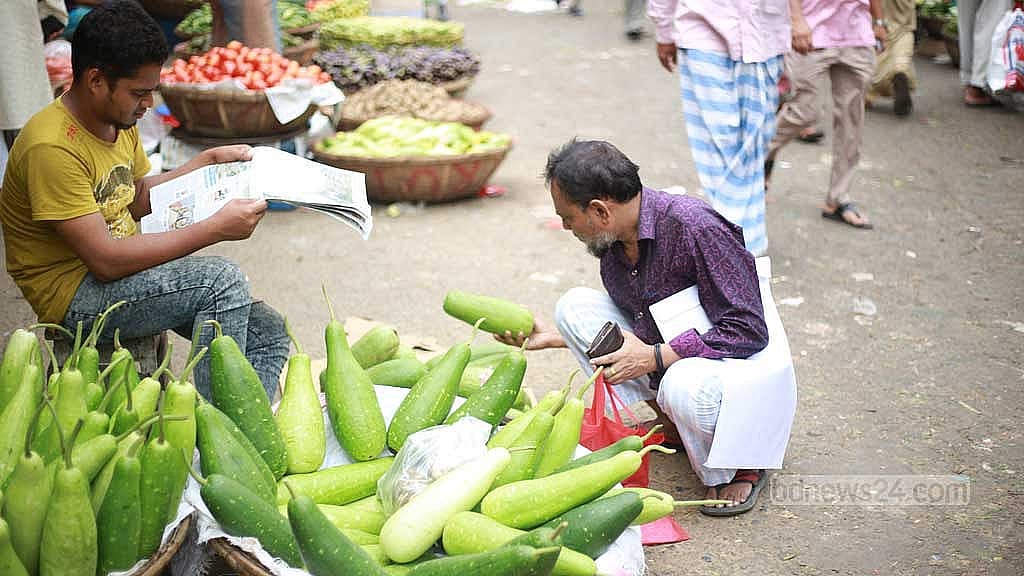
While these steps appear to be reflected in the declining inflation numbers, many consumers say they have yet to see substantial relief in daily market prices.
In its latest budget, the government has set a target of reducing inflation to 6.5 percent by the end of the 2025-26 fiscal year.