


Published : 27 Dec 2020, 11:08 AM
Updated : 17 Oct 2022, 11:17 AM



Many of them reacted sharply to the government decision on mandatory quarantine when they began returning home in droves at the onset of the outbreak earlier this year after the coronavirus ground the world economy to a halt.
After staying home without any work for months, the returnees faced another hurdle – the limited availability of air tickets to return to their country of employment, culminating in days of protests. Many lost their jobs after failing to rejoin work in time.
In this situation, the death of Umme Kulsum, a teenager from Brahmanbaria who worked in Saudi Arabia as a domestic help, highlighted the perils for Bangladeshi women working abroad in unsafe conditions.
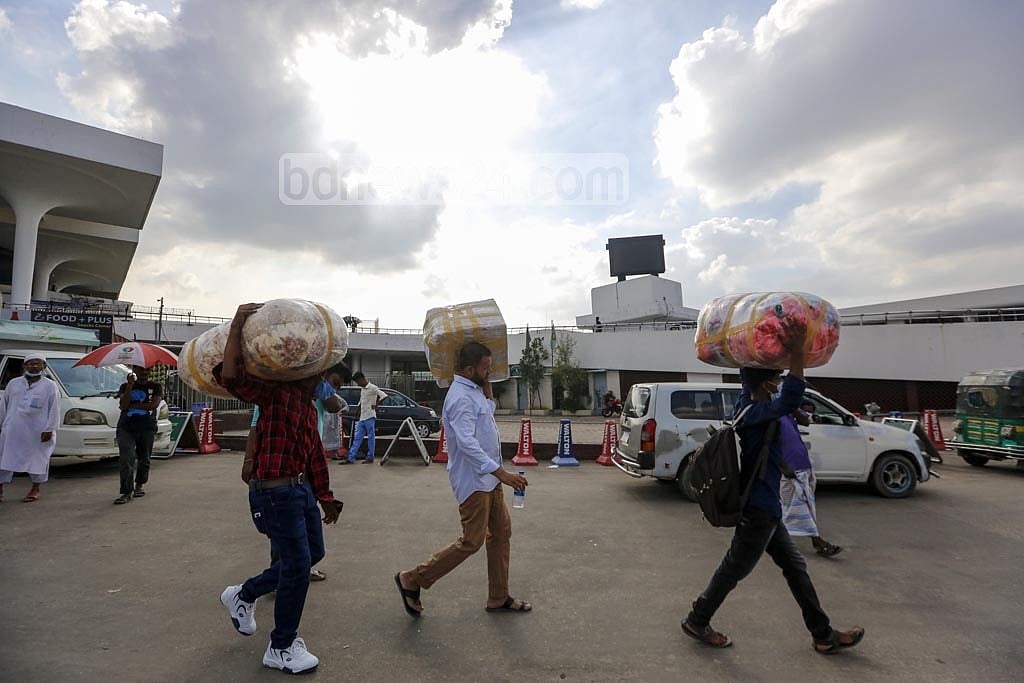
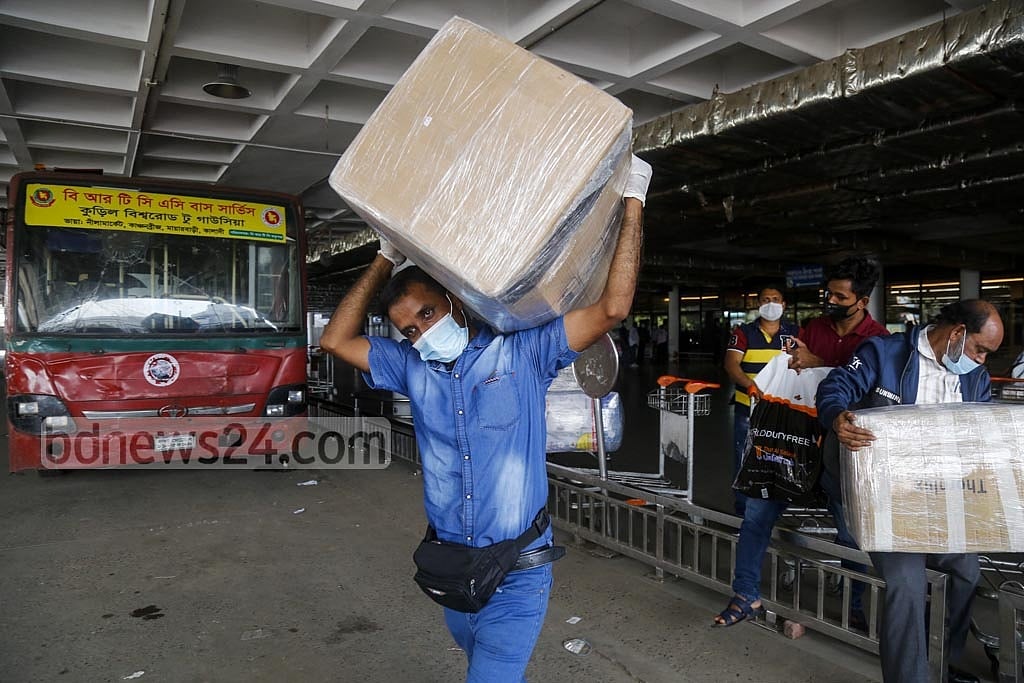
A Bangladeshi migrant worker has returned home from Kuwait with all the belongings he had as it is uncertain whether he will go back to the Gulf country again. Photo: Mahmud Zaman Ovi
The record-breaking remittances have also taken the country’s foreign currency reserves to new heights.
On the other side of the success were the stories of the remitters’ shattered hopes.
One of them, 45-year-old Anwar Hossain of Gazipur’s Kaliakair who worked at a hotel in Malaysia, flew to Bangladesh to celebrate his daughter’s wedding before the coronavirus outbreak.
Caught off guard by the pandemic, he has now been left stranded without work for almost a year, while his attempts to return to Malaysia have to come to no avail as he spends his days reeling in a financial crisis and looks to the future with trepidation.
He used to send back Tk 30,000-40,000, which was enough for his family. “I am in extreme financial hardship with no income at the moment. I can neither bear the agonising hunger, nor can I share the pain with someone else. Our future is now uncertain.”
According to the Expatriates’ Welfare Desk at the Shahjalal International Airport in Dhaka, as many as 326,758 Bangladeshi workers, including 39,274 women, flew back to the country between Apr 1 and Nov 30.
Job losses and shrinking income triggered the exodus of migrant workers at the beginning of the year, with the first batches arriving from Italy where the outbreak’s first wave took a devastating turn in February.
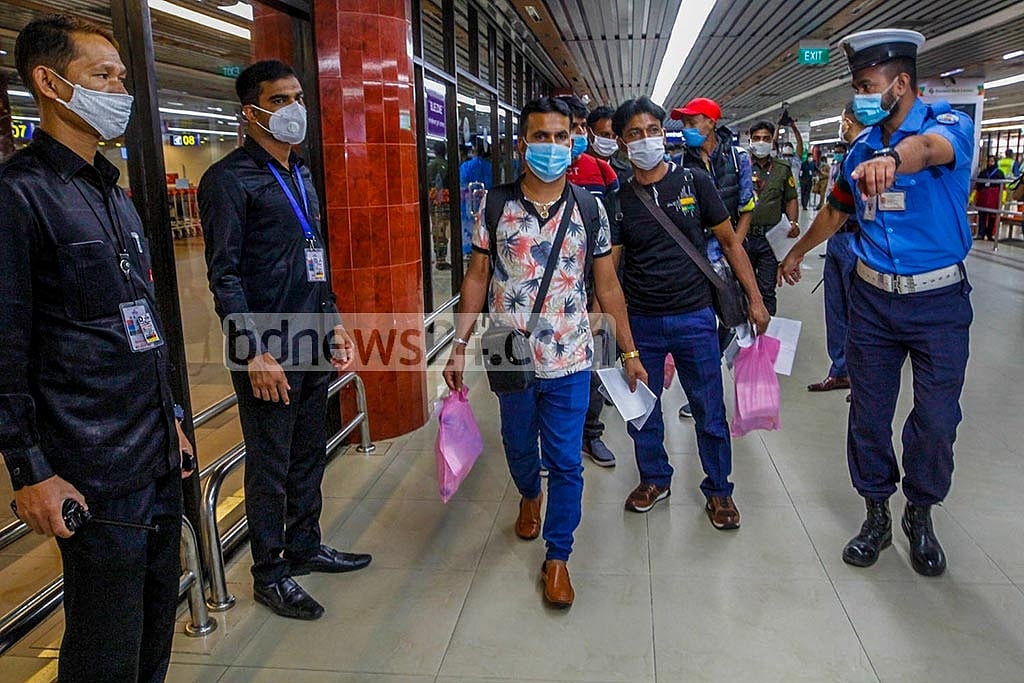
The government decided to keep the returnees from Italy, an early epicentre of the pandemic in Europe, under institutional quarantine at the Ashkona Hajj Camp near the airport and a centre in Gazipur.
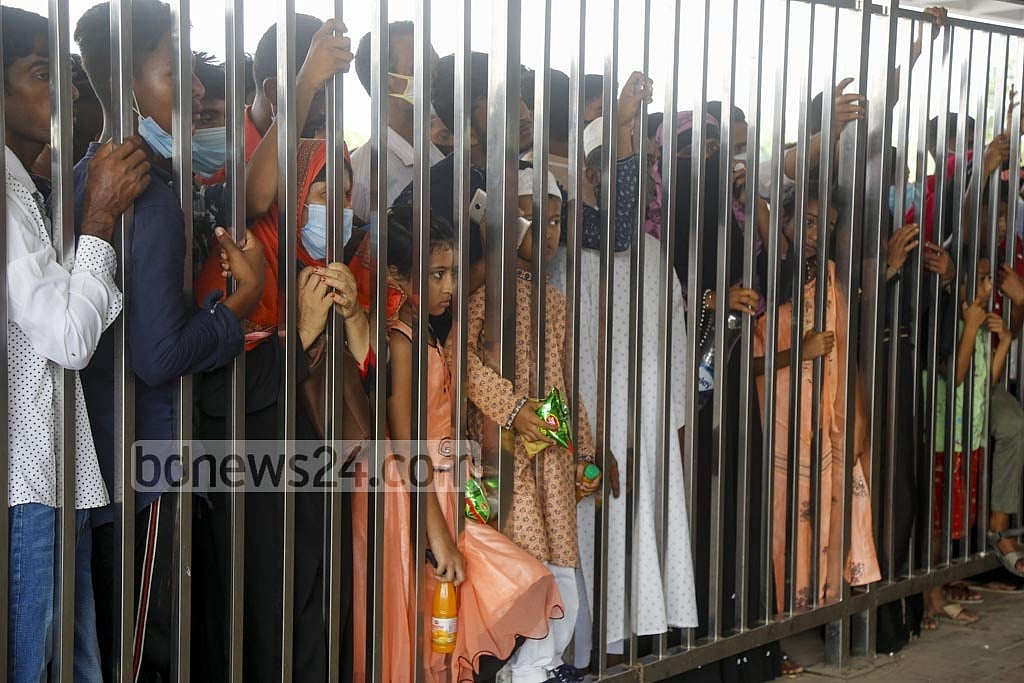
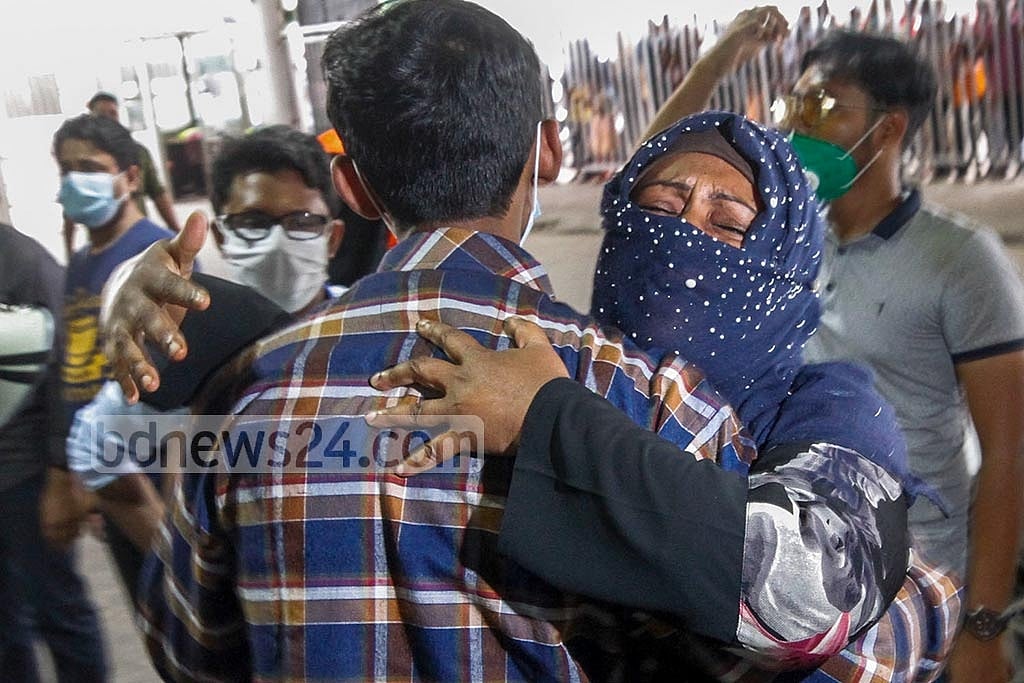
Family members gathered outside Shahjalal International Airport in Dhaka to receive their loved ones returning from abroad on Aug 24, 2020. Photo: Mahmud Zaman Ovi
As most of the countries cut off air connectivity with each other to slow the spread of the coronavirus, the government used special flights to bring back the workers who were stranded abroad after their losing jobs.
Upon returning, some were forced into isolation at home with their families by their neighbours while others faced fines for breaching quarantine rules.
The expatriates wanted to return to their countries of work when the curbs on air travel were being eased in July, but trouble arose over a shortage of plane tickets.
Only a few airlines conducted flight operations on a limited scale at the time, dashing countless migrant workers’ hopes of returning to work.
One of them, Mahbub Alam of Noakhali’s Sonaimuri, worked in Bahrain but was stuck at home amid the pandemic.
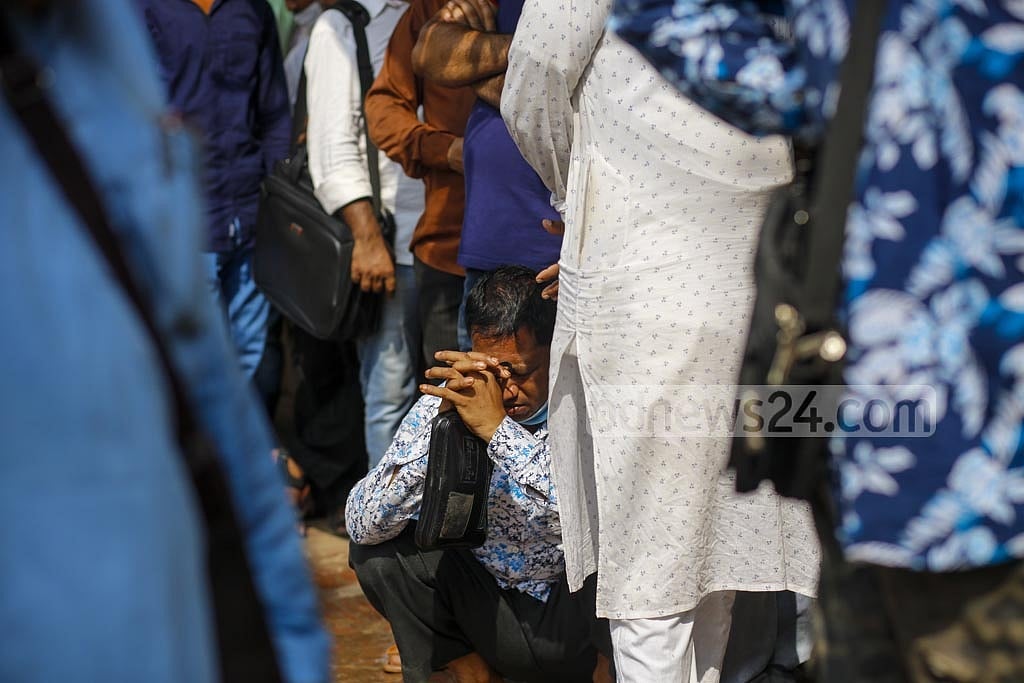
An exhausted Bangladeshi migrant worker rests on the footpath after hours of wait for air tickets outside the Biman Bangladesh Airlines office in Dhaka's Motijheel on Oct 4, 2020. Photo: Mahmud Zaman Ovi
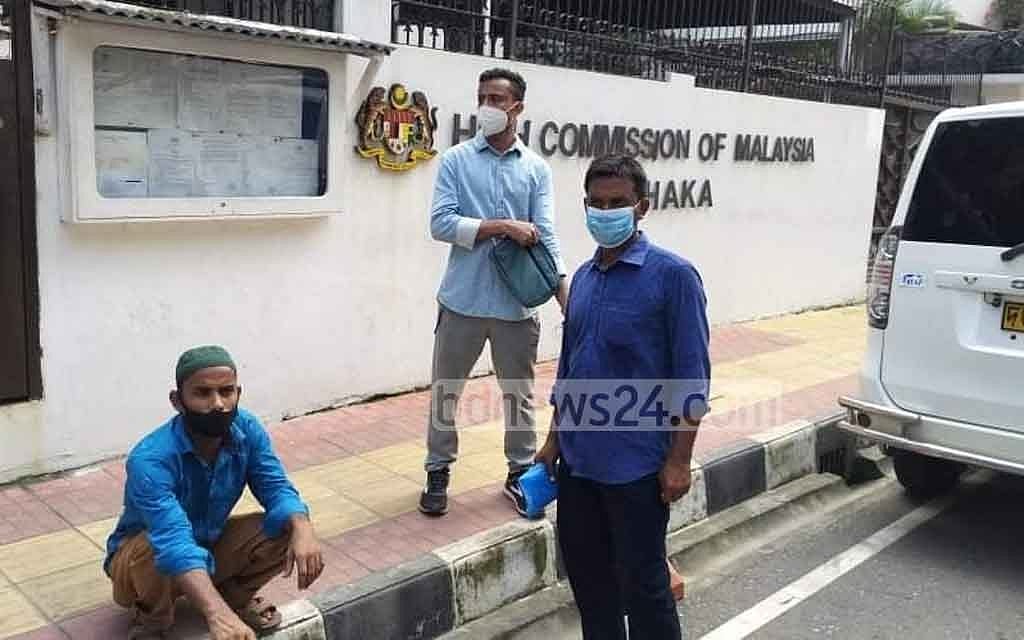
“But I couldn’t travel back as I couldn’t buy a ticket at such a high price,” he said. His visa has also expired.
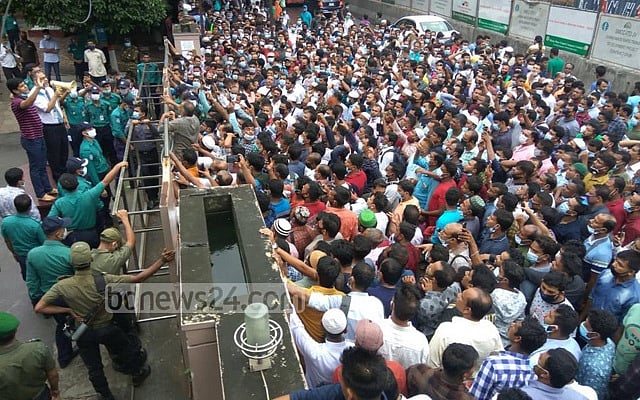
Caught in a predicament, thousands of Bangladeshi migrant workers demonstrated for days in Dhaka for tickets. Their struggle eased when the government stepped in to increase the number of flights and the Middle-Eastern countries agreed to extend visas and appointments.
But a new crisis emerged when Italy closed its doors to Bangladeshis after some expatriates tested positive upon arrival in the European nation.
Some of the migrant workers were fortunate enough to get back to work abroad by overcoming all the hurdles, but they still face an uncertain future.
One of them, restaurant chef Gazi Kutubuddin, went back to Italy in October after spending seven months without work at home in Bangladesh. But what he found there was shocking – the owner decided to keep the restaurant, a business dependant on tourists, closed for quite a while after the pandemic hit the business hard.
Things were much worse for migrant workers without any legal documents, according to Kutubuddin.
“Many people’s lives and livelihoods will be on the line if the situation continues.”
CHALLENGES AHEAD AS REMITTANCES SURGE
Roughly 50,000 Bangladeshi migrant workers used to travel overseas every month before COVID-19 struck, totalling about 600,000 people a year, according to data from organisations involved in migration.
Imran Ahmad, the expatriates’ welfare and overseas employment minister, said in the beginning of the year that the government aimed to send at least 750,000 workers abroad in 2020.
Some of the returnees from Italy altercated with police as they protested against the government decision to quarantine them at Ashkona Hajj Camp near Shahjalal International Airport in Dhaka on Saturday.
The World Bank had forecast the downward trend in manpower export at the pandemic’s outset, predicting that Bangladesh’s inward remittances would drop by at least 25 percent year on year. But the projection proved to be well off the mark as migrant workers sent record amounts home after a dip in April.
Between July and November, Bangladesh received a record $10.9 billion in remittances with a 41.32 percent year-on-year increase. In July alone, migrant workers sent $2.6 billion, an all-time monthly high.
The World Bank said the expatriates were able to send more money this year as their spending opportunities narrowed due to the pandemic. The breakdown of illegal channels and the incentives on remittances sent through banks were also major factors for the massive upturn.
Pointing to a drop in exports, researcher Ahsan H Mansur warned that the pandemic may eat into the remittances as well.
“The expatriates are sending money from their savings or loans, not earnings. They won’t be able to send money once the savings dry up,” said the executive director of Policy Research Institute.
“The government needs to first ensure that workers do not need to return to Bangladesh. Communication with embassies of different countries has to be strengthened for that. Besides that, those who returned to the country but can’t go back must be rehabilitated,” he said.
He also recommended taking steps to ensure training of the workers so that Bangladesh can export skilled manpower once the situation normalises.
Foreign Minister Momen said that the government is rigorously working to send back the expatriates marooned at home due to the pandemic. The government also promised employment opportunities and incentives for those who would not be able to return, he said.
Several countries have put restrictions on foreign travellers amid fears of a second wave of the pandemic, but Momen believes Bangladesh’s labour markets will remain largely unaffected.
The Middle East is Bangladesh’s biggest labour market. Almost 65 to 70 percent of Bangladeshi expatriate workers live in Saudi Arabia, while the UAE, Kuwait and Qatar are among the other top destinations.
Not just the workers but the overseas employment industry as a whole has been hit by the pandemic, he said.
“We, the owners and officials of manpower exporting companies, have suffered the biggest losses.”
At least 40,000 employees worked in 1,600 manpower exporting agencies in the country, according to Shameem. The expenses of these agencies, including the wages of employees, amounted to approximately Tk 450 million every month.
Additionally, visas of almost 100,000 Bangladeshis have expired, which means the agencies cannot send them abroad now.
Without any income during the pandemic, the agencies suffered losses of at least Tk 20 billion, Shameem said.
Outlining the steps taken for the troubled migrant workers amid the pandemic, he said the government wants them to avail all the opportunities and facilities it offers to them and their families.
Ahmed Munirus Saleheen, the expatriates’ welfare secretary, said at the programme that they are facing five challenges – ensuring the welfare of those working abroad, the safe return of those stranded abroad, sending back those stranded at home, rehabilitating those who want to stay in Bangladesh, and sending new workers abroad.
The government said it was arranging soft loans for the rehabilitation of the returnees from Probashi Kallyan Bank.
Imran said 64 Technical Training Centres and six Institutes of Marine Technology are working to create skilled workers while the work to set up 40 Upazila-level training centres is in the final stage.
Written in English by Syed Mahmud Onindo and Osham-ul-Sufian Talukder. Edited by Turaj Ahmad













