


Published : 17 Nov 2021, 10:05 AM
Updated : 08 Apr 2022, 01:21 PM


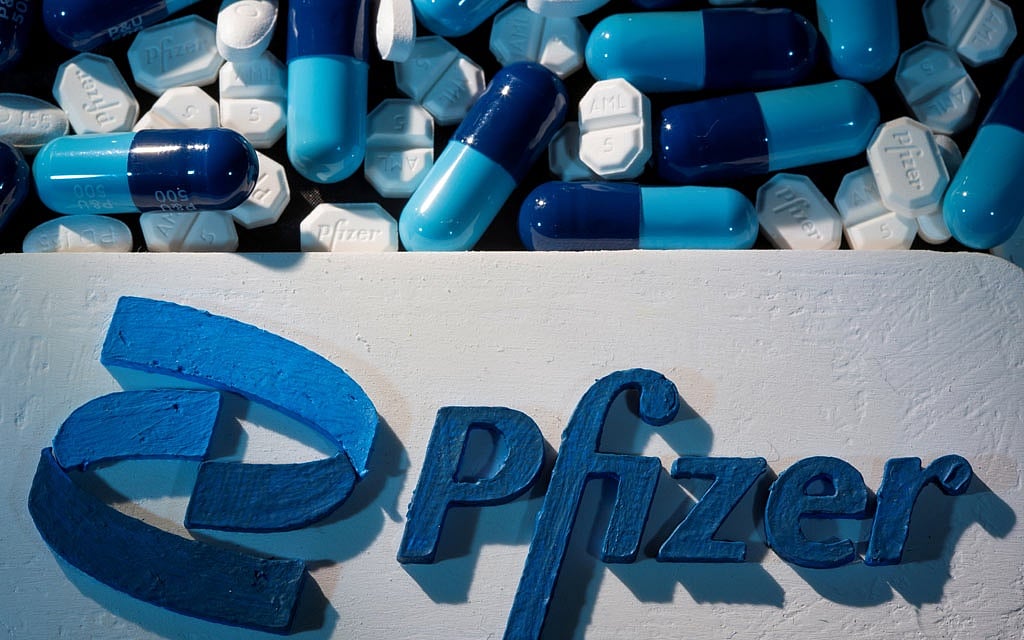
Senior federal health officials are counting on the drug to be a powerful weapon against COVID. When given promptly to trial groups of high-risk unvaccinated people who developed symptoms of the disease, the drug sharply reduced the risk of hospitalisation and death.
Pfizer on Tuesday applied for federal authorisation of the drug on an emergency basis. A similar pill developed by Merck and Ridgeback Biotherapeutics could be authorised as soon as early December, meaning pharmacies could have limited supplies on hand in weeks. Pfizer’s treatment is taken as a regimen of 30 pills over five days; Merck’s requires 40 pills over five days.
The antiviral drugs have helped inspire hope among senior administration officials that the United States will be able to curb the devastating toll from the delta variant and its predecessors. Some experts believe the worst of the coronavirus pandemic has passed in the country, in part because more than 4 out of every 5 Americans ages 12 and older are at least partially vaccinated.
Others say rates of infection have merely plateaued and could easily rebound, especially with the onset of winter. After declining for more than a month, the daily average of cases has started creeping up.
“I do think that these new oral antivirals will change the way that COVID is managed,” said Dr David Dowdy, an associate professor of epidemiology at the Johns Hopkins Bloomberg School of Public Health.
“These will help reduce burden on hospitals and the death toll,” he said, but he added that “even without these pills, those numbers are going down.”
The antiviral drugs are a new class of treatment for COVID that is ultimately expected to reach far more patients than others have. Monoclonal antibody treatments typically require infusions, usually given at outpatient clinics. Antiviral pills, in comparison, are meant to be picked up at pharmacies and taken orally at home.
Their promise depends in part on access to rapid over-the-counter tests, because the pills have proved to work in five days or less after symptoms develop. While the government has pledged $3 billion for rapid tests and the Food and Drug Administration has cleared a dozen of them, a test typically costs about $12 and not everyone can easily obtain one.
One of the newest rapid tests costs $7, though, and by the end of the year the overall supply is projected to be nearly 10 times what it was in August, federal officials said.
“You do have more availability and more coming online,” said Dr Amesh A Adalja, a senior scholar at the Johns Hopkins Center for Health Security.
“But they are still not being used to their full potential,” he added, and “fast testing is going to be critical for those antiviral tests.”
A much bigger obstacle, at least initially, is likely to be availability. Merck is expected to supply enough courses to cover slightly more than 3 million people before February. Pfizer is expected to supply enough to cover about 300,000 people by the end of February, then to sharply increase deliveries.
That means the drug that appeared less effective in studies will be more plentiful at first. The Pfizer pill cut the risk of hospitalisation or death by 89 percent when given within three days after the start of symptoms. The Merck pill was only about 50 percent effective when given within five days of the onset of symptoms, though the different designs and timing of the clinical trials make comparisons imprecise.
Both drugs are geared toward people who are older than 65 or who have medical conditions that put them at higher risk of severe COVID. Pfizer submitted data showing the effectiveness of the treatment only for unvaccinated people at high risk, although officials said the company could submit more data later as clinical trials progress.
Both Pfizer and Merck, which applied for authorisation of its drug last month, said it would be up to the FDA to decide which groups would be eligible to receive the treatments. A panel of experts that advises the FDA on antimicrobial drugs is scheduled to meet at the end of the month to discuss Merck’s drug.
“I think this is a powerful new tool in terms of keeping people alive and out of the hospital,” Dowdy said. “But the people who are going to get these are the people who can get diagnosed quickly and who are enough at risk that someone thinks they might need to get to the hospital.”
Pfizer and Merck plan to ramp up production over the next year. Pfizer has said it expects to be able to produce enough pills to cover more than 21 million people in the first half of next year and 50 million by the end of the year.
Australia and Britain have already snapped up some of the supply. Pfizer said Tuesday that it had reached an agreement to allow other manufacturers to make and sell the pills inexpensively for use in 95 developing countries.
The US government had initially planned to order 1.7 million courses of Pfizer’s treatment, with an additional option for 3.3 million, for about $700 per course. But under the contract for 10 million treatments, the cost is expected to be significantly lower — perhaps as much as $180 less per treatment.
The contract is not yet final, but an announcement is expected this week.
©2021 The New York Times Company













