Published : 25 Mar 2022, 02:02 AM
Updated : 18 Jul 2022, 02:37 PM


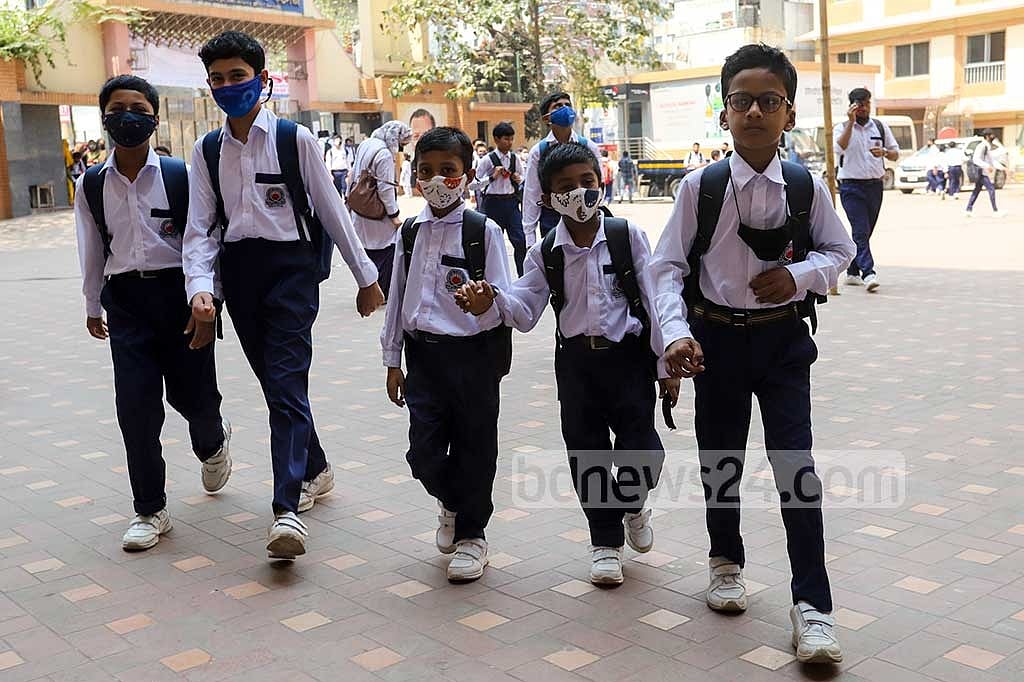
People in Bangladesh are largely reluctant to follow the common rules for reducing the risk infection – such as wearing a mask or avoiding crowds.
With the government nearing the target of vaccination, some experts see a light of hope.
Some others think Bangladesh should also be on guard as many countries around the world are yet to see a fall in infections. China is witnessing a new rise, so is Europe.
According to the latest data released on Thursday, Bangladesh registered 92 new lab-confirmed cases of COVID-19, taking the total caseload from the disease to 1,951,072.
The government recorded no new coronavirus-related death in the 24-hour count, leaving the fatality toll unchanged at 29,118. Two months ago, on Jan 23, the caseload increased by 10,906 with 10 new deaths.
As many as 12,111 samples were tested across the country, for a positivity rate of 0.76 percent, down from record 33.37 percent on Jan 28.
Throughout January, the government confirmed 226,078 coronavirus cases. The number dropped to 132,389 in February. In the 24 days of March until Thursday, 7,495 cases have been detected.
After a study of samples collected from Feb 21-22, the government’s Institute of Epidemiology, Disease Control and Research said all the cases were of the omicron variant, which appears to cause less severe infections.
Omicron's predominance has reduced the chances of a new variant, said Dr Be-nazir Ahmed, a former director of the IEDCR's disease control wing.
With mostly mild symptoms or asymptomatic cases, Dr Be-nazir believes, omicron has led to herd immunity.
“Unless something exceptional like a World War III takes place, it could be the beginning of the end of the pandemic,” he observed.
So far, more than 126.5 million people in Bangladesh have received their first dose of coronavirus vaccine. More than 92.4 million have taken their second dose and over 6.4 million have been given booster shots.
ASM Alamgir, chief scientific officer at IEDCR, said that Bangladesh has vaccinated a large part of its population. Everyone will get their second jabs this month. Bangladesh is in a good position as the infection rate has fallen.
Some countries, including Bangladesh, have vaccinated more than 70 percent of their population, but most countries have failed to do so. So, global herd immunity is unlikely, he warned.
“About a million people are still getting infected by the virus every day [globally] and so the infection may return to Bangladesh. We need to be careful. There is no room for complacency."
According to Professor Nazrul Islam, former vice-chancellor of Bangabandhu Sheikh Mujib Medical University, it cannot be said before the end of March if the pandemic is ending for Bangladesh.
He, however, believes large-scale infections may not recur as many people have been vaccinated against the coronavirus. “My guess is that the severity of the infection has decreased because of the vaccination.”
Citing data from the World Health Organization, former IEDCR director Meerjady Sabrina Flora said that the infection is said to be under control if the detection rate remains below five percent for two consecutive weeks. And, that is the case now in Bangladesh.
The COVID beds in hospitals are now being used for non-COVID patients as the number of patients has come down, she said.
The Directorate General of Health Services has made arrangements to use them again in case the infection spikes again, said Sabrina, now an additional director general at the DGHS.
“Overall, Bangladesh is in a very good position. But the end of the pandemic cannot be announced just yet since patients are still being found in many parts of the world.”
“The pandemic may end, but the virus will stay,” she said. “Maybe the fatality will decrease. But we’ve to keep following health rules.”