


Published : 01 Apr 2021, 04:16 AM
Updated : 14 Oct 2022, 06:30 PM


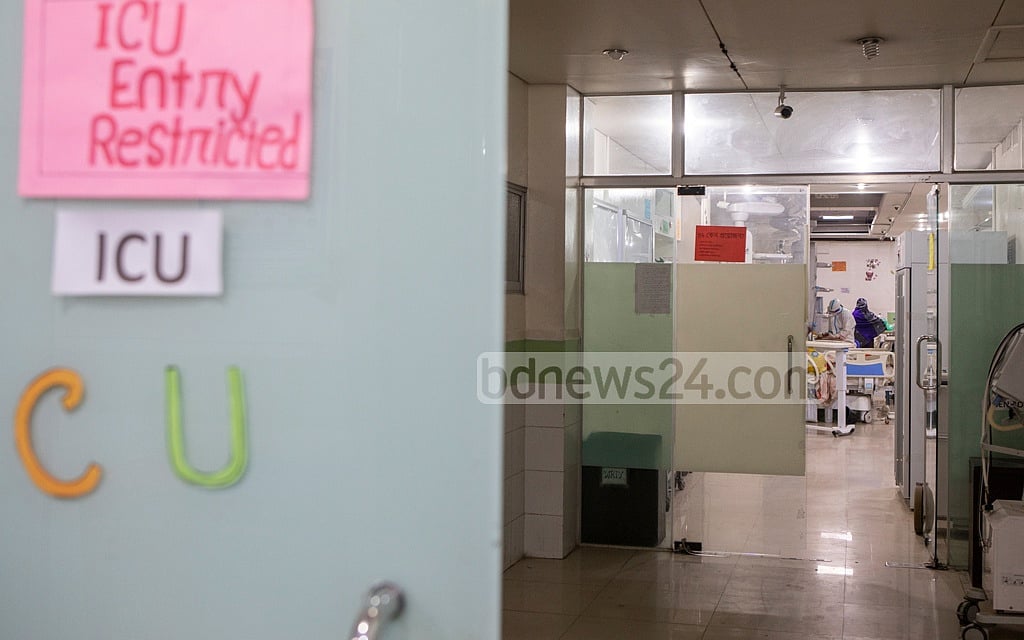
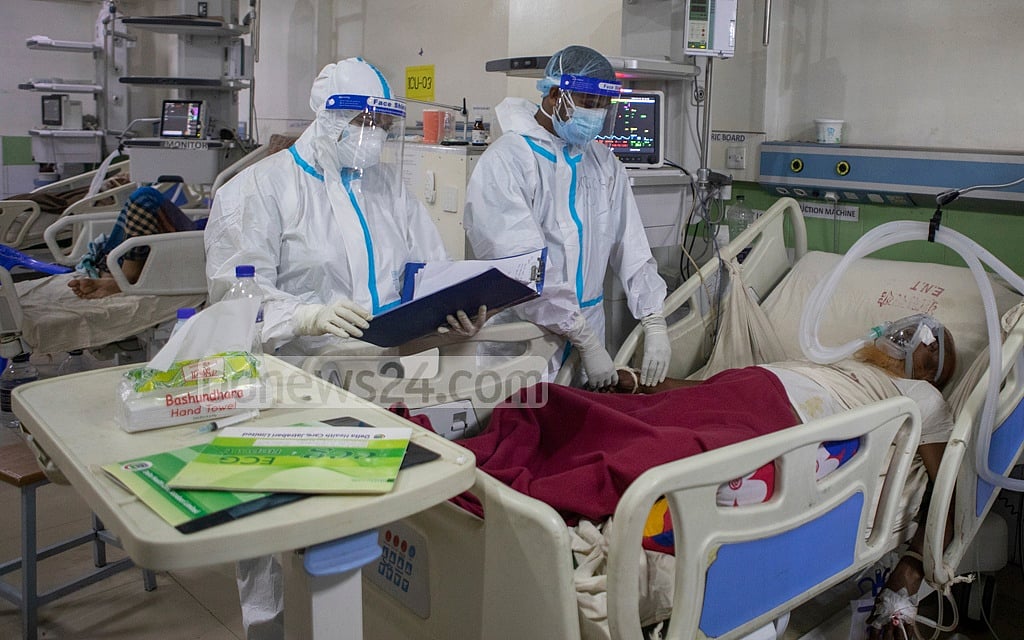
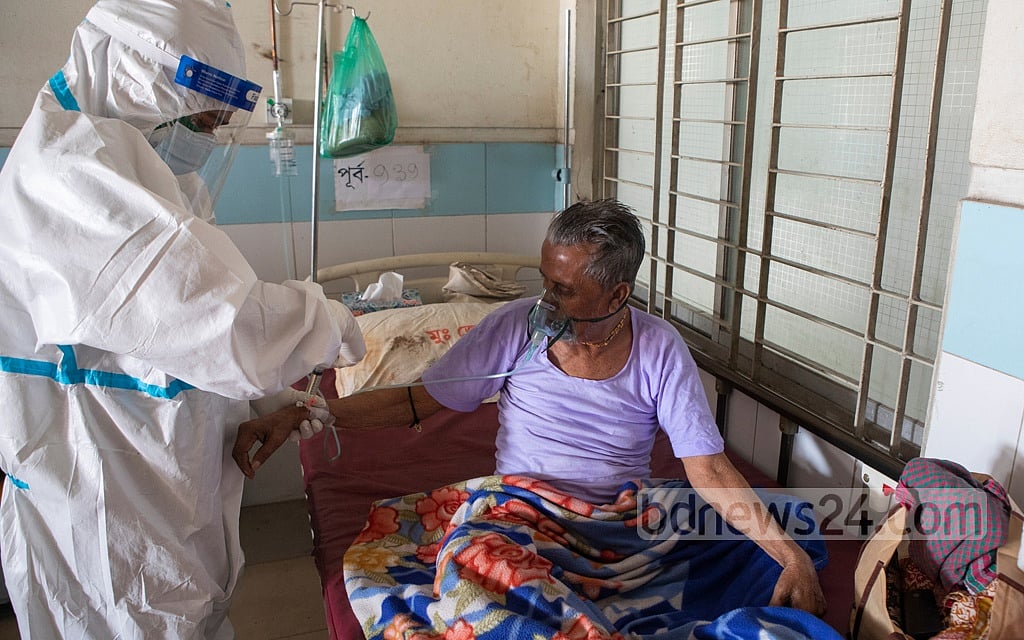
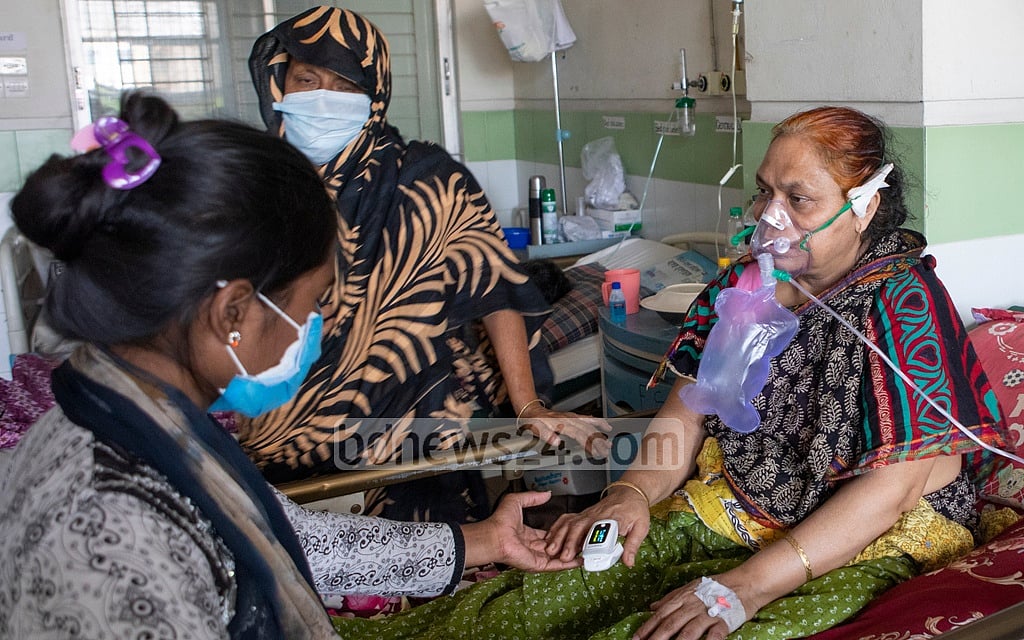
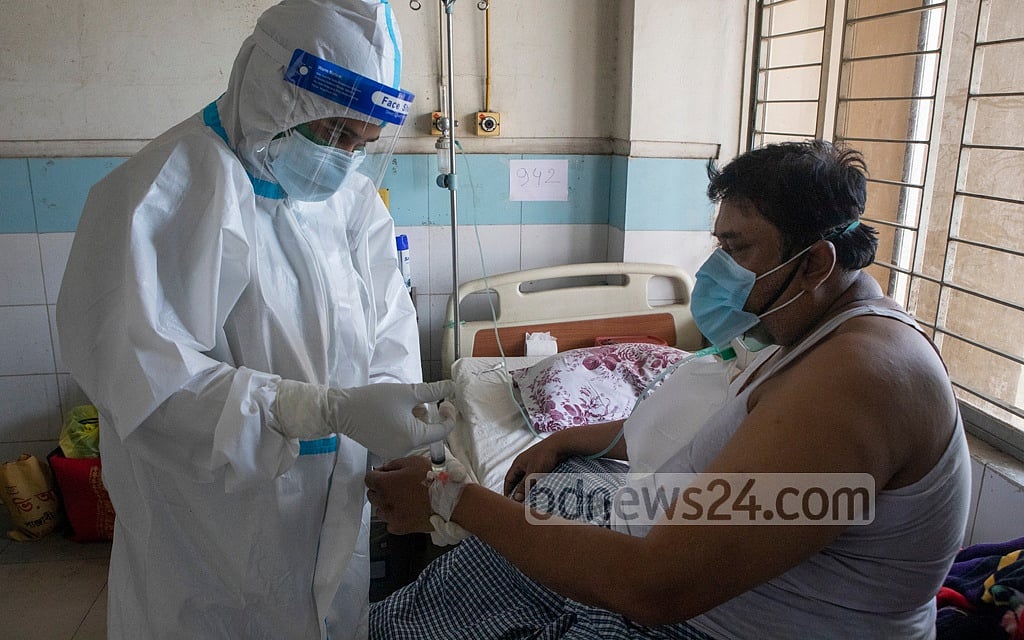
But all the ICU beds at the hospital were filled up. So Morshed began contacting other hospitals in the capital for his wife’s intensive care, and was terrified to learn that none of them had a single ICU bed free in their coronavirus units. He left his phone number at the hospitals in case a bed is available.
Finally, a hospital on Green Road called telling him that they have a seat.
“We needed to swiftly admit her there, otherwise some other patient would get in,” Morshed.
Scores of families like the Morshed’s are struggling to get their loved ones hospitalised with severe COVID symptoms, especially for intensive care, in Dhaka with Bangladesh in the grip of a renewed wave of coronavirus.
The death toll climbed to 9,046 after 52 fatalities, the highest daily tally since Aug 26, were registered in 24 hours to 8am on Wednesday.
Doctors said the surging rate of infection is piling more pressure on the hospitals and it will be difficult to take patients in if the surge continues.
As many as 13.38 percent of the beds in hospitals around the country were occupied on Feb 28. The rate leaped to 40 percent on Wednesday.
The occupancy of ICU beds rose to 65 percent on Wednesday from 25.26 percent on Feb 28.
The hospitals in Dhaka are comparatively under more strain. Out of the 2,511 general beds in the 10 government hospitals treating COVID patients, 265 were vacant while only five of 108 beds were without a patient, according to data gathered by the Directorate General of Health Services.
Kuwait Bangladesh Friendship Hospital, Kurmitola General Hospital, Government Employee Hospital, Dhaka Medical College Hospital and Bangabandhu Sheikh Mujib Medical University had no ICU bed vacant on Wednesday.
Brig Gen Md Nazmul Haque, director of DMCH, said there will be more pressure on the ICU in the week to come given the alarming rate at which patients are being diagnosed with COVID-19.
Citing international studies, he said about one percent of the over 5,000 COVID-19 patients daily will be in critical condition and could require ICU and High Dependency Unit support after 10 days from infection.
“How are we supposed to give them space?” he wondered with desperation in his voice.
“Wehad no idea about this a month ago. It has come to this because we are not following the health rules. Infection rate has soared like this because we became too complacent. There is still time, we have to be cautious,” he warned.
Brig Gen Nazmul also pointed out that the health workers at the hospital were overtaxed because it is difficult to handle such a huge pressure of patient care. “Still, we have to send patients away due to a lack of oxygen supply.”
Dr Asim Kumar Nath, director of Mugda General Hospital, said they have had no vacant bed at the ICU since Mar 9 as new patients kept being admitted. “Now we receive requests for ICU beds everyday. And talking about the general wards, there are vacancies, but the rate of admission has gone up four times.”
Dr Md Khalilur Rahman, director of Shaheed Suhrawardy Medical College Hospital, said situation was worsening by the day.
The hospital is launching a 10-bed ICU unit and raising the number of beds in its COVID unit to 200 from 150.
Khalilur said the hospital may start treating COVID patients only, closing other units, soon following government instructions if the situation continues to deteriorate.
The private hospitals are facing a similar crisis.
Dr Arif Mahmud, senior general manager of Evercare Hospital, said the COVID unit had been empty for several weeks but patients began pouring in on Mar 19.
None of its 28 cabins and 12 ICU beds were available. They were unable to respond to admission requests being made by relatives of many patients.
Those who are arriving now are mostly young, and there is another group who are getting infected three to four weeks after taking their first shot of the vaccine, he pointed out.
“There’s no seat vacant in the ICU. I can’t give you one if you ask for it now. I’m afraid to pick up the phone nbecause I have to say 'no'. It’s very hard,” said Shagufa Anwar, chief of communications and business development at United Hospital.
Farid Hossain Mia, a director at the DGHS, said the hospitals have raised the number of ICU beds and would add more. “But we will need sufficient workforce to run the ICUs. We are working on it."
The fresh surge in coronavirus cases, he said, still brings danger. “The number of patients increased slowly last year. It’s rising rapidly this time,” Farid said.
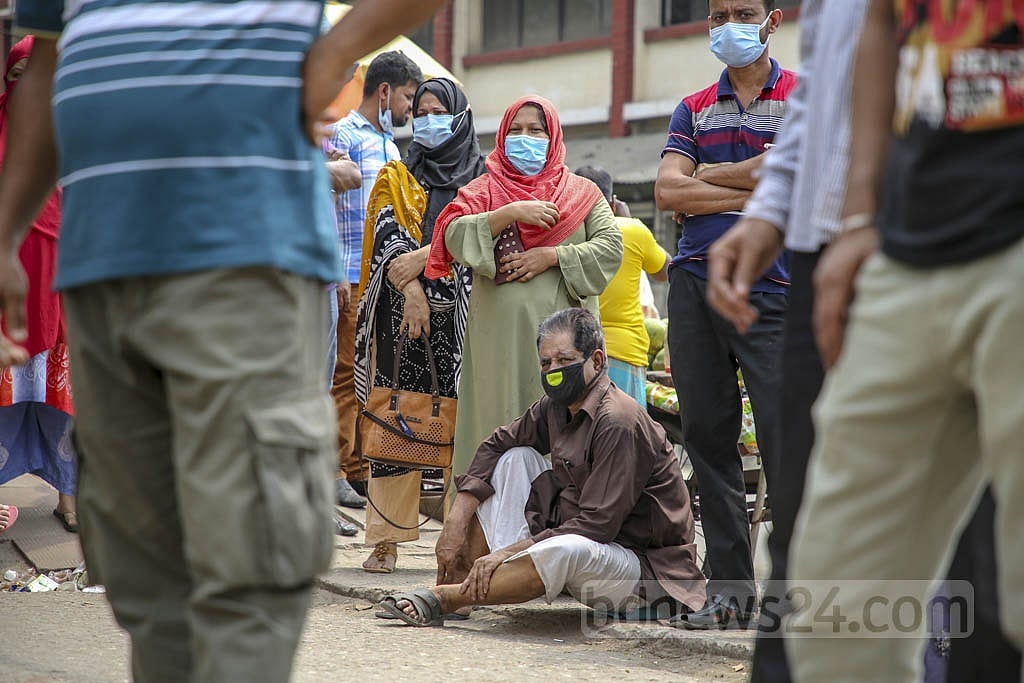
The number of suspected coronavirus patients seeking tests rose significantly at Mugda Medical College Hospital in Dhaka on Wednesday, Mar 31, 2021 as infections surged across Bangladesh.
Khalilur, the director of Shaheed Suhrawardy hospital, said the authorities must force everyone to follow the health rules – wearing masks, washing hands with soap and water or sanitiser, and maintaining physical distancing.
The people have to stay alert as well. They need to avoid going out unless absolutely necessary, avoid social programmes, and be on the guard at all times, especially during travel or commute.
Dr Mushtuq Husain, who advises the government on COVID-19, said the government must ensure isolation of all the suspected patients and quarantine the families of the patients who test positive, with support if necessary.
“The low-income people need attention. These are difficult steps, but not impossible. We must do this, otherwise, raising ICU beds won’t help,” he added.













