


Published : 21 Mar 2016, 10:24 PM
Updated : 19 Oct 2022, 05:10 PM


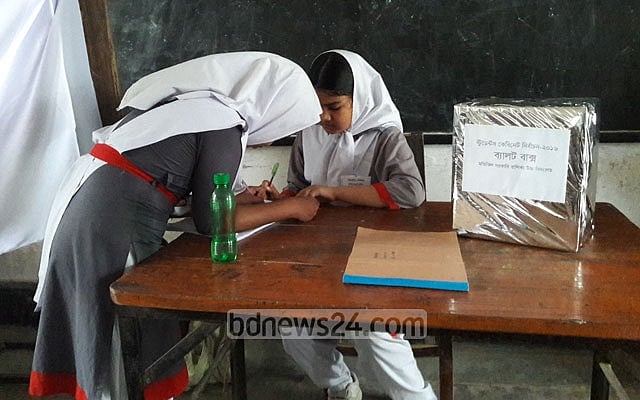
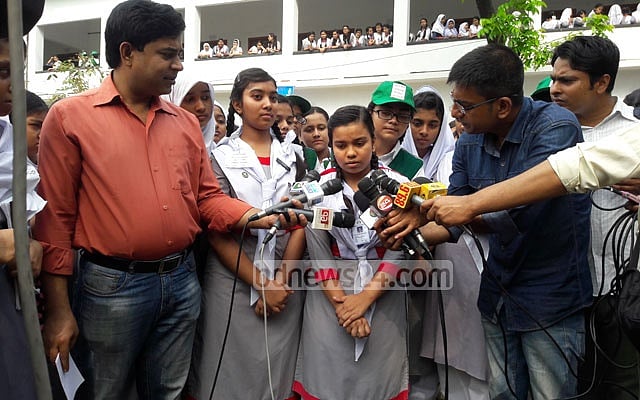
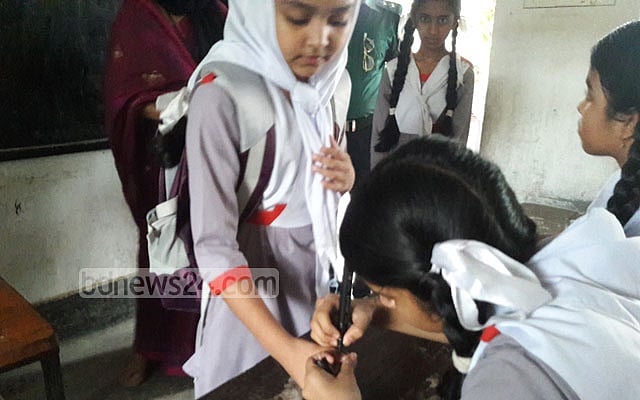
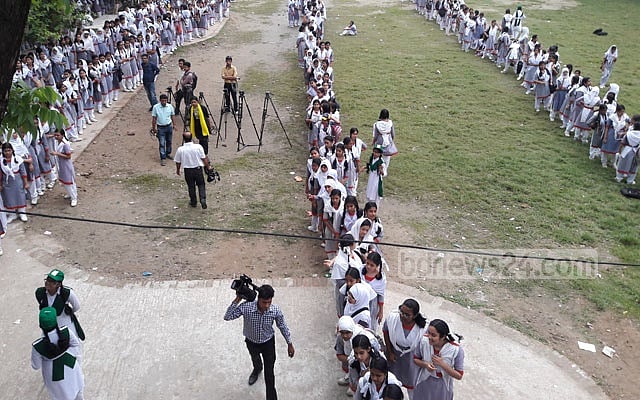
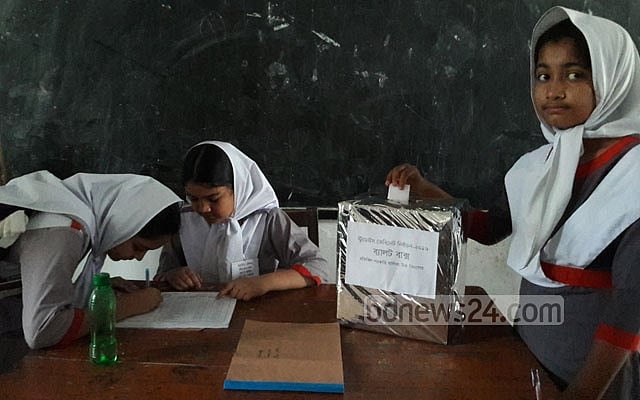
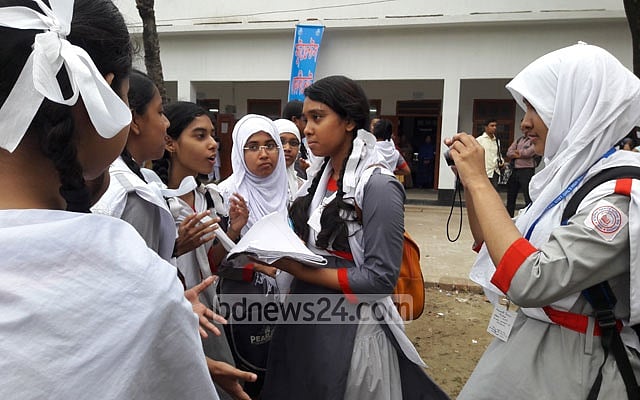
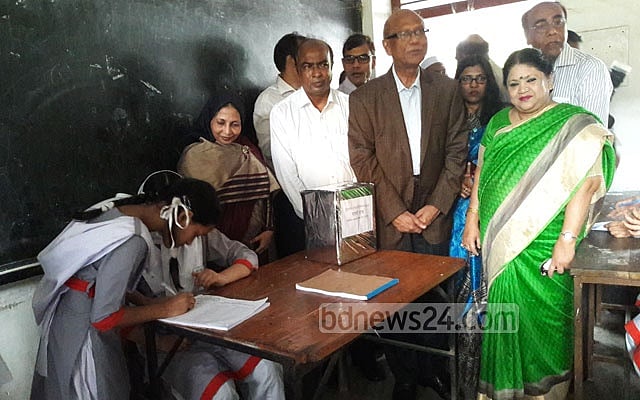
The chief election commissioner, the returning officer, polling officer, presiding officers, polling agents, police and journalists were all there.
But there was a difference – all these poll personnel were schoolchildren playing their part in school elections and not imposing officers.
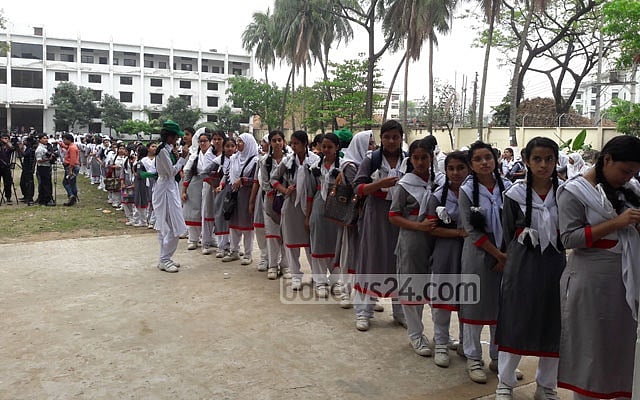
The Motijheel Government Girls’ High School that held its Students Cabinet polls along with 16,424 high schools and 6,567 dakhil madrasas across the country, hummed with excitement all through Monday.
Long queues of enthusiastic voters had formed well before polling started at 9am. The school had 1,639 voters. There were 10 booths.
Election information
# Elections were held in 22,911 secondary-level schools and madrasas.
# A total of 9,744,495 voters were enlisted.
# 500,000 contested for 183,928 posts.
A teacher of the Motijheel school said the students were allowed to take out processions in support of candidates during the recess and the following period on Sunday.
“They were very excited,” she said.
While students from grades six to 10 took part in the voting, those of grades three to five took part in the campaign, she said.
The supporters hung handwritten posters and distributed leaflets.
Presiding Officer Nabiha Jaman Jaima, a sixth-grader, said, “Everything is all right.”
Fifty students were on police duty. One of them, Sajnin Arefin Ritu, said, “Policing is a good job if you do it right.”
The contenders had to stay in a room from the time the voting started.
What is Students Cabinet? >> Secondary students elect eight-member cabinets for a year in each institution. >> All students from grades six to 10 are the voters. Any of the voters can fight for posts. >> Every voter casts five votes to elect class leaders from grades six to 10. They also cast votes for three more posts. >> A cabinet is formed with the five class leaders and those elected for the three other posts. |
What will the cabinets do? >> The cabinets will work on environment, books and learning materials, sports, culture, water resources, gardening, the observation of national days, the holding of programmes, and information and communication technology. >> The cabinets will hold at least one meeting per month. The teachers will advise them to make and implement decisions. >> A general meeting with all the students will be held every six months. |
Why Students Cabinet? >> The education ministry says the Students Cabinet elections aim at exercising democracy, creating tolerance and prevent dropout. >> Last year, Minister Nahid said, “The students should learn politics. No one will be able to become a leader without acquiring modern knowledge. |
Candidate Mahjabin Hossain said she was initially a ‘bit nervous’. “But whatever the results, there will be no problem,” she assured.
Nuruddin Mia, a guardian, told bdnews24.com outside the school that he had to take his daughter to the school early in the morning.
Chief Election Commissioner Ruqaia Alam Moon said she was ‘honoured’ to get the post.
Asked if there was any problem, she said, “No.”
The Election Commission cancelled the nomination of 12 candidates, she said.
Nahid said he wanted the students to be ready to run the country.
Last year, Students Cabinet polls had been experimentally held in 1,043 secondary-level institutions.
At the primary level, such elections have been held since 2010.












