Published : 30 Sep 2026, 09:29 AM
Updated : 30 Sep 2026, 09:29 AM


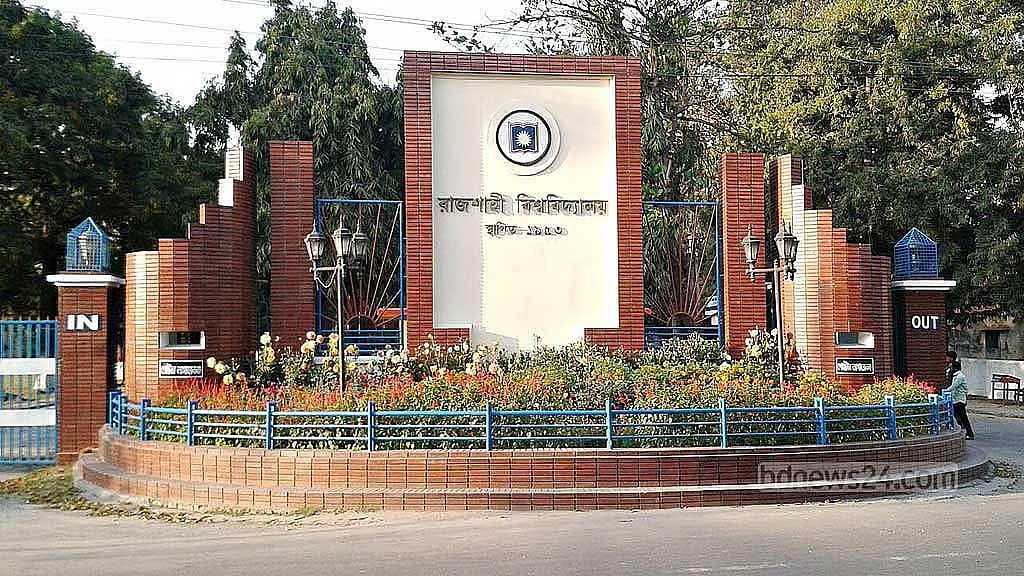
Departments at Rajshahi University (RU) have been charging wildly different fees for exam form submissions, improvement exams and other purposes in the absence of any central policy.
Even for identical exams, fees vary from one department to another.
Some departments charge per course, others by exam duration, and others still a flat rate, according to a review of form-fill notices from different faculties.
Students have also alleged extra charges under headings such as departmental development, departmental associations and cultural activities.
The university has 59 departments under 12 faculties, according to data. Students pay a range of prescribed fees when enrolling for a new academic year.
These include monthly tuition, library and seminar books, transport, student union, sports, newspaper, health check-ups, student assistance and welfare funds, Rajshahi University Sports Council, Rover Scouts and Rangers, cultural activities, Bangladesh National Cadet Corps (BNCC), Teacher-Student Cultural Centre (TSCC), and library development.
They also cover observance of national and university days, “Zoha Day” and Intellectuals Day, internet, data storage and management at the computer centre, internet connection and maintenance, and health insurance.
Resident and non-resident students are also charged hall fees, union fees, sports fees, religious activity fees, student welfare fund fees and festival fees.
Beyond these fixed fees, departments have been accused of collecting additional fees for different purposes since there is no central policy governing how much departments can charge, leaving each to set its own rates.
Departments also do not clearly explain what the collected money is spent on.
No Policy on Exam Fees
An analysis of exam-form notices from departments under different faculties shows wide variations in fees.
Some departments charge Tk 50 per hour for three-hour theoretical exams and Tk 60 per hour for exams lasting more than three hours.
Several departments under the Faculty of Social Science charge Tk 100 per course for a three-hour exam.
Most departments charge Tk 50 for oral examinations.
Practical exam fees, however, vary sharply: some departments charge Tk 20 per hour, while the Faculty of Fine Arts charges Tk 100. Several departments charge Tk 500 to Tk 1,000 for an entire practical examination.
Departmental notices also show students being charged every semester for sports, department development, student welfare funds, cultural activities, tutorials and miscellaneous expenses.
Under university rules, students with 60 to 75 percent attendance are considered non-collegiate and can sit for exams after paying a prescribed penalty.
Those with attendance below 60 percent are considered dis-collegiate and generally cannot sit for the semester’s final examination.
The university sets the additional penalty for non-collegiate students at Tk 500, but some departments charge Tk 600 to Tk 700.
The Faculty of Business Studies’ ordinance sets the non-collegiate fee at Tk 1,000.
Despite being under the faculty, the finance department charges Tk 2,500.
There are also allegations that dis-collegiate students are allowed to sit for examinations after paying Tk 4,000 to Tk 5,000.
Finance Department Chairman Prof ASM Kamruzzaman said he did not know how much non-collegiate students paid and denied that dis-collegiate students were allowed to sit for exams.
“I don’t know how much non-collegiate students pay. We don’t allow dis-collegiate students to sit for exams. This is a false allegation,” he said.
University Vice-Chancellor Prof Faridul Islam, who is serving as dean of the Faculty of Business Studies, said he had not previously been informed about the matter and would investigate it.
He said any illegal practice would not be allowed to continue.
Meanwhile, the Department of Persian and Language Literature under the Faculty of Arts is accused of collecting Tk 1,000 per semester as a department development fee without issuing a specific notice.
Students said they cannot complete their exam forms until the money is deposited at the bank.
This amounts to Tk 2,000 a year per student. Several students said they were unhappy about the charge but feared that protesting could affect their examination results.
A student said they felt dependent on the department because they had to pay the extra Tk 1,000 every semester and feared repercussions in their exam scripts if they raised objections.
Faculty of Arts Dean Prof Belal Hossain said he would look into the matter and try to formulate a policy with the heads of all departments under his faculty.
‘Uncontrolled’ Improvement Exam Fees
University rules allow students to sit for improvement examinations if they obtain a CGPA of 2.75 or lower in a course in a semester. But fees for such exams also vary widely between departments.
An analysis of improvement exam fees shows charges ranging from Tk 100 to nearly Tk 2,000.
A recent finance department notice for first-year, first-semester exam forms requires students seeking an improvement exam to deposit Tk 1,500 in the department chairman’s name.
Students said they must then pay another Tk 100 for each course.
The charge has caused discontent among some students.
A finance department student said other departments charge Tk 100 to Tk 500, while finance students have to pay more than Tk 1,500, putting additional financial pressure on them.
Prof Kamruzzaman said the higher fee was intended to discourage students from taking improvement exams too frequently.
He said the fee had previously been Tk 1,000 and was raised by Tk 500 because the number of students seeking improvement exams had increased.
Calling the practice of depositing money in the chairman’s name unethical, University Pro-Vice Chancellor (Education) Prof Mamunur Rashid said there should be no separate fund in the chairman’s name and that holding money this way was unjustified.
Fees Collected For ‘Associations’
An analysis of departmental exam-form notices shows that students are also charged a fixed fee for departmental associations every semester.
Such fees are collected by departments including physics, law and land administration, chemistry, management, statistics, Urdu, philosophy and anthropology.
Students taking improvement exams are also required to pay the fee again.
The annual charge ranges from Tk 500 to Tk 1,000, depending on the department.
The money is collected for departmental festivals, sports and cultural events, but many students have expressed dissatisfaction.
One student said the annual association fee is reportedly used for national-day observances, picnics and sports competitions.
The student questioned why the associations collect separate fees when the university administration already provides budgets for national-day events and sports competitions.
What the Administration Says
Prof Hasnat Kabir, head of the university’s Controller of Examinations office, said departments generally set semester examination fees based on factors such as the type of course and whether it includes practical work.
He said variations in fees arise because the faculties have no central policy governing such charges.
Pro-Vice Chancellor Prof Rashid said fees set by departments for their own needs would have to be considered separately, but additional charges imposed on students for examinations would not be acceptable.
He said a common policy for fee-setting across the university’s 12 faculties would bring greater consistency.
The administration will also examine whether any department is charging more than the prescribed amount, he said.