


Published : 24 Feb 2022, 09:43 PM
Updated : 03 Aug 2022, 11:34 AM


Wall Street was poised for a slide when trading begins, with futures pointing to a 2.5 percent drop in the S&P 500.
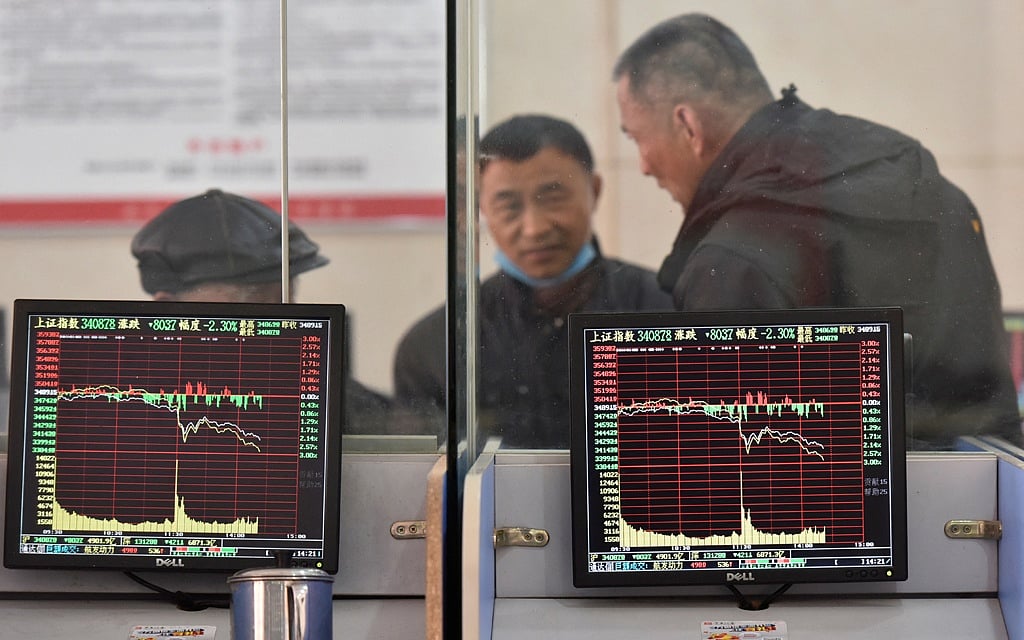
The devastation in financial and commodity markets from Russia’s overnight attack was immediate and broad, starting in Asia’s markets, where the Hang Seng in Hong Kong lost 3.2 percent.
By midday in Europe, Germany’s DAX index had fallen nearly 5 percent, and the broader Stoxx Europe 600 was 3.8 percent lower.
The price of Brent crude oil, the global benchmark, rose more than 8 percent to $105.32 a barrel. West Texas Intermediate crude also jumped 8 percent, moving above $100 a barrel for the first time in more than seven years.
Dutch front-month gas futures, a European benchmark for natural gas, jumped 31 percent when trading started, to about 116.5 euros a megawatt-hour. Russia provides more than a third of the European Union’s gas, with some of it running through pipelines in Ukraine.
With more severe financial sections against Russia in the works, global bank stocks were falling faster than the markets overall. Shares of European banks with the biggest Russian operations plunged: Austria’s Raiffeisen was down 17 percent, while Italy’s UniCredit and France’s Société Générale both lost about 11 percent of their value in early trading
In Moscow, stocks collapsed and the ruble fell to an all-time low against the dollar. The MOEX Russia equities index lost nearly a third of its value. The Russian stock exchange resumed trading at 10 am local time after suspending the session earlier in the day.
Global markets had broadly been souring in recent days. The Stoxx Europe 600 reversed early gains to fall 0.3 percent on Wednesday. The S&P 500 notched its fourth consecutive day of losses, losing 1.8 percent and sliding deeper into correction territory — a drop of more than 10 percent from a recent high. It is now 11.9% off its Jan. 3 peak.
The news from Ukraine turned increasingly dire Thursday. Russian President Vladimir Putin ordered the start of a “special military operation,” and Ukraine’s government confirmed that several cities were under attack. Cyberattacks also knocked out government institutions in Ukraine.
A full-scale invasion could have broad effects on commodities, including oil, natural gas, wheat and metals. Europe is hugely reliant on Russia for energy, and parts of the Middle East and Africa receive most of their wheat from Russia and Ukraine. Even if supply chains remain intact and Russia’s exports are not affected by sanctions, there are concerns that Putin could punitively cut off supplies.
Few of Russia’s exports head directly to the United States, but disruptions anywhere could drive up prices, prolonging the inflation that already has dragged on longer than officials had anticipated. The Federal Reserve has indicated it is preparing to raise interest rates, aiming to slow inflation by slowing spending, giving supply time to catch up. But higher rates will also dampen growth, and doing so while the markets are already declining risks prolonging the downturn.
US stocks had been flirting with a correction for weeks, as investors fretted over how quickly the Federal Reserve would raise rates. The S&P 500, the US bench mark, had fallen past the 10 percent threshold multiple times in intraday trading but had risen by the end of trading. Technology stocks in particular have fallen far off their highs, and the tech-heavy Nasdaq composite is 18.8 percent below its November record. It is nearing a drop that indicates an even worse change in sentiment on Wall Street: a bear market, or a decline of 20 percent.
© 2022 The New York Times Company













