


Published : 29 May 2019, 01:17 PM
Updated : 17 Oct 2022, 11:40 AM


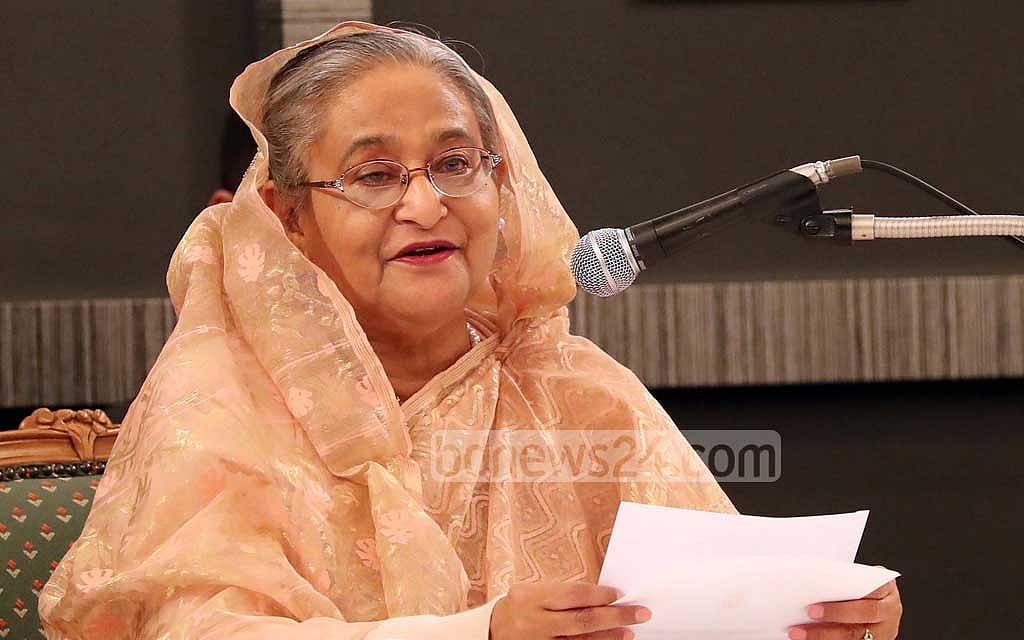
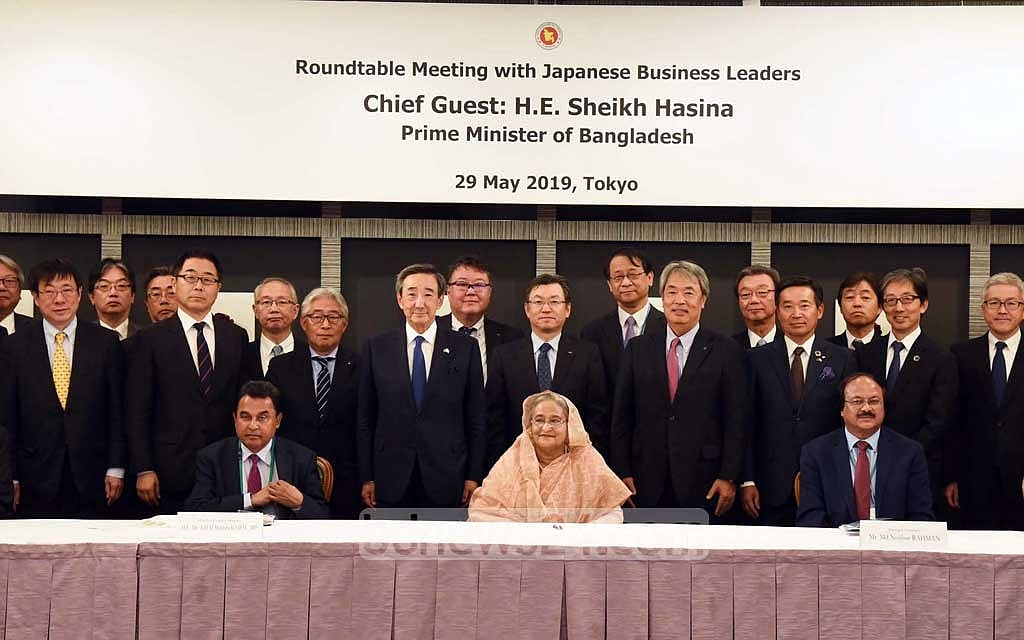
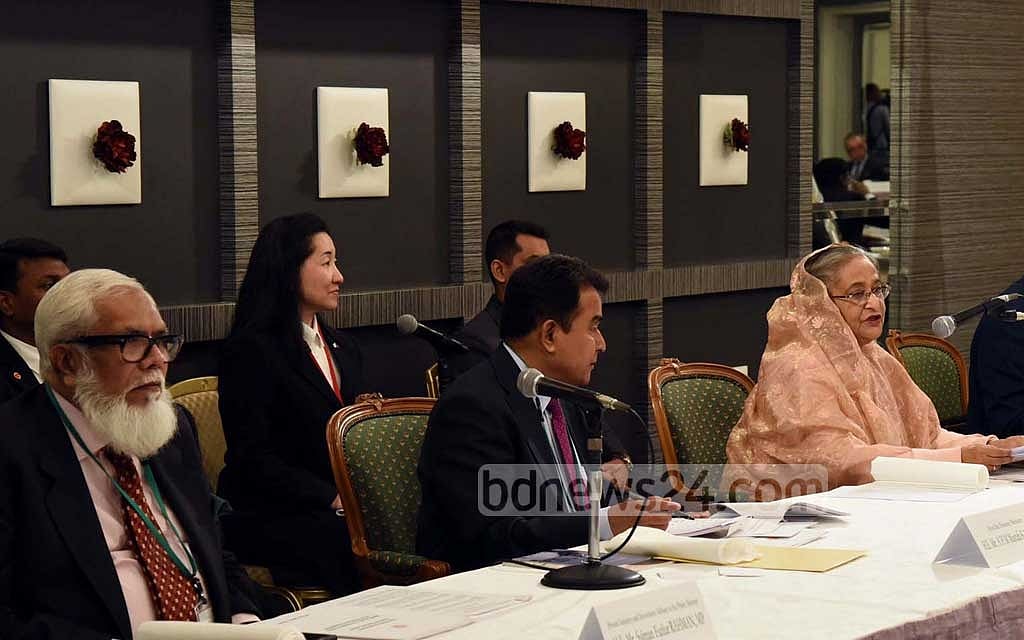
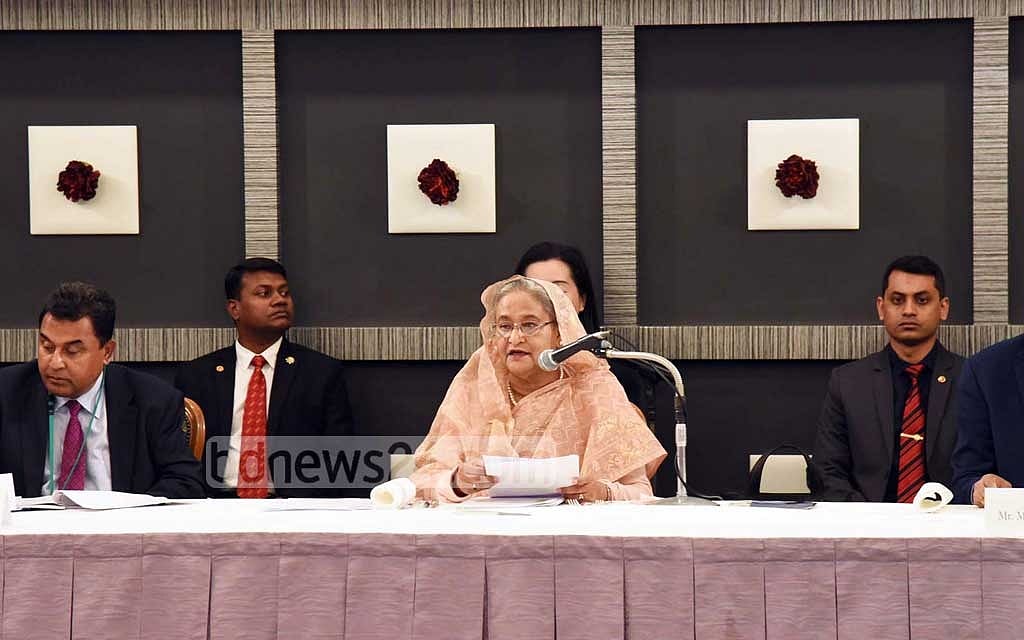
She was addressing the Bangladesh-Japan Business Forum meeting at Tokyo's Hotel New Otani on Wednesday. Business leaders from both countries attended the conference.
“I invite you to explore the full potentials of business and trade relations with Bangladesh,” said Sheikh Hasina as she mentioned the great bilateral relationship between the nations.
She also urged Japanese investors to invest in new sectors in Bangladesh.
The prime minister highlighted the increased investment, business growth and the measures taken by her government to expand trade in Bangladesh.
Since her last address to the forum in 2016, the bilateral ties between Bangladesh and Japan have grown significantly, with a number of Japanese companies registering an interest to do business in the South Asian country, Hasina observed.
“Beside trading, these companies are also involved in various infrastructural development projects. Japan in now our top export destination in Asia,” she said.
“All these have led Bangladesh to be the 2nd largest economy in South Asia and 41st in the world in terms of nominal GDP. This year, our GDP growth is poised to hit a record 8.13 percent. And if the current trend of growth continues, we are confident that Bangladesh will attain double-digit growth rate soon.”
Price Waterhouse Coopers in a report listed Bangladesh among the top 32 countries which will be the biggest and most powerful economies in 2050, she said.
Rapid expansion of the industrial sector enabled us to double our annual export earnings to USD 36.67 billion in just five years, Hasina added.
The McKinsey & Company has dubbed Bangladesh as one of the fastest growing sourcing destinations, emerging manufacturing and distribution hubs, and an expanding consumption economy, she continued.
Japan's external trade organisation JETRO in a recent survey ranked Bangladesh as the highest in terms of future expansions among Japanese companies in the region.
"The private sector is the main engine of the economy in Bangladesh and the government has given top priority to entrepreneurship development and private investments, both domestic and foreign," said Hasina.
The government is establishing 100 Special Economic Zones throughout the country, including one exclusively for Japanese investors at Araihazar, she stressed.
Bangabandhu Sheikh Mujib Shilpanagar in Chottagram has plenty of land for establishment of Economic Zones under G2G basis and Public Private Partnership model.
She also invited Japan to support the Moheshkhali-Matarbari Integrated Infrastructure Development Initiative (MIDI) for logistics hub, power and energy hub and water front industry hub.
Hasina also mentioned the Bangladesh's initiative to develop IT instrastructure under which, two software technology parks and 26 high-tech, software technology parks are currently under construction.
“Software is yet another promising industry in Bangladesh. Among 800 Software and IT companies of Bangladesh, over 150 are specialised in serving overseas’ clients. More than 20,000 Bangladeshi IT professionals are working in various reputed IT companies all over the world, including Microsoft, Intel, IBM, Oracle and Cisco,” said Hasina.
It also offers hundred percent foreign equity, unrestricted exit, full repatriation of dividend and capital as it enjoys preferential access to most of the leading world markets, including EU, Canada, and Japan, Hasina added.
“Success of our ready-made garments sector is globally known. We are the second largest readymade garments exporter in the world, after China. Apparel is our number one export product to Japan."
Bangladesh is now a major global hub for quality medicine exporting medicines to more than 100 countries, including USA, UK, Australia and Africa, she said.
Bangladesh's ship-building industry has also drawn global attention by producing world-class ocean-going vessels. Bangladeshi companies have supplied passenger and cargo ships to 14 countries in Europe.
She also mentioned agro-based products, Jute Goods, home appliances, light engineering products, leather products, pharmaceuticals, and electronic gadgets making a mark in the world market.
The prime minister assured the Japanese business community of trade security in Bangladesh.
At least nine Japanese businessmen and investors spoke on the occasion. They were- Japan Bangladesh Committee for Commercial and Cooperation Chairman Terao Asada, JICA executive vice president, JETRO president, Sumihito Corporation president and CEO, executive vice president of Mitsui and Co Limited, senior managing executive officer of Sojits Corporation, vice president of Mitsubishi Motors, managing officer of Honda Motors and president of Maruhisa Corporation.
FBCCI President Sheikh Fazle Fahim, BGMEA President Rubana Haque and MCCI President Nihad Kabir spoke among the Bangladeshi business leaders.
Finance Minister AHM Mustafa Kamal, Prime Minister’s Private and Investment Sector Adviser Salman F Rahman and Principal Secretary to the Prime Minister Nazibur Rahman were also in attendance.













