


Published : 11 Nov 2020, 03:02 AM
Updated : 17 Oct 2022, 11:15 AM


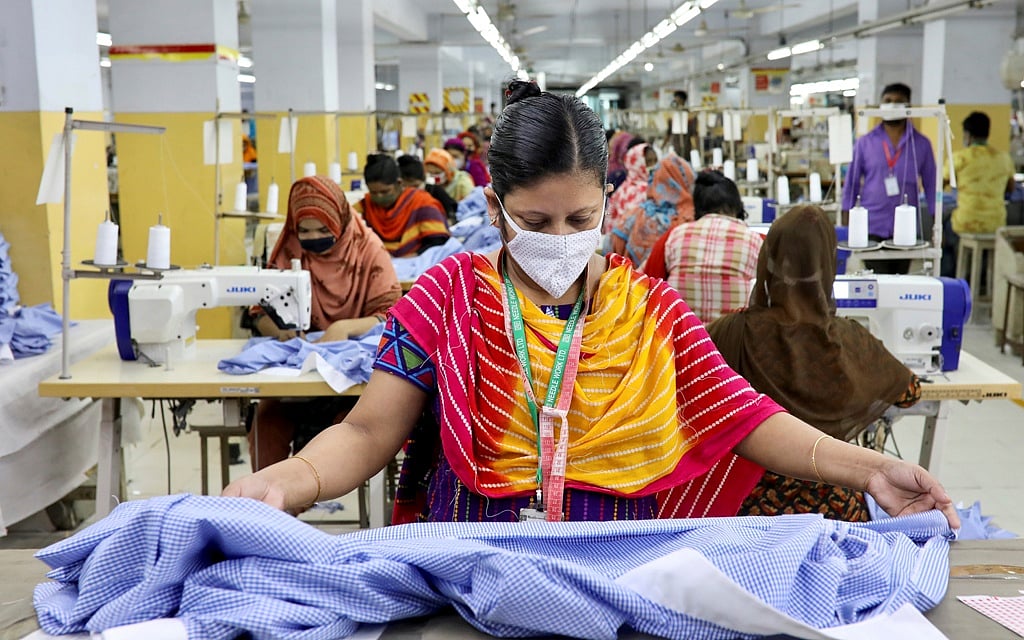
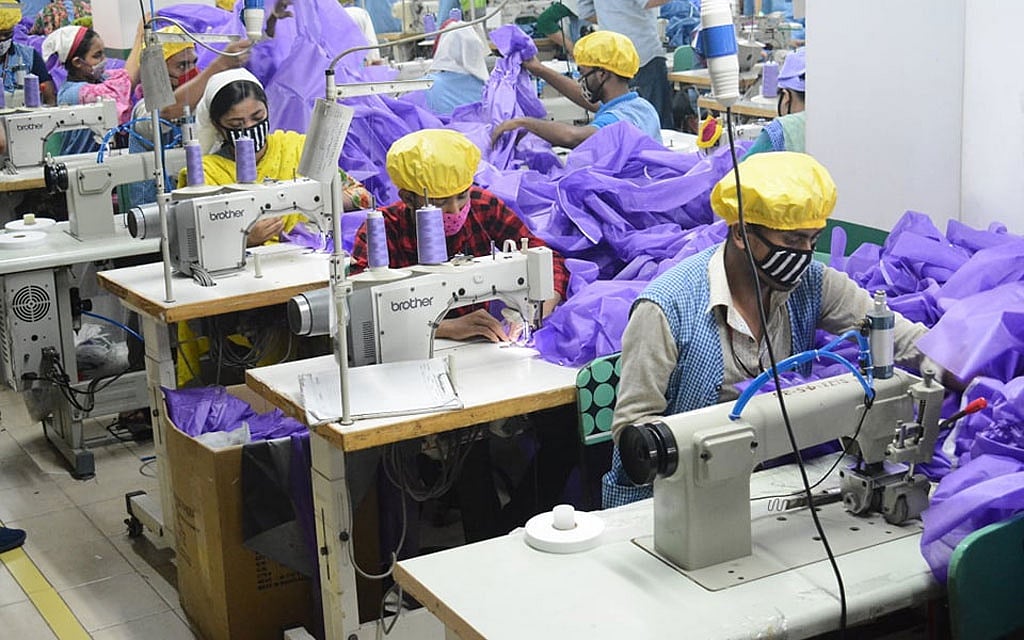

The apparel sector posted growth in export in August and September after several months, but returned to the negative zone in October.
A drop in the product price against rising production costs has also hit the industry, according to the exporters. New work orders dropped in November and December in comparison with the same period last year, the entrepreneurs said.
“Of course we are worried - we have to observe the situation with caution,” said Rubana Huq, president of garment exporters' lobby Bangladesh Garment Manufacturers and Exporters Association or BGMEA.
Bangladesh exported garments worth $34 billion, or about 84 percent of the total export earnings, in 2018-19.
With help from the government’s stimulus package to soften the blows of the pandemic and the restart of the economies, the sector began turning around, said analysts.
As the industry is facing more novel challenges now, the authorities should design a new plan evaluating the previous initiatives, the analysts said.
EXPORT SITUATION
Bangladesh’s export earnings began to dip in March 2020, with RMG export dropping to $2.25 billion that from $2.82 billion in the same month last year, after the pandemic began in China in late 2019.
The factories were finally closed in late March with shipments halted. Garment exports plummeted by 85 percent year on year to only $370 million in April.
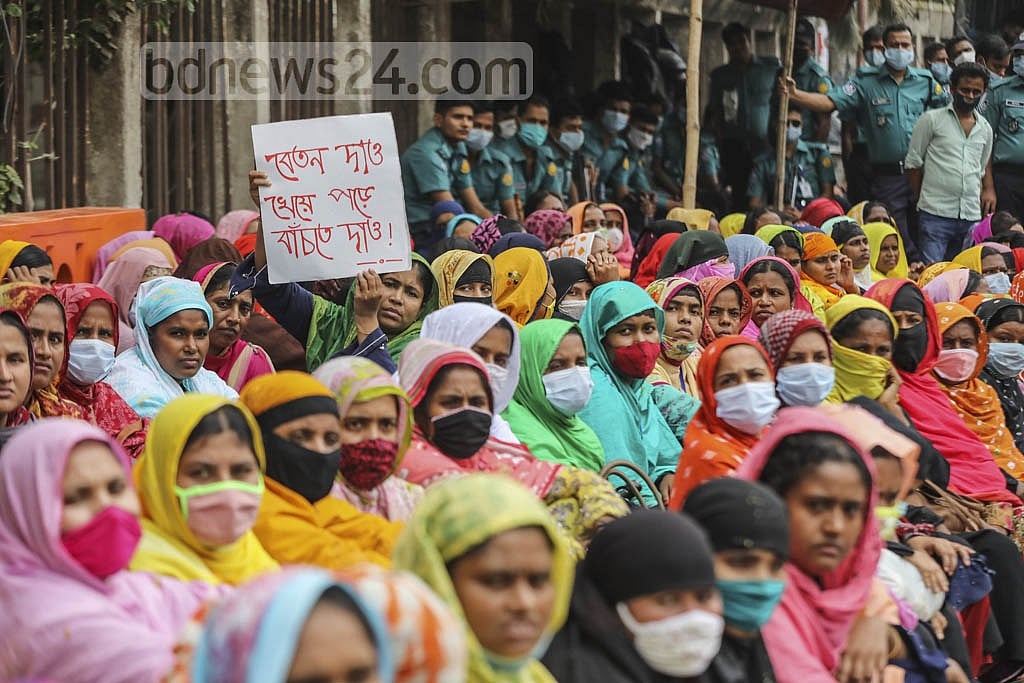
Workers stage protest in a garment factory in EPZ in September over back pay.
Exports in the sector bounced back to growth in July and August bringing relief to the factory owners after a 6 percent negative growth in June.
Garment exporters, however, are losing hope again with the 7.78 negative growth in October.
Woven garments could not be exported much in the first four months of the 2020-21 fiscal year, but export of knit garments was significant.
RMG export growth % (year on year) | |||
Month | Woven | Knit | Overall |
July | -8.43 | 4.30 | -1.98 |
August | - 5.14 | 9.80 | 2.58 |
September | -2.49 | 7.96 | 3.09 |
October | -14.43 | -2.19 | -7.78 |
Since early March, fashion brands have cancelled orders worth billions of dollars as COVID-19 shuttered stores worldwide, with lockdown imposed in Europe and other parts of the world even before the virus spread in Bangladesh.
The garment sector experienced unrest with workers hitting the streets in protest against layoffs and demanding dues.
After the factories were shut for some days amid the lockdown, they began to roll again following health protocols. Foreign buyers, too, started to issue work orders.
On an average, male workers worked for 43 hours in April while the females worked for 42 hours, according to a field survey by South Asian Network on Economic Modelling (SANEM). Work hours began to increase in May and rose back to 246 hours in September, the same monthly level of 2019.
The government’s low interest loan, an initiative to support the factory owners for paying the workers their wages, helped them survive and turn around amid the pandemic.
The government gave Tk 75 billion to the owners in loans with only a 4 percent interest rate enabling them to pay the workers’ wages. Later, it gave another Tk 30 billion as sought by the owners.
The factories drew almost half the offered funds to combat the economic crisis amid the pandemic.
BGMEA President Rubana Huq
SECOND WAVE
According to the Export Promotion Bureau, Bangladesh exported readymade garments worth $22.38 billion in the first 10 months this year against $27.63 billion in the same period last year.
The difference would drop towards the end of the year, market analysts had expected, while the exporters had been looking forward to a rise in exports with the upcoming festival season of Christmas.
But both Europe and the US are experiencing a second wave of coronavirus infection, worse than the first months of the pandemic.
Some of the European countries have imposed lockdowns again.
“Volume wise, the sector was on a recovery track in last 2/3 months - but at a compromised price level. We have witnessed a sharp decline in prices,” said BGMEA President Rubana.
Citing data gathered by the National Board of Revenue, she said that the prices of apparel exported from Bangladesh dropped by 2.17 percent year on year during the January-September period of 2020. The decline in September alone was 5.23 percent.
“Unfortunately this is leaving the supplier side extremely vulnerable,” the BGMEA chief said.
“Now, due to the second wave of COVID in the Western countries, the volume might drop as well. Buyers might hold back placing new orders. It means factories might end up with idle capacity, being already in a weakened financial position due to price hits they had already taken.
“This might provide extremely difficult for the industry to cope with,” she added.













