Published : 03 Jun 2026, 04:03 PM
Updated : 08 Sep 2026, 11:23 AM


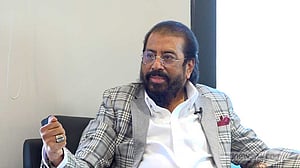
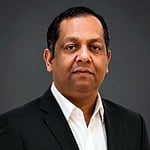
Doing business in Bangladesh has become more difficult than before amid political changes and persistent inflationary pressures, according to Shama-E Zaheer, chairman of Mir Group of Companies.
He says import dependence, high inflation, the impact of wars abroad and elevated lending rates have created multiple obstacles for businesses, particularly in the construction sector.
The businessman, who has long been involved in the construction sector, shared his views on the industry's challenges, constraints and prospects in bdnews24.com interview programme “Chinwag with the Chiefs”.
Business Getting Tougher, What's The Way Out?
Asked how businesses can navigate the current “difficult” environment, Zaheer pointed to both domestic political changes and global economic pressures.
"We have seen a political transition in the country, and naturally that, along with other socio-economic factors, has affected business. On top of that, wars abroad and inflationary pressures around the world have had an impact.
“Doing business is certainly harder than before.
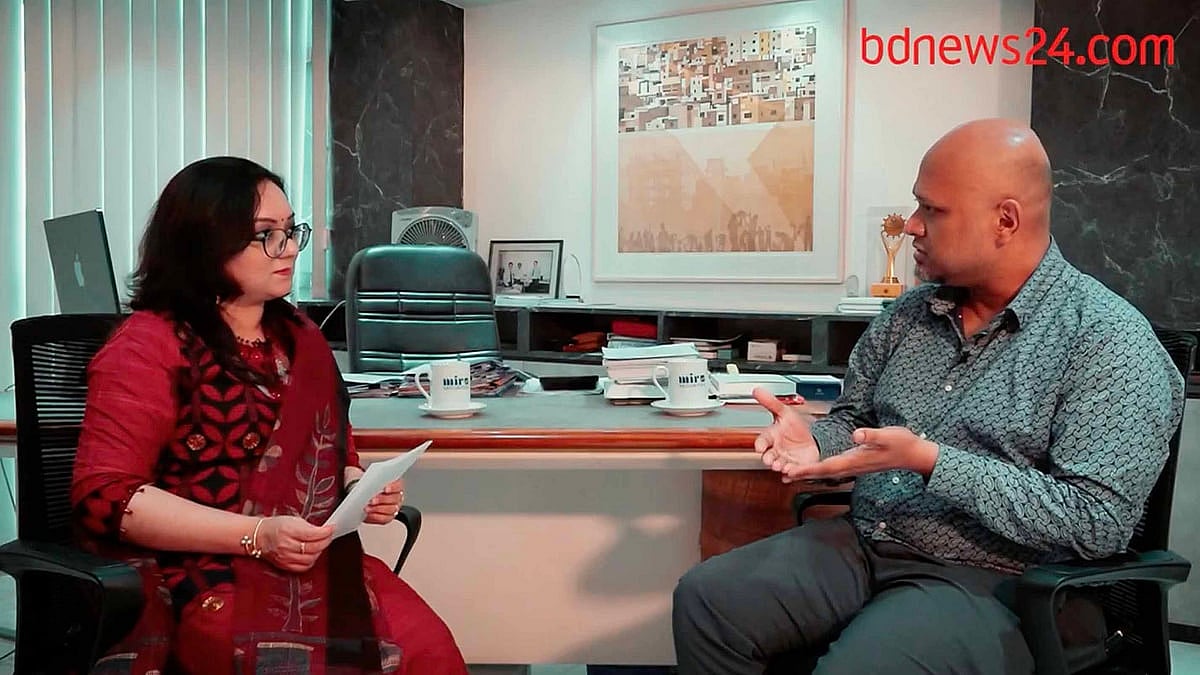
"With the political transition, a new government has taken office and is pursuing different initiatives. We are quite hopeful that business will become easier in the coming days and many of the obstacles will gradually ease."
Zaheer, the chief operating officer of construction firm Mir Akhter Hossain Limited also believes high inflation, disruptions to imports caused by global conflicts and elevated borrowing costs are creating major hurdles for businesses.
He says entrepreneurs are increasingly looking for opportunities in new sectors through technology.
While Mir Group has expanded around the construction sector for five decades, it has also entered telecommunications, software and brokerage services.
Zaheer described artificial intelligence (AI) as one of the most exciting and important developments shaping modern business.
He said Mir Group is already using AI in software development, including service creation and coding.
Although the company works with clients in several countries in its newer ventures, he believes there is still significant room for expansion.
"We haven't yet achieved the scale we expected," he said.
"In software development, we have been working with American and Canadian companies for many years. But we have not yet reached the level of scale that I believe is possible."
He said the group also operates internet connectivity services internationally, including a presence in Singapore that links services to Bangladesh.
"We provide cloud services, data services and computing services in Bangladesh. We are competing in this space and serving overseas customers, but there is still considerable scope to expand further."
What are the Obstacles? Where are the Solutions?
Alongside its newer ventures, Mir Akhter Hossain Limited has been involved in projects including the construction of the Radisson Blu Dhaka Water Garden and the new block of the Sheraton Dhaka.
The company is currently responsible for upgrading a 48-km stretch of the Dhaka-Sylhet Highway.
It has also nearly completed work on a 19-km connecting road in Tangail under the South Asia Subregional Economic Cooperation (SASEC)-2 project.
Zaheer said the company is also working on projects including runway and taxiway capacity enhancement at Shah Amanat International Airport in Chattogram, as well as rail rehabilitation works in Sylhet’s Chhatak and Faridpur’s Kamarkhali.
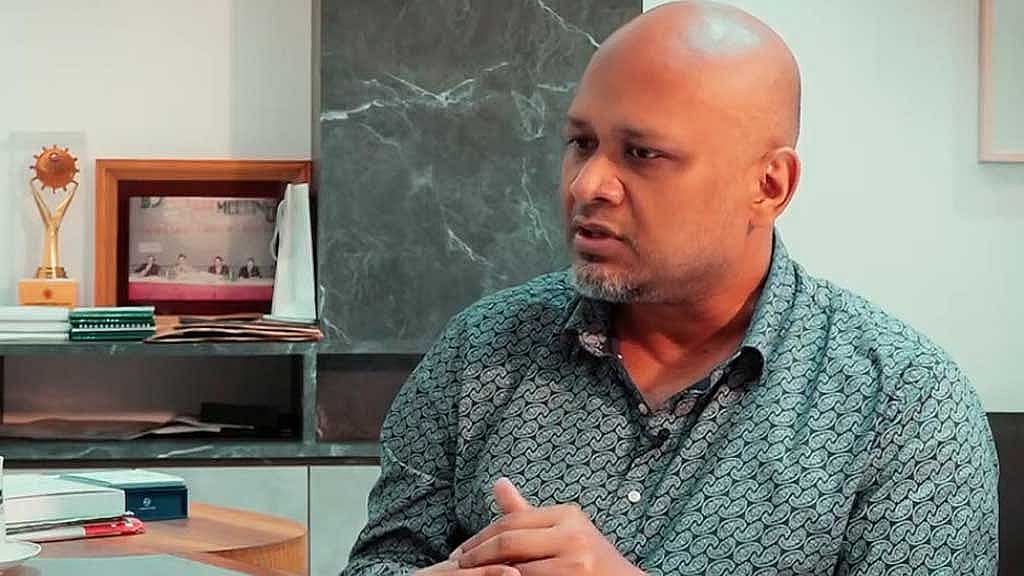
Pointing to numerous challenges in project implementation, he said such obstacles often prevent construction projects from being completed on schedule.
According to him, land acquisition remains one of the biggest challenges.
When the government acquires land, owners may be unwilling to hand over property immediately and may seek legal remedies, causing delays before work can begin.
Even after contractors enter a project, delays in importing and sourcing construction materials can slow progress further, he said.
He said instability in West Asia has created difficulties in importing essential materials such as bitumen and stone for transport infrastructure projects.
Inflation has also pushed up the prices of raw materials, including steel rods and cement.
Zaheer said foreign-funded projects often include price-adjustment clauses that help cushion some of the impact of rising costs.
However, if inflation exceeds those limits, contractors still face significant pressure.
He argued that domestically funded projects are particularly vulnerable because they generally lack mechanisms for adjusting costs in response to inflation.
High lending rates are another major obstacle, he said.
"If we take a loan at eight or nine percent when a project begins and that rate rises to 14 percent during implementation, the contractor has to absorb the additional cost," he said.
He also pointed to delays in the release of funds after domestically financed projects are completed.
According to him, when projects run into a new fiscal year, budget reallocations often take time, creating further complications.
Zaheer suggested that switching Bangladesh's fiscal year from July-June to January-December could reduce some of these difficulties.
Because the current budget cycle overlaps with the monsoon season, project execution, billing and payment processes often face additional challenges, he said.
He believes such obstacles are less severe in foreign-funded projects.
Despite these challenges, he said Bangladesh's infrastructure development continues to move forward through the efforts of skilled engineers and workers in both the public and private sectors.
Are Political Pressure and Corruption Major Barriers?
While political influence and corruption at the local level are often cited as major obstacles in project implementation, Zaheer disagrees.
He said local stakeholders naturally want to be involved when projects are carried out in their areas.
According to him, local politicians or representatives may approach contractors with requests, but he does not view that as undue political interference.
He also believes working with local people helps contractors reduce costs and improve efficiency.
Zaheer similarly rejected the notion that bribery or corruption is a major factor behind rising construction costs.
He argued that many factors can either facilitate or complicate project implementation, but these should not automatically be interpreted as instances of corruption.
"Some people may think there is a speed or money issue whenever obstacles are addressed, but that is not necessarily the case," he said.
He described the perception as an outdated one.
"There may have been such practices in the past, but if you look at the country's infrastructure development today, the quality of construction is very high. If widespread corruption existed, that would not be possible."
He acknowledged that corruption may occur in some local projects where poor-quality work is evident.
Zaheer, however, does not believe those cases represent a major share of Bangladesh's overall infrastructure development.
Why are Construction Costs High in Bangladesh?
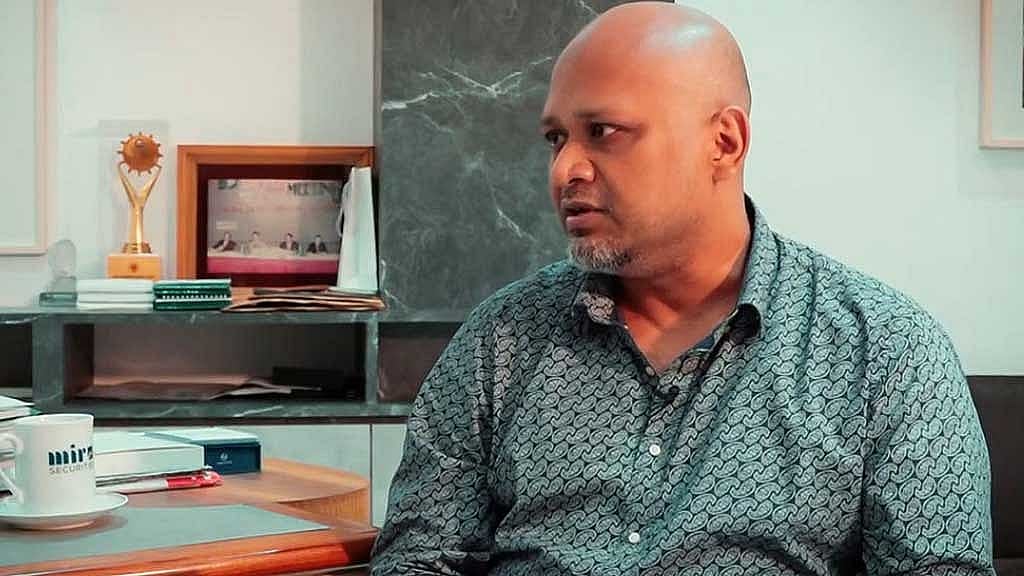
Zaheer attributed high construction costs primarily to import dependence and land acquisition expenses.
Unlike neighbouring India, where most construction materials are produced domestically, Bangladesh relies heavily on imported inputs, he said.
Clinker for cement, steel products, fuel and a large share of stone are all imported.
As a result, around 80 percent of the materials used in road construction and other infrastructure projects come from abroad.
Exchange-rate fluctuations, transport costs and import duties further increase expenses, he added.
Land acquisition is another major contributor to project costs.
According to Zaheer, compensating landowners in Bangladesh often costs more than in neighbouring countries.
As a result, total project costs from acquisition through completion tend to be higher than those in many comparable markets.
Advice for Entrepreneurs, Investors
Zaheer advised young entrepreneurs to be honest, hardworking, forward-looking and technologically capable.
He encouraged them to move beyond conventional thinking and pursue innovative ideas that are technically, practically and commercially viable.
For investors, he recommended taking calculated risks.
Before committing funds, investors should carefully assess potential challenges and limitations within a business, he said.
"There must be a willingness to take risks, but that willingness should be matched with good judgement,” he added.