Published : 03 Nov 2024, 07:19 AM
Updated : 21 Aug 2026, 12:02 PM


Zakir Hossain, a former headmaster from Board Bazar in Dhaka’s Tongi, retired two years ago, while his wife Monowara Begum is nearing retirement. The couple had long planned to buy a flat in Dhaka with their life savings. Now, however, they are plagued by doubts about whether to proceed.
"With the change in government causing all this upheaval, I'm hesitant to withdraw my money from the bank to buy a flat," Zakir said.
"My wife and I have saved almost Tk 6 million through my pension and other sources. But the places we're looking at don't offer new flats within our budget.

“This is a problem. Besides, I didn't know that the registration fee for old flats is the same as for new ones, around 15 percent. The biggest concern, though, is if buying a flat with this money now would lead to complications. That’s why we're holding back."
According to housing industry experts, the real estate sector is struggling due to a range of issues, including political uncertainty following the government change, high registration fees, increased construction material prices, and delays in revising the Detailed Area Plan, or DAP.
Middle-income buyers, in particular, are reluctant to use their savings to purchase flats amid the high cost of living.
The interim government's position on the FY2024-25 provision allowing a 15 percent tax for ‘black money’ investment in flats and plots remains unclear, adding to the apprehension among all buyer segments.

BUYERS CAUGHT IN DILEMMA
Rina Begum and Swapan Hossain, a middle-income couple from Chandpur’s Kochua, had planned to buy a flat in Dhaka's Dhanmondi 9/A area.
They even paid a down payment to secure the property through an instalment plan, but are now looking to sell it instead of paying further instalments.
"We’re not feeling secure," Rina said.
"We had some savings in a Shariah-based Islamic bank, but now we’re struggling to withdraw those funds. Bank officials have asked for more time.
"We wanted to keep paying for the flat instalment, but we’re feeling uncertain. We’re concerned that the economy might decline further or political tensions might rise. So, we’re considering selling it now and perhaps buying again when things improve. But with the market in such a slump, finding a buyer has been difficult. It’s a real predicament.”

In Dhaka’s Niketan businessman Borhan Uddin lives in a rented flat and runs his business in Mohakhali.
Recently, he decided not to buy a flat in Moghbazar as initially planned, instead redirecting his funds back into his business.
"Frankly, it’s hard to gauge the current situation; I’m unsure if it’s safe," Borhan said.
“With inflation climbing so fast, I’m starting to wonder if buying a flat is even worth it right now.”

MARKET CONTRACTION FOLLOWING POWER SHIFT
Real estate professionals cite multiple factors contributing to the stagnation of the housing market, including the political instability following the government change, economic slowdown, and the cancellation of the DAP for 2022-2035.
According to data from the Real Estate and Housing Association of Bangladesh, or REHAB, approximately 15,000 flats and apartments were sold annually from 2010 to 2012.
This figure dropped to just over 12,000 per year between 2013 and 2016, then stabilised at around 13,000 to 14,000 from 2017 to 2020. From July 2020 to June 2022, sales returned to nearly 15,000 annually.
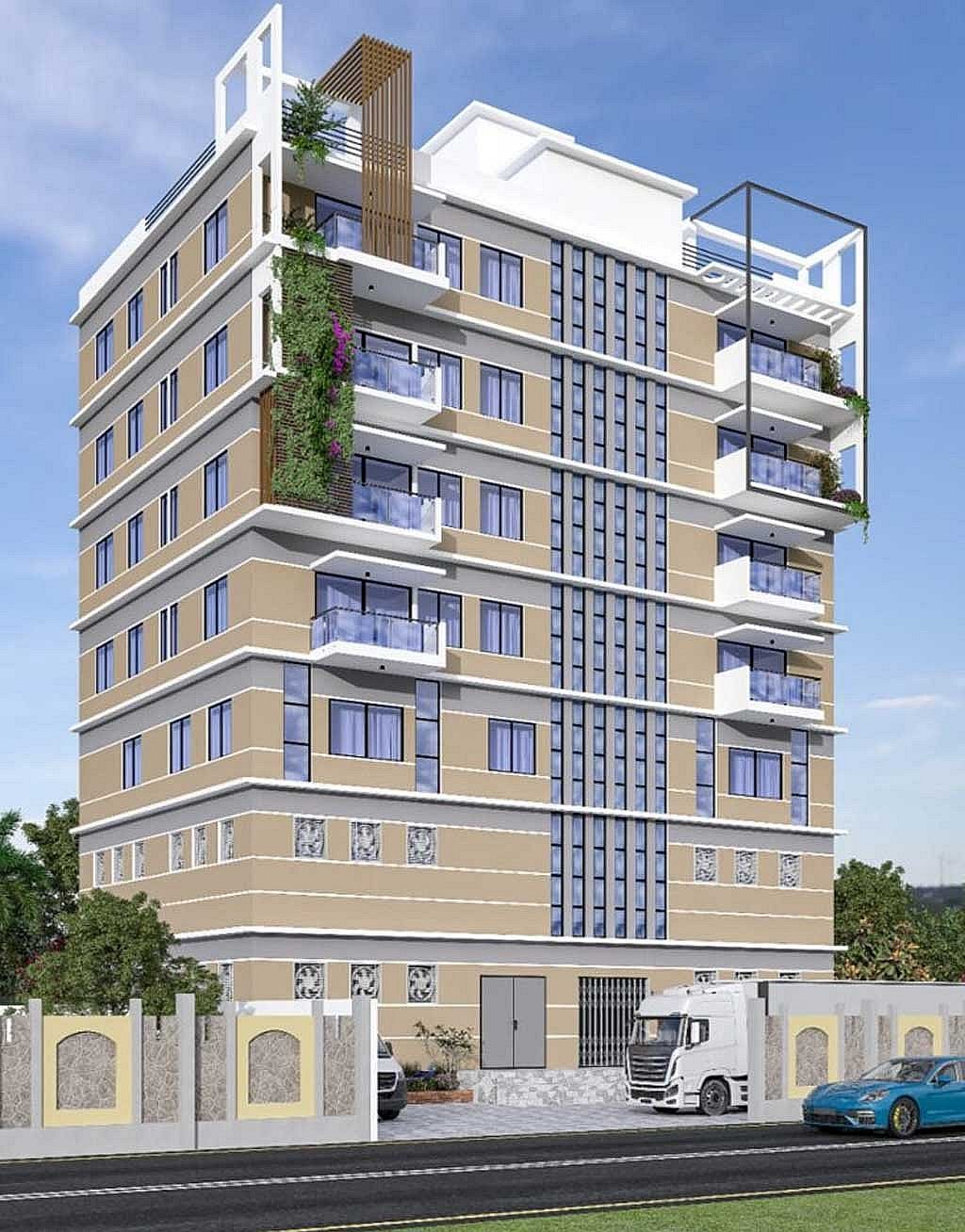
However, with rising construction material costs and the onset of the COVID-19 pandemic, sales took a hit again, plummeting to around 10,000 in the 2022-23 fiscal year and falling below that mark in 2023-24.
This data indicates a declining demand for flats and apartments.
REHAB claims that sales have decreased by at least 50 percent since the student-led protests for regime change started a year before the current political situation.
The interim government was sworn in on Aug 8 after a student-led mass movement toppled the Sheikh Hasina government on Aug 5. It ended 15 years of rule by the Awami League.
Afterwards, there were also attacks on various police stations, Awami League offices, the homes and workplaces of its leaders and activists, and the houses, businesses, and places of worship of the Hindu community.
Abdul Latif, managing director of Basic Builders Limited, told bdnews24.com: “The changing political situation in the country is leading all businesses into a ‘recession,’ and our real estate sector is no exception. While transactions aren’t completely absent, sales are down significantly, often requiring compromises on prices, which are now 50 to 60 percent lower than before.”
When asked about the sales decline, the REHAB Vice President Latif, said: “After a major change in power, people tend to feel anxious. Investors are uncertain about whether it is wise to invest now, fearing the situation might worsen. This general apprehension is causing citizens to adopt a ‘go slow’ approach.”
He also said liquidity issues in some banks have prevented buyers from withdrawing money in time to pay their instalments after purchasing flats.

Latif said: “I believe if the government can establish law and order over the next two to three months, stabilise the country, and improve the economic situation, this downturn will not last long. I expect things to be back on track by December.”
He hopes for initiatives from the interim government, saying: “If the government promotes sectors where investment is not obstructed or presents low risks for keeping money in banks, it might encourage recovery in this sector. Building public confidence is key.”
He added, “Many are hesitant to invest due to a lack of confidence. If their money gets locked away, they are left with nowhere to go. With liquidity crises in many banks, this combination has led to what we are calling a ‘recession’ in the sector.”
Another businessman said genuine buyers in the market are also noting the lower prices of flats and showing less interest in purchasing.
Some buyers are waiting for opportunities to acquire properties at reduced prices, he said. Overall, the pace of sales remains sluggish.
Baridhara, Gulshan, Banani, and Dhanmondi are known as upscale residential areas, typically owned by the affluent. A group of real estate investors has poured substantial capital into these areas, supported by banks. Currently, however, sales activity has also slowed here.

Akash Developers operates in these premium areas.
Aniruddha Bappi, the company’s manager, said: “We have projects available. However, the market is currently slow. There are buyers, but they seem to be observing the situation before making a decision.”
OPPORTUNITIES FOR BLACK MONEY INVESTMENT REMAIN UNCERTAIN
Following the change in power, the National Board of Revenue, or NBR, cancelled the opportunity to legalise undisclosed income or black money through a 15 percent tax in the current fiscal year 2024-25 budget on Sept 2.
However, the notification did not mention another opportunity for investing black money.
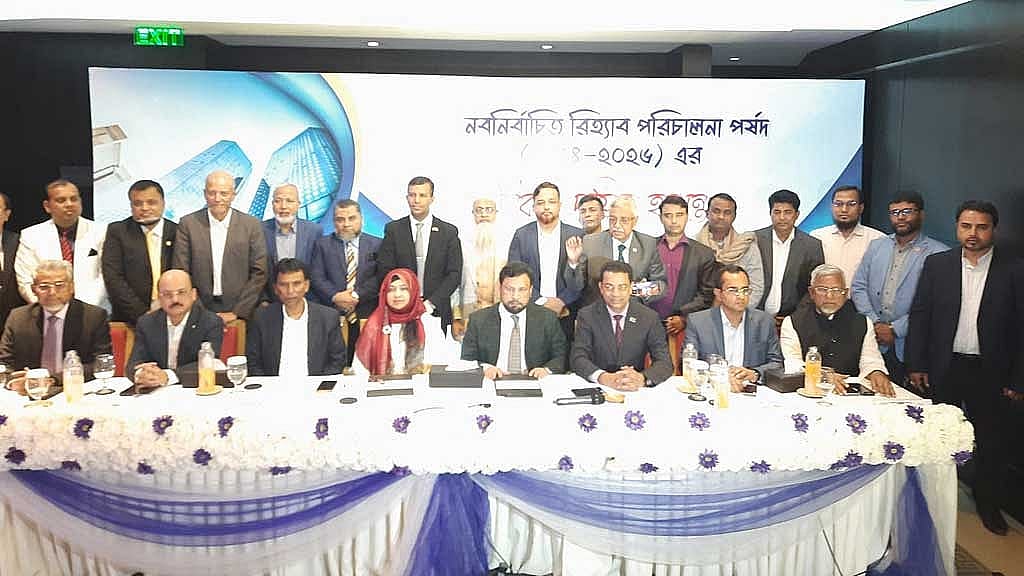
This opportunity allows for the legalisation of undisclosed income for investments in buildings, houses, flats, apartments, floor space, and land by paying income tax at a specified rate.
As the government has not made any decision on this matter, it remains legally valid.
Nevertheless, the sluggishness in the housing sector over the past two months indicates that investors or buyers are not taking advantage of this opportunity.
AKM Badiul Alam, a member of the NBR's tax policy division, told bdnews24.com: “No decision has been made about the opportunity to invest black money in land and flats. Discussions are still ongoing; that’s all I can say.”
REHAB URGES DAP CANCELLATION TO EASE STAGNATION
In the housing business, particularly in the plot and flat market, industry leaders have repeatedly pointed to the need to cancel the DAP as a key reason for the ongoing crisis.
They argue that the current DAP by the capital development authority the Rajdhani Unnayan Katripakkha, or RAJUK, is discriminatory.
According to them, cancelling it would speed up the building plan approval process and increase the building size or unit flats, potentially revitalising the market.
Business leaders have said under the Detailed Area Plan 2022-2035, most areas in Dhaka can now accommodate only about 60 percent of the previously allowed building sizes, preventing developers from launching new projects.
Even individual homeowners are reluctant to seek plan approvals because, in many areas, where they could previously construct eight-storey buildings, they are now limited to four or five storeys.
They have also demanded adherence to the Dhaka Metropolitan Building Construction Act 2008 and the master plan DAP 2010 for building design approvals.
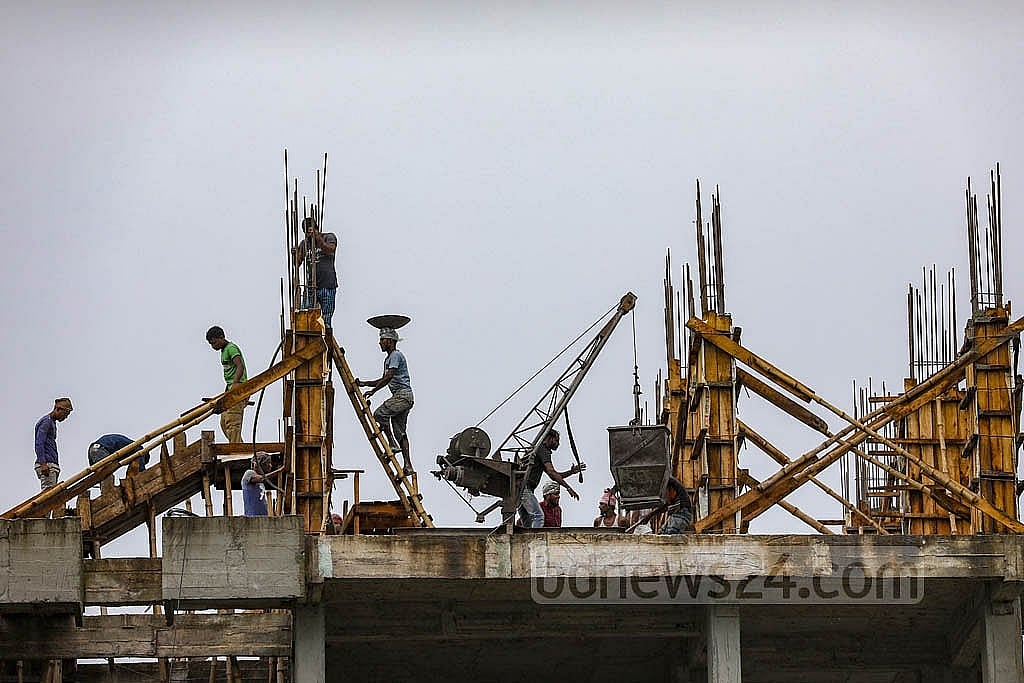
“Despite progress, the biggest crisis arose after the announcement of the DAP in 2022. Since the DAP was passed, development in Dhaka has completely stalled, leading to significant stagnation in the housing sector,” REHAB President Mohammad Wahiduzzaman said during a press conference at Dhaka's CIRDAP Auditorium on Aug 21.
He added, “The Dhaka Metropolitan Building Construction Act 2008 and the Master Plan 2010 were unjustly disregarded.”
He expressed concern that the situation would worsen over the next year, potentially leading the housing industry into a severe downturn.
Liakat Ali Bhuiyan, REHAB's senior vice president and chairman of Brick Works Development Ltd, attended the press conference.
He told bdnews24.com, “Business is nearly at a standstill due to the DAP. No one is getting their plans approved because it wouldn’t be viable for developers or homeowners. This has created a vacuum in the market. We have no products. While prices might not drop, they could rise further. The market won’t improve until the DAP is revised.”
Abdur Razzak, REHAB's vice president (finance) and chairman of Arma Real Estate Limited, said: “If someone has three katha of land, previously we could get six or seven flats on it. Now, only three or four flats can be built, resulting in no profits for anyone.”
In this context, Mohammed Akter Biswas, managing director of Akter Properties Ltd and REHAB’s vice president, told bdnews24.com: “We have faced issues due to the DAP. It has caused discrimination, which we have presented to the government. We have communicated this to RAJUK and related authorities as well.
“We have been able to convey our concerns, and they understand the need for reform. However, they have not indicated how much reform or changes will occur or when.”
bdnews24.com reporter could not reach Mohammad Ashraful Islam, the chief urban planner of RAJUK, for comment.
RISING COSTS OF CONSTRUCTION MATERIALS, REGISTRATION
Business leaders have highlighted several factors contributing to the downturn in flat sales.
They point out that the registration rates for both new and old flats are the same, which is hindering market growth.
The increase in construction material prices and the costs of labour and skilled workers have also impacted flat prices, consequently affecting sales.
The Bangladesh Steel Manufacturers Association, or BSMA, recently held a press conference, urging the government for policy support to sustain the industry.
At the conference, BSMA President Jahangir Alam said: “Steel production companies are struggling due to high gas and electricity prices, the dollar crisis, and pressure from bank loans. Many entrepreneurs have seen a decrease in business due to the discrepancy between production costs and market prices.”
He added, “Recently, the value of the dollar has increased, causing production costs to rise by 65 percent. Gas prices have also gone up, resulting in an additional Tk 2,000 per tonne of rebar, as 85 percent of the raw materials, chemicals, and parts for the steel sector are import-dependent.”
He pointed out that high inflation is diminishing people's purchasing power, a trend that is also evident in the cement, sand, and brick industries.
REHAB senior official Liakat said, “This industry is linked to about 250 to 300 backward linkage businesses, affecting flat pricing and the market overall. The increase in construction material costs and labour costs has collectively impacted the business.”
REHAB Vice President Akter said the cost of construction materials continues to rise while supply has decreased, slowing down construction work.
He urged for a reduction in registration fees, saying, “If the flat registration fee is lowered to below 10 percent, similar to neighbouring countries, it will positively impact the market. Currently, the total registration fee in our country is around 15 percent, and when combined with other costs, it can go up to 18 percent. This serves as a deterrent for buyers.
“We have requested the government to consider reducing it to single digits (7 percent, 8 percent, or 9 percent). Other neighbouring countries have similar practices,” he said.
He continued, “We still have no regulations for our secondary market. In other countries, if you buy a second-hand flat, the registration cost is often below half of the initial fee. However, in our case, you must pay the same registration fee each time you buy or sell.”
Despite these challenges, international market research firm Statista Market Insights estimates by the end of 2024, Bangladesh’s housing market will reach $2.75 trillion.
It is anticipated that the residential sector, valued at $2.4 trillion, will dominate the market.
From 2024 to 2028, this market is expected to grow at an annual rate of 2.23 percent, potentially reaching $3.7 trillion by 2028.
[Writing in English by Arshi Fatiha Quazi]