


Published : 10 Apr 2017, 11:28 AM
Updated : 19 Oct 2022, 03:32 PM


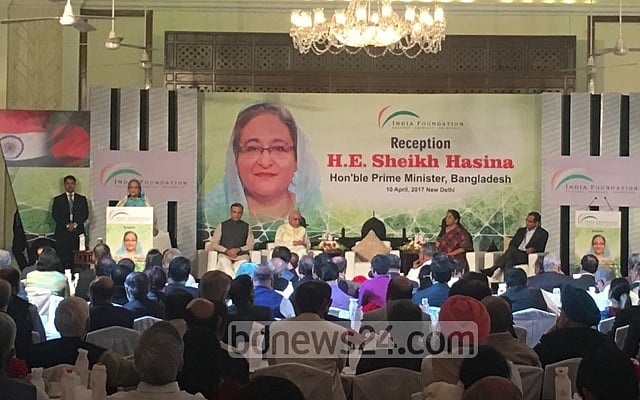
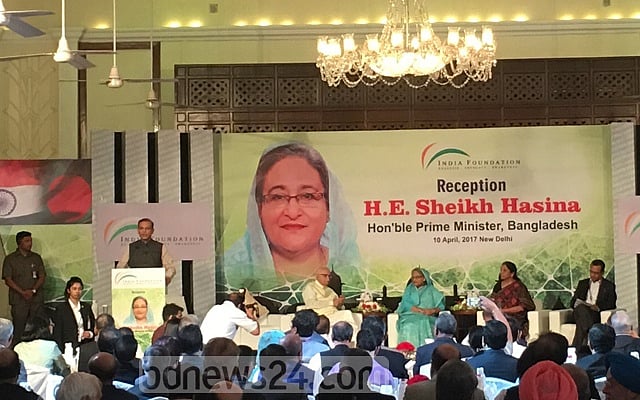
Her statement came on Monday in New Delhi during a reception for her hosted by the Indian Foundation, which was attended by former Indian deputy PM and BJP Advisory Group Chairman LK Advani.
Hasina said a comprehensive, basin-wide solution with an in-built solution to water sharing of the rivers was vital for the two countries future.
"On Teesta issue, Prime Minister Modi once again reiterated his government’s strong resolve to conclude the water sharing treaty at the soonest. Once it happens, the face of Indo-Bangladesh relations would undergo another transformation," she said in her address.
The prime minister touted the progress on assuaging India’s concerns regarding security, building trust between the two countries and the ‘historic’ settlement of the Land and Water Boundaries.
“We have put in place multi-layered and effective bilateral security architecture with many dedicated joint institutional mechanisms for targeted and coordinated actions,” she said.
Hasina also called for more concerted efforts to strengthen the response to militancy.
“Our journey towards peace and prosperity is put to peril by the rise of terrorism and violent extremism. Security threats from state and non-state actors tend to undermine our efforts to integrate our economies and societies.”
The prime minister highlighted the two countries’ cooperation regarding energy and power during the address.
“We are importing electricity from India through grid-interconnection,” she said. We are also collaborating on … renewables such as solar, wind and hydro, offshore exploration, LNG, LPG, diesel.”
She also hinted that Bangladesh may try to import hydro-electric power from Bhutan and Nepal in the near future.
The prime minister concluded her speech by highlighting the need for connectivity and cooperation between India and Bangladesh, calling attention to the countries’ shared histories and the ways it could continue in the future.
“We believe connectivity holds the key to our collective and inclusive development,” she said.
“The people of India and its government supported us wholeheartedly during the War of Liberation in 1971. In 1971, 3 million people were killed and over 200,000 women were violated ... We want this genocide to be recognised by the international community. Prime Minister Modi has made commitment to remain with us in our efforts.”













