


Published : 30 Dec 2015, 09:03 AM
Updated : 19 Oct 2022, 07:07 PM


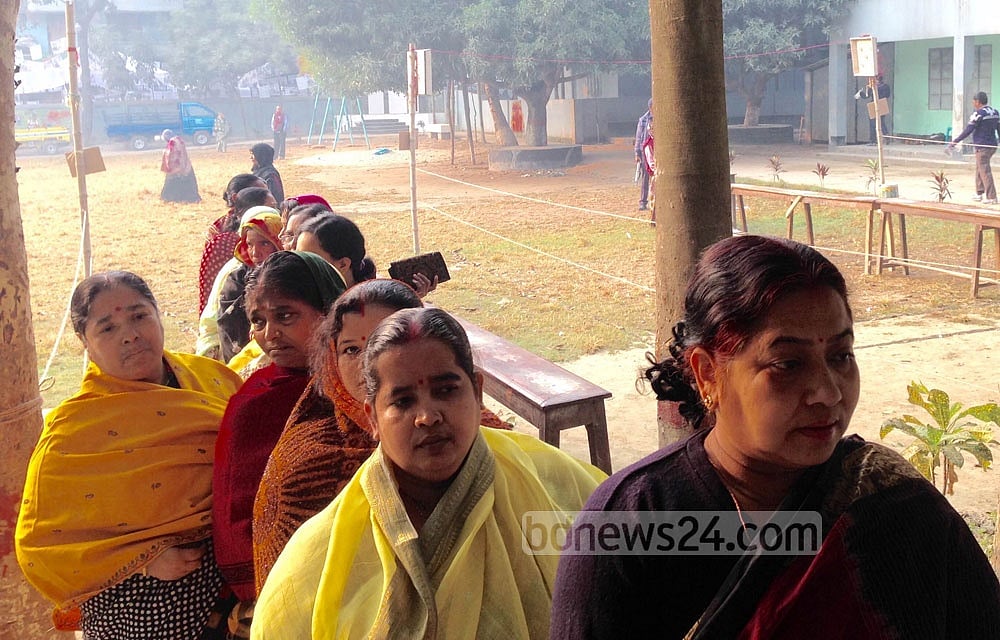
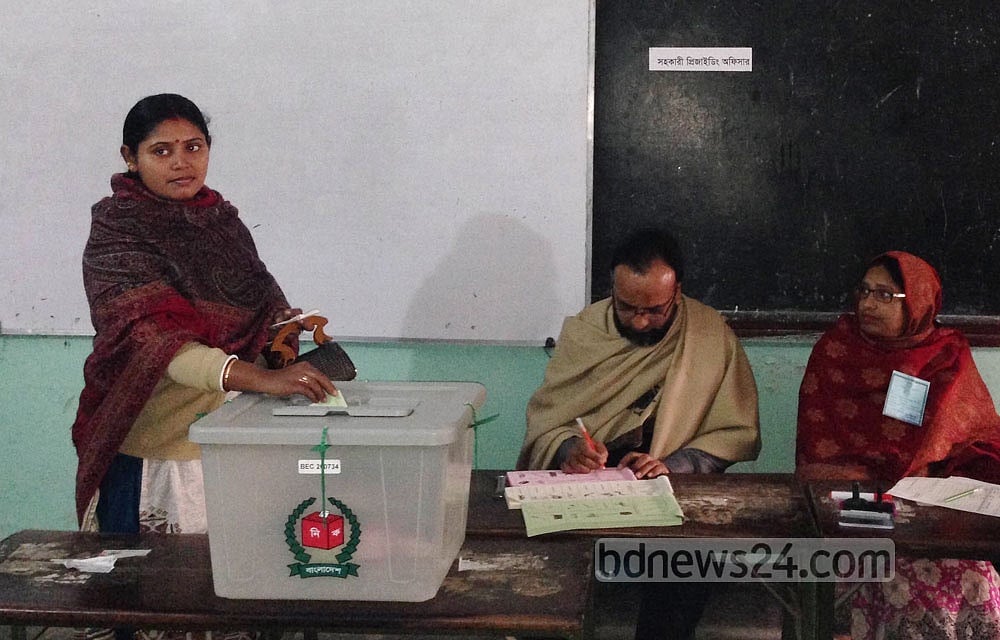
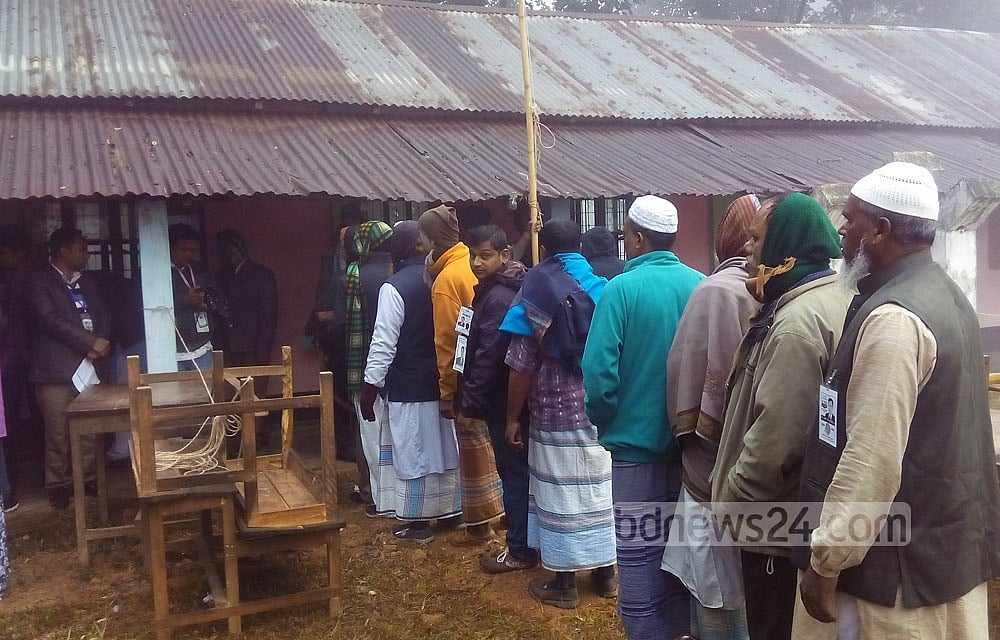
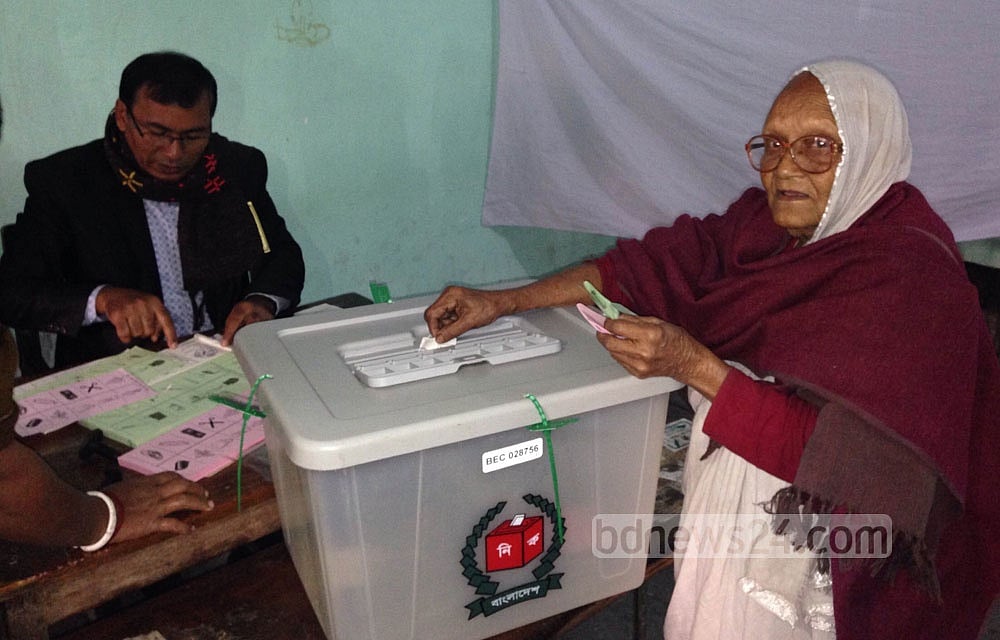
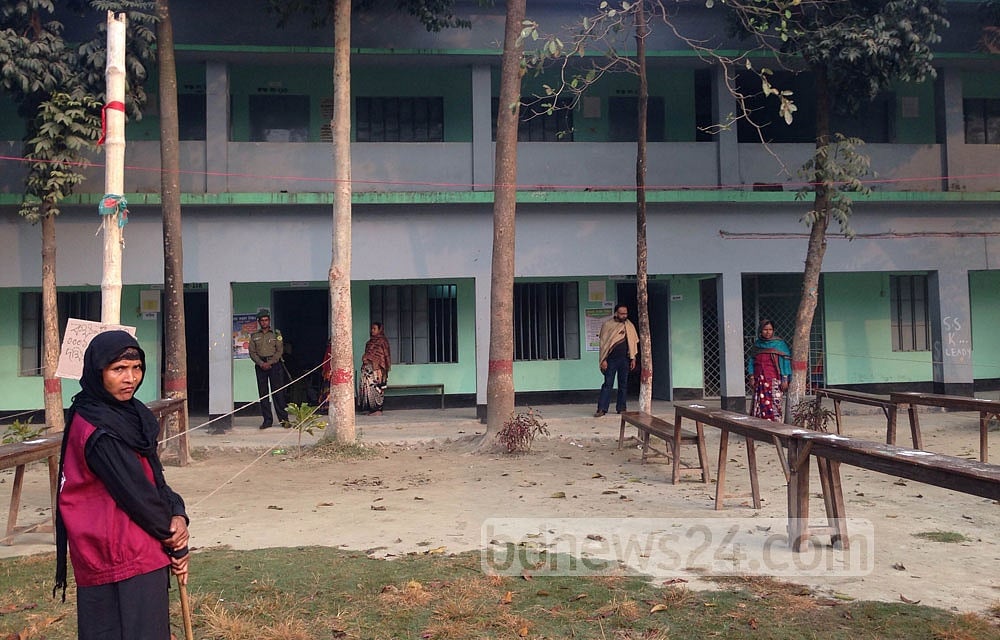
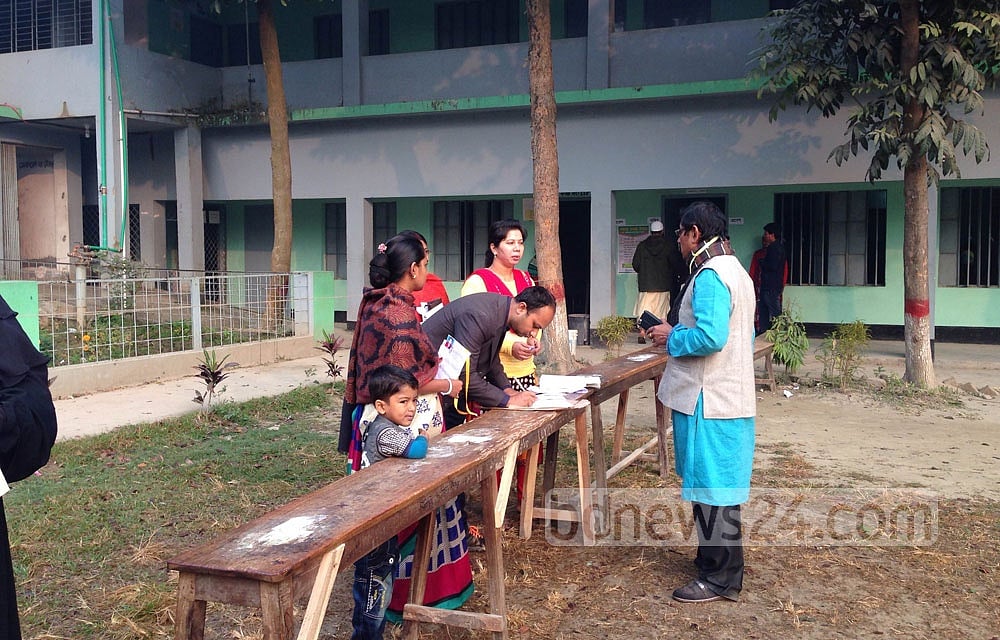
This is the first nationwide election after the 2008 parliament polls in which the two leading parties, Awami League and BNP, are facing each other off.
The voting at the polling stations began in the winter morning from 8am on Wednesday and will continue until 4pm.
Over 12,000 candidates are contesting for around 3,000 posts in the polls.
The Election Commission said it completed all arrangements on Tuesday to hold the polls.
With reports of clashes coming in from at least 50 municipalities in the run-up to the balloting so far, the elections have also triggered fears.
The polls promise a keen contest with the Awami League and the BNP joining the fray this time.
Although just 7.5 percent of the country’s total electorate is expected to vote, the event is being seen as a referendum on their agendas by the nation’s two rival political blocs led by the Awami League, contesting with the ‘boat’ symbol, and the BNP with ‘paddy sheaves’.
The BNP is viewing the impending outcome of the local government polls as a verdict on its demand for caretaker regimes to oversee national elections, while the Awami League hopes it will be an affirmation of its development programmes.
The BNP had boycotted the last national election held in January 2014, letting the Awami League stage a virtual walkover.
Altogether 20 parties have fielded over 650 candidates for the posts of 234 mayors in as many municipalities. There are 275 independent contestants for those posts as well.
Over 11,000 aspirants are in the race for general and reserved councillor posts.
Chief Election Commissioner (CEC) Kazi Rakibuddin Ahmad on Tuesday said that the conditions for unhindered polling had been ensured.
Appealing to all political parties to maintain peace during the election, he told the people, “We want to assure everyone that arrangements have been made for a free and fair election. Go to your polling centres without fear. Enough law-enforcing personnel have been deployed.”
The CEC said there was no fear of any vitiation of the polling atmosphere.
The Awami League had expressed its satisfaction over the arrangements but the BNP was sceptical.
The BNP had claimed deterioration in the situation and wanted assurance that peace would be maintained and that the results would truly reflect the verdict.
The Awami League and BNP candidates are locked in a direct contest in 222 of the 234 municipalities.
With the EC vouching for all arrangements in place to prevent interference or intimidation, people are now casting their ballots.
The ballot papers and other polls materials, along with electoral officials, had reached the polling centres under tight security earlier.
Law-enforcing agencies and detectives had cautioned against militant threats in Rajshahi and Rangpur divisions, recommending extra vigil in those regions.
They had also warned of the possibility of inner-party factional rivalry and terrorising by party cadres causing trouble in some places.
In response to these intelligence inputs, the EC instructed district administrations, police, and returning officers to take effective preventive measures.
The election roadmap was announced on Nov 24. After the symbols were assigned on Dec 14, the candidates campaigned for 15 days.
First municipal polls on party lines
Local government elections in Bangladesh are, for the first time, being held with direct participation of political parties, lending the exercise the flavour of a national vote.
In 2011, candidates taking part in a four-phase election to over 250 municipalities had done so with covert party backing, with the Awami League and the BNP emerging evenly poised after the results.
The BNP finds itself outside the 10th parliament because of its boycott of the last general election. It has, this time, decided to stay on in the electoral process until the very end.
But former prime minister Khaleda Zia’s party and its allies in the fray have also accused the EC of not being adequately firm in dealing with electoral code violations by ruling party leaders.
The EC has described the holding of this round of local government elections with party participation as a ‘big challenge’.
Monitoring organisation National Election Observation Council Chairman Prof Nazmul Ahsan Kalimullah feels the participation of parties has turned the municipal elections into a ‘fight for prestige’.
The EC has issued identity cards to at least 4,000 observers. Around 10,000 journalists will also cover the event.
Security
Over 100,000 members of the law-enforcing agencies have been tasked with maintaining security for the elections.
EC Deputy Secretary Shamsul Alam said about 45,000 police personnel, 9,000 personnel from Border Guard Bangladesh, 8,824 from RAB, 255 coastguards, 49,728 Ansar-VDP, and 4,512 personnel of Battalion-Ansar will be on polls duty for four days.
In all, 117,304 law enforcers will be on the ground, he said.
In addition, 1,204 executive and judicial magistrates had started their election engagement from Monday.
Twenty law enforcers are manning each sensitive polling centre on Wednesday, and 19 of them are posted in each of the others.
Meanwhile, all outsiders were ordered to leave election areas by Monday midnight.
Owners of licensed firearms were ordered not to carry or display their weapons for seven days startingMonday.
The administration and police were directed to arrest all party cadres known for resorting to terror, and to clear the air of fear.
Actions on allegations
The Election Commission have warned and show-caused six MPs for breach of electoral code of conduct.
Two returning officers and OCs of seven police stations have been withdrawn for bias so far.
The returning officers were ordered to check 114 allegations, but they found most of them untrue.
Tk 1 billion polls
The Commission was allocated Tk 1 billion for the municipal election.
Of the amount, Tk 450 million is being spent on conducting the balloting and Tk 550 million on security.
Most of the money has already been disbursed.
EC Deputy Secretary (Budget) Shajahan Khan said the spending will not cross Tk 1 billion.













