Published : 26 Mar 2021, 10:25 PM
Updated : 14 Oct 2022, 06:30 PM


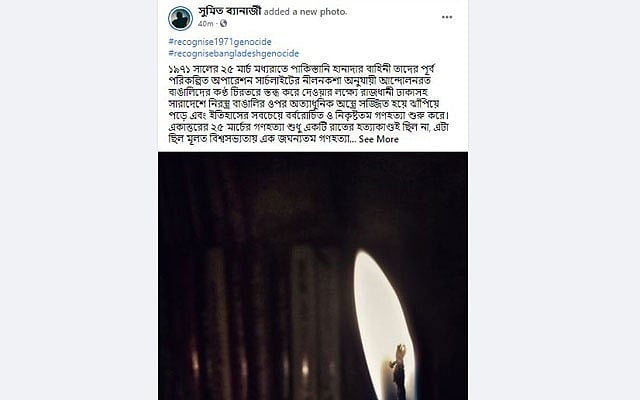
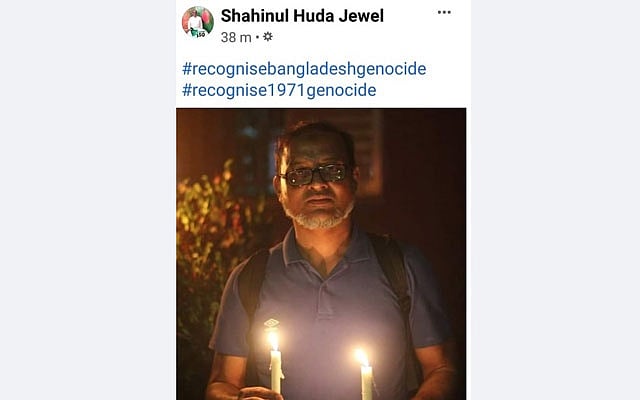
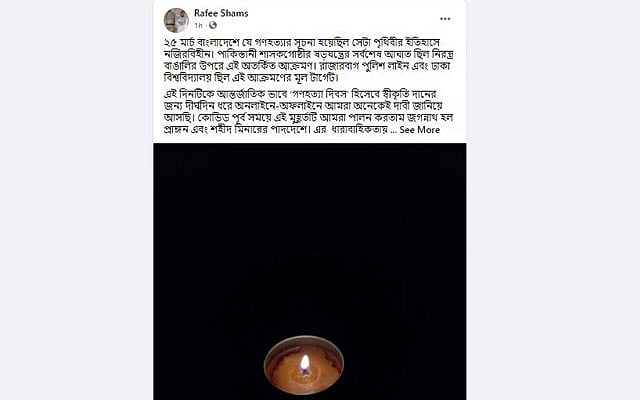
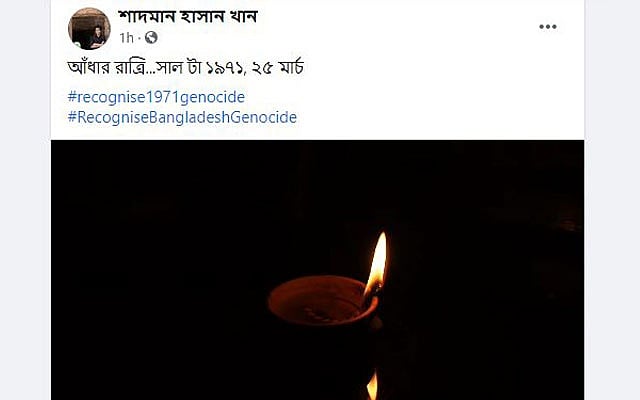
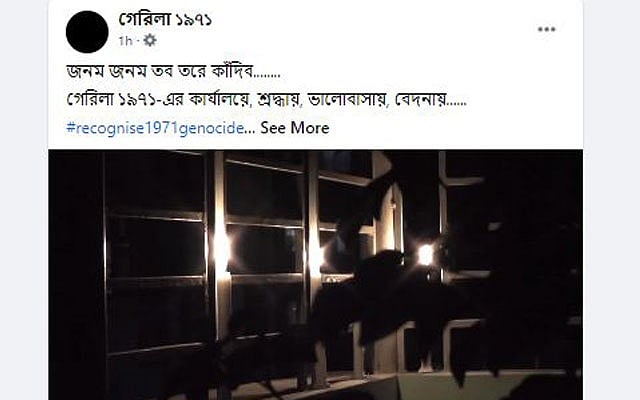
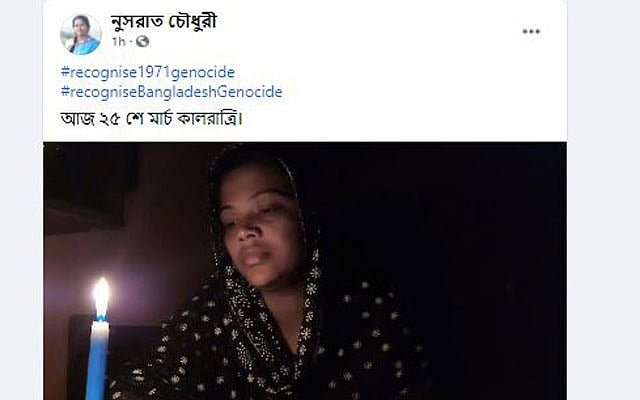
International Crimes Strategy Forum or ICSF and Bangladeshi expatriates in Australia called for the virtual candlelight initiative at 00:01 hours on Thursday.
The global call for candlelight vigil marked Bangladesh's National Day of Genocide Commemoration on Mar 25, which precedes Mar 26 Independence Day.
Scores of people joined in on the global call during the small hours of Mar 25 in remembrance of the martyred freedom fighters on the 50-year anniversary of the genocide.
Many posted videos or photos of lighting a candle or lamp on Facebook with the hashtags #recognise1971genocide and #RecogniseBangladeshGenocide.
The Pakistan Army swooped down on unarmed Bengalis on the night of Mar 25 in a brutal attempt to crush their struggle for freedom.
Codenamed ‘Operation Searchlight’, it carried out genocide in the early hours of that night in Dhaka.
Bengalis retaliated with spectacular resistance and fought for nine months of Liberation War to snatch the victory on Dec 16 when occupying Pakistani forces surrendered to the allied forces backed by India.
Lighting a lamp, Rafee Shams, a bank executive, wrote: “Bangalees from around the world from wherever they are have expressed solidarity with the demand online by lighting candle/lamp at 12:01 am, the early hours of the Mar 25. I, along with my family, join the initiative and express solidarity.
Arguing why international recognition should be given to the horrors of that night, he added, “Recognising Mar 25 as the International Genocide Day will globally highlight the organised barbarism upon us, and also provide the impetus to awarding us justice on international platforms.”
“We have to continue asking for justice for the mass murder we were subjected to in 1971 until the end. We successfully carried out justice to the war criminals in our country, and now it is time to strengthen the demands to adjudicate Pakistan for their war crimes. Only then will this fight be fulfilled.”
Another Facebook user, Farhan Rakib Emon, wrote: “Our demand will continue until the recognition is received.”
Besides recalling the dark night by lighting candles and lamps, ICSF and Bangladeshi expatriates in Australia organised open discussions to mark 50 years since the genocide.
“Viewers from at least 26 cities of Bangladesh, Australia, UK, USA, Canada, Malaysia, South Korea, and Japan logged in to participate in the program. The discussion program started at 4 PM Bangladesh time and was broadcasted live through Facebook, YouTube, and Twitter,” read a media statement from ICSF on Friday
“Columnist Dr. Ezaz Mamun from Canberra inaugurated the discussion with his welcome speech.
“He provided the historical context of 1971 Bangladesh Genocide and its global recognition. It was followed by one-minute silence in remembrance of the genocide, and then a critically acclaimed documentary title ‘Creed for Justice’ was played.
“At this point the main discussion began where discussants talked about various dimensions of global recognition of Bangladesh Genocide. Former Chair of Bangladesh Human Rights Commission Prof. Mizanur Rahman moderated the discussion,” it added.
“At the beginning of the discussion, trustee of ICSF Dr. Rayhan Rashid, expounded on organisational stance on global recognition of Bangladesh genocide.
“On behalf of ICSF, three specific recommendations were made to the government: one, Genocide perpetrated during 1971 needs to be included in the constitution of Bangladesh to secure its constitutional recognition; Two, “Global Recognition of Bangladesh Genocide” should be treated as an inseparable part of foreign policy; And three, three should be reflections of the lessons learned from previous genocides in conducting state affairs.”
“In her statement, honourable member of parliament Shirin Akhtar mentioned that the parliamentary resolution taken on 2017 on Genocide Remembrance Day is legally non-binding. This is why she promised to discuss with the Prime Minister the point of including the matter of 1971 genocide into the constitution. She also expressed her willingness and resoluteness to work toward global recognition of the Bangladesh genocide along with her like-minded colleagues.”
“Member of Bangladesh Human Rights Commission Dr. Namita Halder commented that genocide was the highest form of Human Rights violation. She also promised to ask the government through BHRC to get further involved in the work of securing global recognition of 1971 Bangladesh Genocide.”
“In response to questions/points raised on behalf of ICSF, the High Commissioner of Bangladesh in Australia reassured that Bangladesh Foreign Ministry will certainly work with the diaspora to secure the global recognition of Bangladesh genocide. He further mentioned that all the diplomatic missions of Bangladesh around the globe can work in tandem and utilize their networks to further the cause of this global recognition of Bangladesh genocide.”
“Another trustee of ICSF said that to secure global recognition, we will have to talk about our own genocide, do our own research, and continue the movement. No one else will do it for us.”
“Among the members of the Bangladeshi Australian diaspora, Mr. Lilac Shahid, Dr. Kamal Uddin, Dr. Abu Taher Mollick, and Mr. Ignatious Rozario also spoke during the discussion. The moderator took questions from facebook, zoom, and other social media platforms all throughout the program and had relevant discussants respond to them.”
“After the discussion, moderator Prof. Mizanur Rahman provided a summary and said, ‘Till now, 1971 Bangladesh genocide has failed to get recognition. We do not want to understand politics; we do not want to become a part of geopolitics and its myriad equations; we just want justice for the crime and savagery perpetrated on our people, on our country, on our motherland’.”
“Towards the very end, former professor at Queensland University Dr. Mohammad Alauddin thanked all the organizers, volunteers who worked behind the scenes, and all the people who actively asked questions and made comments. He also expressed his hopefulness as he concluded the program.”
“International Crimes Strategy Forum (ICSF) is an independent global network of experts and activists operating in the interest of justice for the victims and a long-time campaigner for recognition of international crimes committed against the Bengali populace in 1971.”