Published :
10 Feb 2014, 02:22 PM
Updated :
19 Oct 2022, 07:22 PM
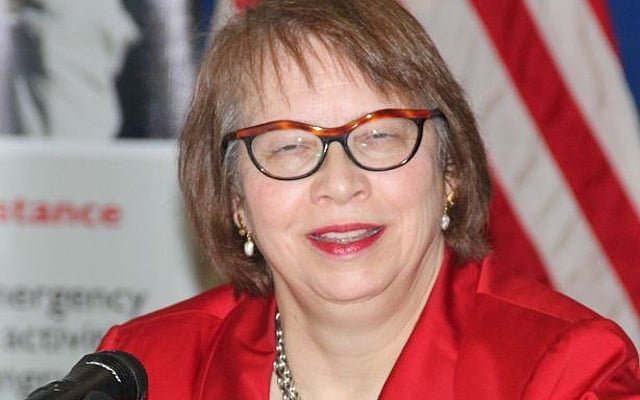
The USAID’s new mission director Janina Jaruzelski in her first press briefing on Monday said they would continue their focus on the “poorest and most vulnerable” part of the society.
But she said USAID would “realign” its focus on democracy and governance related programmes taking into account the latest political conditions.
She, however, said the total level of spending on this programme would not be reduced.
“We do not intend any reduction (on that score),” she said.
The US had strong reservations about the Jan 5 elections which was boycotted by the then main Opposition alliance led by the BNP.
The ruling Awami League came back to the power for the second successive term, but a day after the elections the US state department called for fresh elections “as soon as possible”.
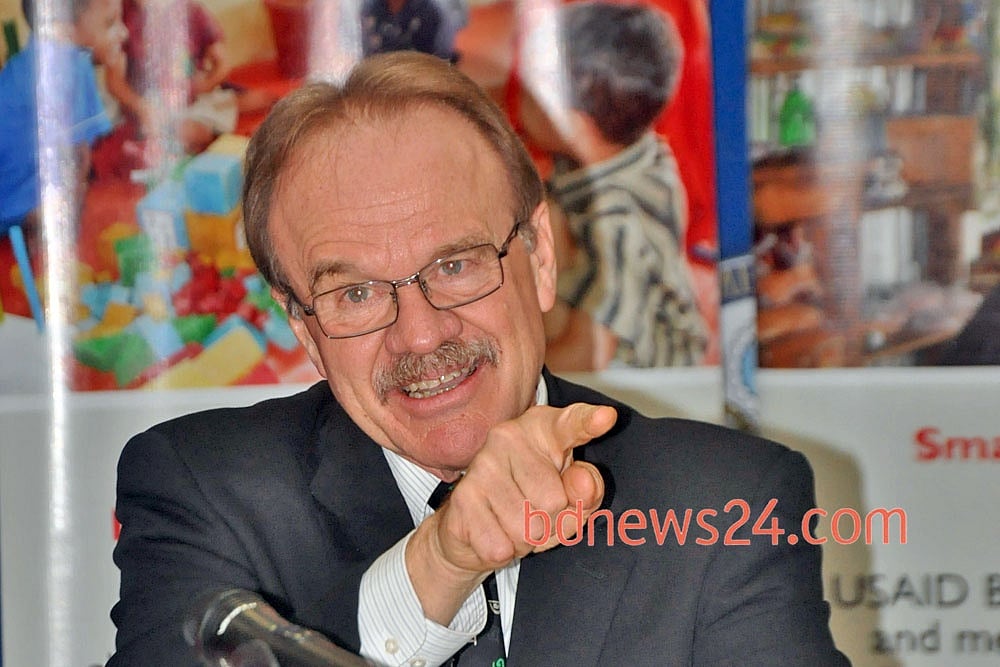
The US ambassador in Dhaka Dan Mozena who was present at the press briefing with the USAID mission director “reconfirmed” the US’s position for a fresh election.
“…our view remained the same (as stated in Jan 6),” the envoy said, leaving it to the political parties to set timeline for new elections.
“It’s not for the America to set the timeline, we are clear in calling for immediate dialogue to find way to hold elections as soon as possible,” he reiterated.
The US embassy announced the arrival of new USAID mission director Jaruzelski on Jan 2 just before the elections. She has been the mission director in Bolivia before her Dhaka assignment.
After the elections, the USAID along with UK development agency funded a survey in Bangladesh conducted by the Democracy International that found Awami League would come to the power again if the elections were held with all parties joining them.
Jaruzelski, however, interpreted the survey in a different way.
Surveys cannot replace elections, she said, but the survey contains a message for both parties.
57 percent of the respondents in the survey said they did not find the Jan 5 polls were credible and majority said there should be another elections relatively soon before five years, she said.
And an overwhelming 79 percent said violence was wrong and political parties should not resort to violence for their political activities.
She said regardless of the political situation “we are intending to maintain the overall level of programmes that are targeted at the poor”.
Jaruzelski said there was “broad consensus” in the US government and within USAID that these programmes must continue.
Since its birth in 1971, the USAID has provided more than $ 6 billion in development assistance to Bangladesh.
Besides, it also helped with technical assistance.
The mission director said last year's assistance was $ 200 million and that would be same this year.
But as USAID programmes are ‘constantly’ reviewed, some of the focus and design of the democracy and governance related programmes directly involving lawmakers may change now, she said.
"We are looking at ways to refine the programmes, but there will be no cut (in amount)”, she said.
She said USAID's main focus in Bangladesh would be on health, food security and climate change issues since Bangladesh is a key partner of the President Obama administration in all three areas –Global Health Initiative, Feed the Future and Global Climate Change Initiative.
With 41 percent children under five too small in height for their age or stunted in growth in Bangladesh, the mission director found it a major challenge for the country on its way to be a middle-income country by 2021.
“It is (middle-income country by 2021) a very ambitious goal, and we are anxious to help,” she said.