


Published : 08 Mar 2015, 02:06 PM
Updated : 19 Oct 2022, 06:37 PM


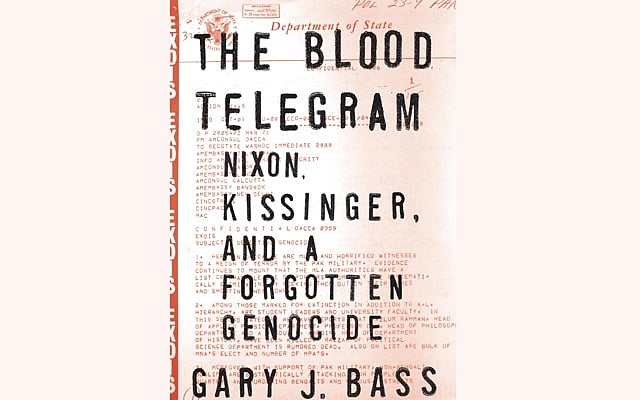
Washington continued to support the brutal Pakistani military junta as it massacred tens of thousands to suppress the Bengali uprising in 1971.
Then US Consul General in Dhaka Archer Kent Blood raised a stink over Pakistani brutalities in a failed attempt to influence the Nixon-Kissinger policy on East Pakistan.
Those messages known as ‘Blood Telegram’ were seen as one of the most strongly-worded dissenting messages in the history of the US foreign service.
Archer Kent Blood was recalled a couple of months into the Liberation War as his bosses in Washington found his pitch against the genocide unacceptable.
Pakistan was a close US ally and member of Washington-sponsored alliances.
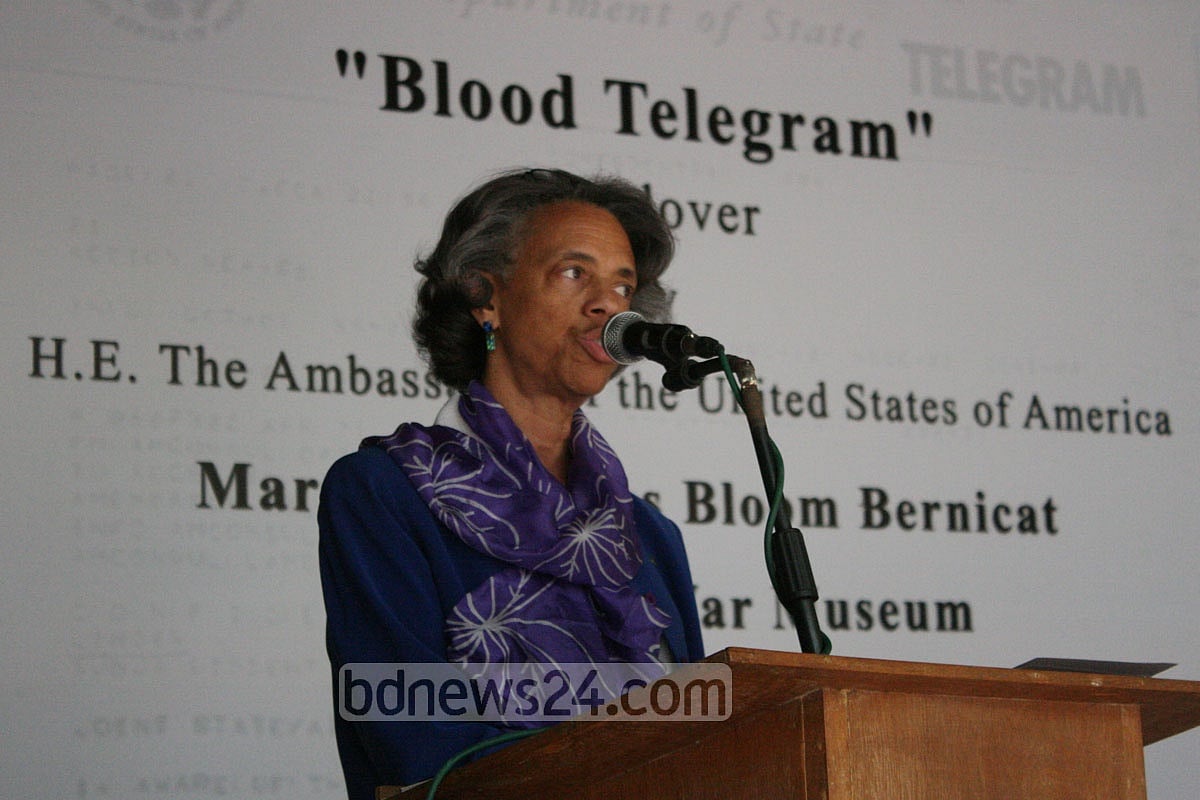
On Sunday, US ambassador in Dhaka Mercia Stephens Bloom Bernicat presented an authenticated copy of the ‘Blood Telegram’ with the seal of the state department to the Liberation War Museum in Dhaka.
At least 25 Americans had signed the Blood Telegram at that time.
Bernicat said Consul General Blood and those who signed his despatches "embodied the importance of dissent and its role in sustaining an operational democracy”.
She said it was a “special gift” to the museum.
“This telegram is a great legacy for every foreign service officer. It is a stark reminder of the value in voicing dissenting views against existing power and authority structures,” she said.
“Freedom of expression and dissent critically contribute to a vital democratic process.”
“A democracy can only achieve its full potential with ample and safe space for free expression, opposition views, and political dialogue,” the ambassador said.
Blood in his telegram categorically stated that West Pakistan was carrying out genocide in East Pakistan, now Bangladesh, which the US had failed to denounce, Akku Chowdhury, a director of Liberation War Museum said.
As Bangladesh emerged through an 'ocean of blood' as a free nation, Blood stood vindicated.













