


Published : 27 Aug 2017, 11:06 PM
Updated : 11 Apr 2022, 09:17 PM


“I don’t know what else could be a bigger politics than defending human rights,” he said, citing examples of what they had to defend during the universal periodic review in 2013 at the UN.
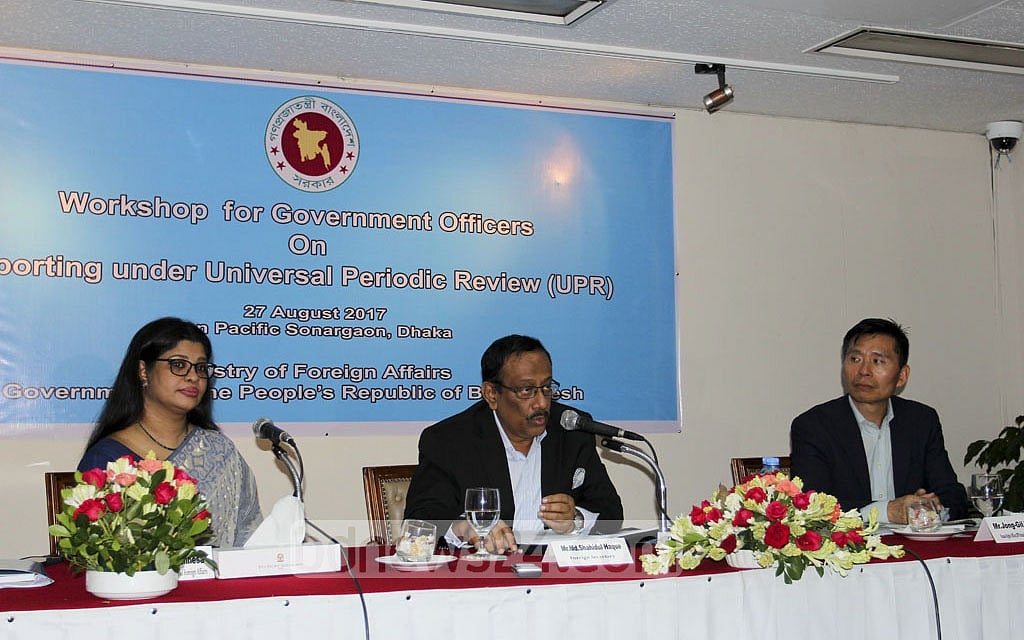
The secretary was speaking at a workshop in Dhaka on Sunday. The Ministry of Foreign Affairs organised the workshop for the government officials to make them understand about the review, also known as UPR. Established in 2006, the review involves all 193 UN Member States. The next review will be in 2018.
Human Rights Officer at the UN Human Rights Office of the High Commissioner’s Universal Periodic Review Branch Jong-Gil Woo who also made a presentation called it a non-political process and said this review serves as a preventer of future human rights violation.
He also stressed on the need of implementing the recommendations that come following the review.
The foreign secretary said during the last review they had even to reply questions related to Rohingya refugees.
“It’s a very difficult process,” he said, “When one state asks questions to another, this is political. This is not economic body or trade body”.
He said Bangladesh declined to take two recommendations after the last review – one is abolishing the death penalty, and the other is accepting same sex marriage.
Next year, he said, they are expecting questions related to extrajudicial killings, among others.
The implementation process of the SDGs would also be an issue of the review, he said.
The reviews are conducted by the UPR Working Group which consists of the 47 members of the Human Rights Council.
Each State review is assisted by groups of three States, known as “troikas”, who serve as rapporteurs.
The selection of the troikas for each State is done through a drawing of lots following elections for the Council membership in the General Assembly.













