Published : 11 Oct 2026, 03:16 PM
Updated : 11 Oct 2026, 03:16 PM


Shipping Minister Shaikh Rabiul Alam has said Bangladesh is formulating a National Port Strategy in the “broader national interest” amid protests over the decision to hand over the New Mooring Container Terminal (NCT) to a foreign company.
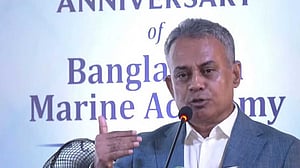
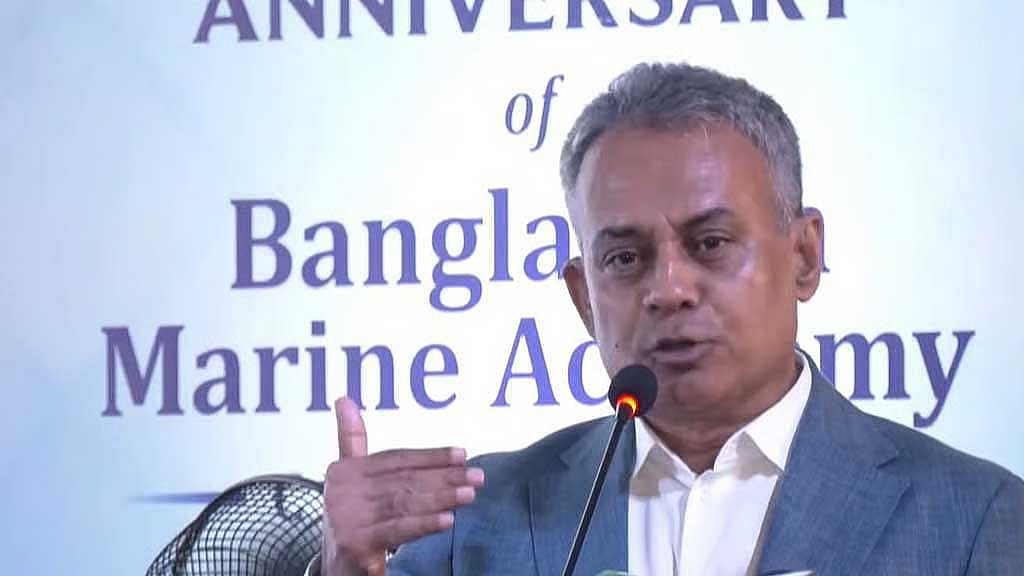
“The National Port Strategy is being formulated with the broader national interest, economic progress and the expansion of international trade in mind,” he said at a seminar organised by the ministry at a Dhaka hotel on Sunday.
A large part of Bangladesh's imports, exports and economic activities is linked to the management of seaports, river ports and land ports, he said.
“Therefore, ensuring coordination, efficiency and effective strategies in port management is now a necessity.”
On Thursday, a concession agreement was signed with Dubai-based DP World to operate the NCT at the Invest Bangladesh auditorium.
Despite objections and protests from different quarters, Chattogram Port Authority Chairman Rear Admiral Moniruzzaman and DP World Chairman Essa Kazim signed the agreement.
Several left-wing political parties and organisations had gathered outside the Invest Bangladesh auditorium from noon that day to protest against the agreement.
They included the Communist Party of Bangladesh (CPB), the Socialist Party of Bangladesh (BaSaD), the Democratic Revolutionary Party, Bangladesh JaSaD, BaSaD (Marxist), Bangladesh Samyabadi Andolon, the Anti-Imperialist and Anti-War Alliance, the Democratic Student Alliance and the Democratic Rights Committee.
At Sunday's seminar, the minister said no particular organisation or ministry should have its authority or responsibilities diminished in the process of formulating the National Port Strategy.
Instead, the country's broader economic interests must take priority, based on the views of all relevant ministries, port authorities, government agencies, businesses, importers, exporters and experts, he said.
He said the Japan International Cooperation Agency (JICA) and relevant experts were assisting with the initiative.
“The most important consideration in formulating the National Port Strategy is to prioritise the broader interests of the state. Everyone must remain alert to ensure that the authority, responsibilities or institutional positions of any ministry or agency do not become obstacles to a coordinated initiative,” Rabiul said.
“However, this does not mean disregarding the legal responsibilities or scope of activities of any authority. Rather, mutual cooperation must be strengthened within the existing responsibilities and structures.”
The country's seaports, river ports and land ports are operated by separate authorities, he said.
Their operations involve not only the shipping ministry but also the commerce ministry, the National Board of Revenue (NBR), Customs and public and private institutions engaged in import and export activities.
Therefore, the views of all relevant parties must be considered when formulating the national strategy, he said.
“There is an opportunity to make use of international investment and experience in Bangladesh's port management. Initiatives have already been taken to involve international companies in container handling and terminal management at various ports in the country,” the minister said.
“To make these initiatives more effective, a balance must be maintained between port operations, investment, trade and national interests.”
Referring to international port operators, Rabiul said Bangladesh was expanding its engagement with leading container terminal operators around the world.
Mentioning initiatives involving DP World, Denmark's AP Moller and Singapore's PSA, he said: “There is an opportunity to improve the efficiency of the country's ports by drawing on international experience. However, coordinated policies and long-term planning are necessary to reap the benefits of such initiatives.”
Improving efficiency in port management would not only facilitate import and export activities but also have a positive impact on the country's overall economic activities, he said.
The minister expressed hope that collective efforts would make it possible to formulate an effective and coordinated National Port Strategy for Bangladesh.
He said the strategy would play an important role in improving port management, expanding international trade and advancing the national economy.