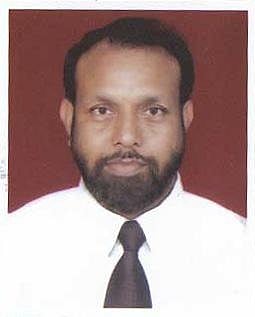
The day I waited for—so long: Mazdar Hossain
The separation of the judiciary from the executive would ensure justice, Mazdar Hossain, the leading plaintiff in the judiciary separation case, said Wednesday. In an interview with bdnews24.com, Mazdar Hossain said: "People of the country will get the benefits of the separation soon. I was keenly waiting with them for the day the judiciary would be free." He said that ordinary people faced a lot of harassments during trials of cases. "People would no longer be harassed once the judiciary got rid of the influence of the executive and worked independently. I firmly believe that people will get justice." He said that the executive magistrates exercised judicial power in addition to their administrative power. "From now on, they would do only administrative work and be more dedicated to people.
bdnews24.com News Service
bdnews24.com
Published :
31 Oct 2007, 04:17 PM
Updated :
17 Aug 2022, 04:24 PM
Dhaka, Oct 31 (bdnews24.com) - The separation of the judiciary from the executive would ensure justice, Mazdar Hossain, the leading plaintiff in the judiciary separation case, said Wednesday.
In an interview with bdnews24.com, Mazdar Hossain said: "People of the country will get the benefits of the separation soon. I was keenly waiting with them for the day the judiciary would be free."
He said that ordinary people faced a lot of harassments during trials of cases. "People would no longer be harassed once the judiciary got rid of the influence of the executive and worked independently. I firmly believe that people will get justice."
He said that the executive magistrates exercised judicial power in addition to their administrative power.
"From now on, they would do only administrative work and be more dedicated to people. People would also get expected services from them. Judicial magistrates would deal only with judicial activities and people would get justice soon," he added.
Mazdar said Article 22 of the constitution speaks of a free judiciary. According to the constitution, the state would ensure freedom of the judiciary. "But the provision of the Constitution regarding separation of the judiciary had not been abided by so far."
Recalling the circumstances under which he filed the case, Mazdar said: "I did not file the case alone. We were 441. I was sub-judge of Dhaka at the time and secretary general of Bangladesh Judicial Service Association at the same time."
He said that judges worked in one of the three branches of the government. But they were in uncertainty over wages, allowances and other facilities—key barriers to performance of judicial activities.
"Though the judiciary was a different branch of the state, judges were in the same cadre of the Bangladesh Civil Service. It was against the law and against the Constitution," he added.
"The reason I filed the case was to see the judiciary free and working as per the constitution. The state will ensure a free judiciary and separate it," Mazdar said.
He said that he was keenly waiting for the day the judiciary would be separated. "I wanted to see people get justice quickly and by spending less. Let the judiciary work independently."
He thanked all for their cooperation in the process of the separation. "Lawyers, journalists and other people took the case to success. Separation of the judiciary from the executive was the result of an all-out effort."
Mazdar was born in Berapara village under Poba upazila in Rajshahi on January 1, 1958.
He completed his matriculation in 1972 from Rajshahi High School and intermediate in arts from Rajshahi Government College in 1976.
He studied law in Rajshahi University and obtained an honours degree in 1980. He obtained a master's degree from the same university in 1981, ranking first in first-class achievers.
In 1983, he started work as
munsef
after passing the BCS examination. He worked as district judge for seven years in different districts. He then worked as deputy secretary in the LGRD ministry.
bdnews24.com/at/my/rm/2210 hours