


Published : 12 Jan 2016, 01:09 AM
Updated : 19 Oct 2022, 05:04 PM


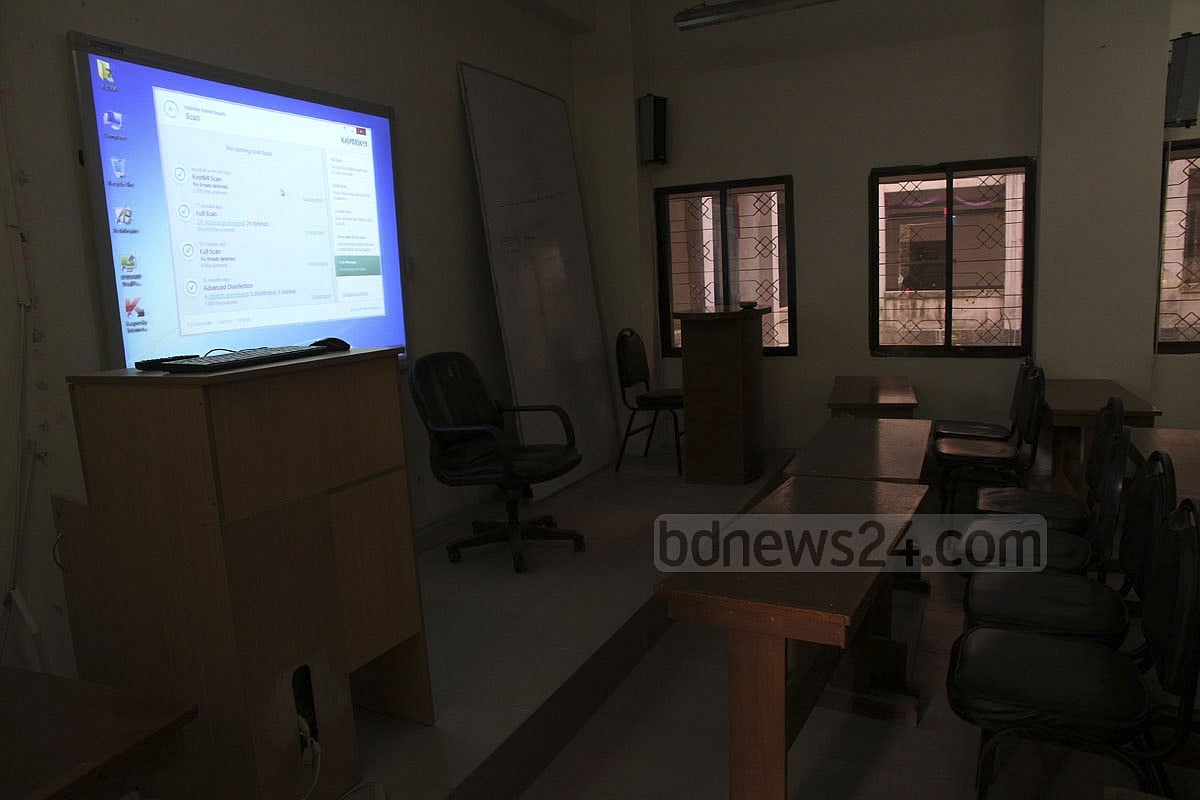
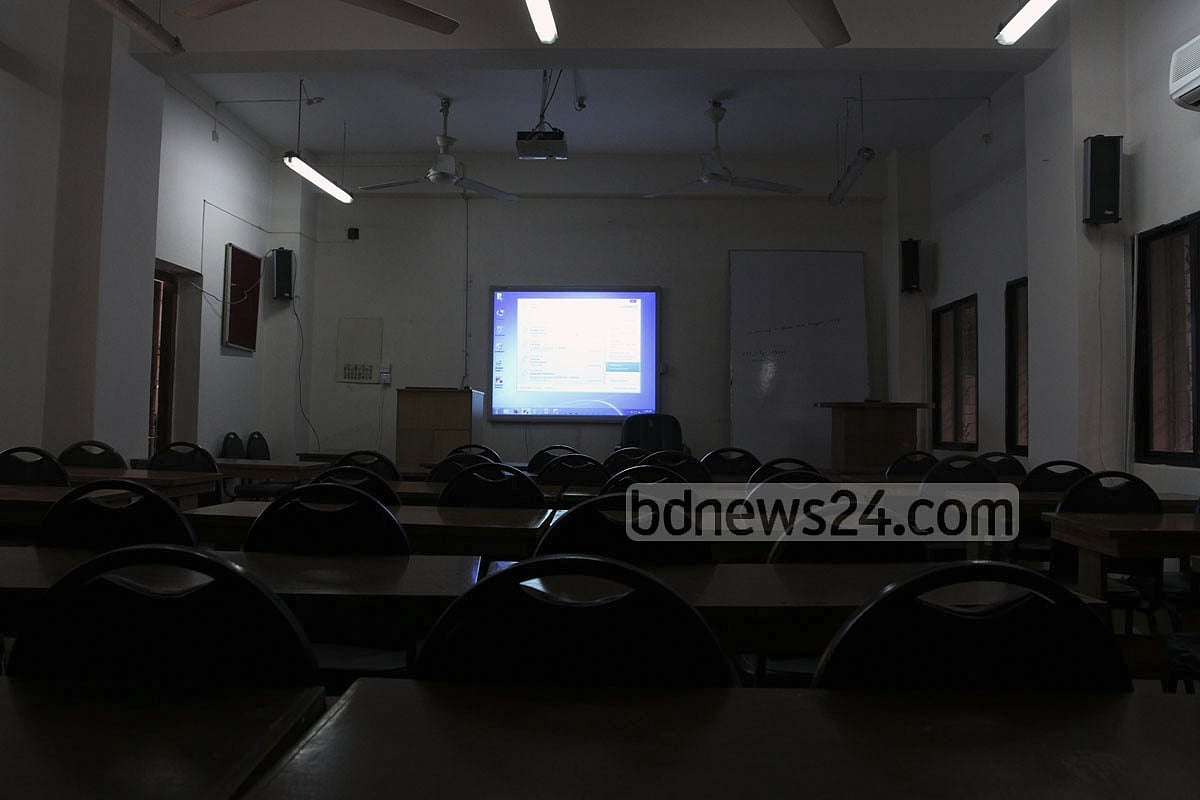
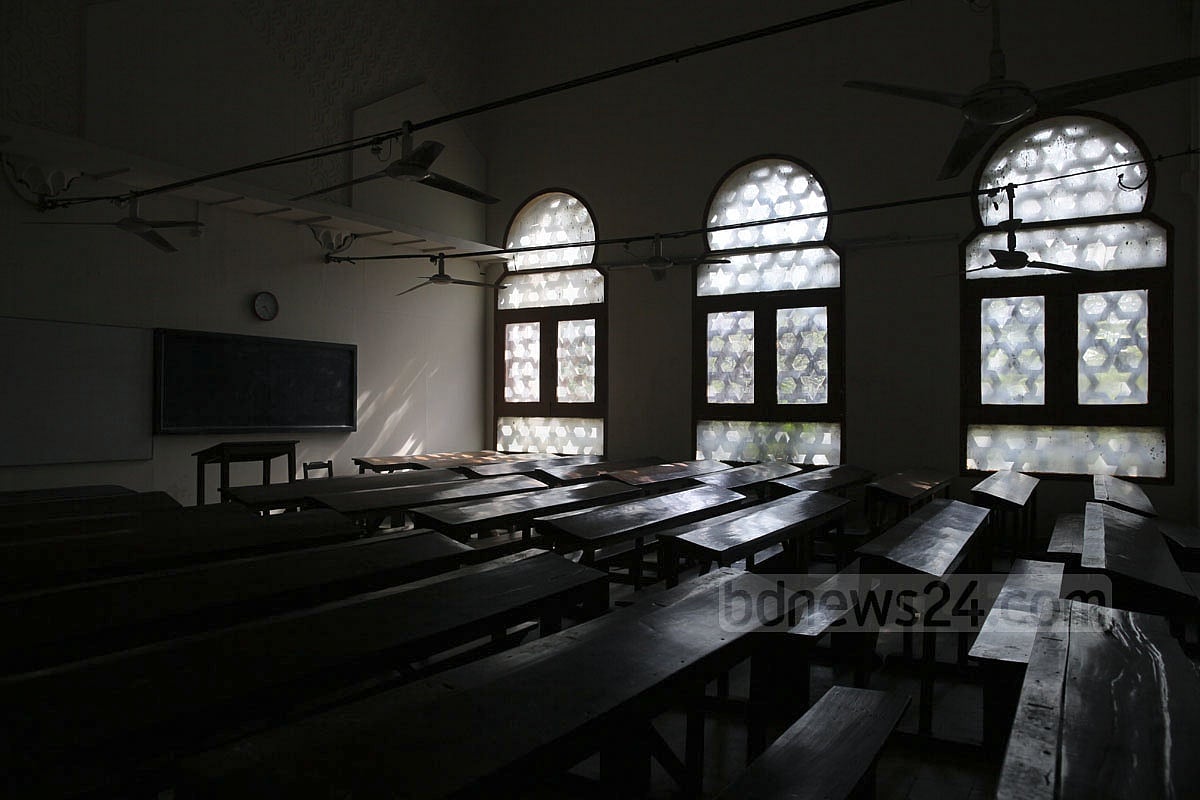
Teachers of these universities joined the strike called by the Federation of Bangladesh University Teachers’ Associations (FBUTA) from Monday morning, accusing the government of failing to meet their demands before the deadline they had given.
FBUTA Secretary General ASM Maksud Kamal told bdnews24.com on Monday evening: “No classes have been held in any public university. But we have left it to the teachers’ associations of each university to decide on their own whether to administer examinations.”
At the Dhaka University, teachers did not take classes or hold midterm or other class tests, but conducted the ongoing semester and other yearly final examinations.
DU Exam Controller Bahalul Haque Chowdhury said they held 52 tests on Monday.
The university’s faculties and departments were deserted throughout the day. But the exam halls at Arts Building and Curzon Hall were abuzz with the examinees and teachers.
No classes were also taken at Jahangirnagar University. But the scheduled final exams of several departments were held, the university’s teachers’ association President Prof Khabir Uddin told bdnews24.com.
The scene was almost similar at the capital’s Jagannath University.
All the teachers’ association of these universities declared that they would continue the strike until the government meets their demands.
Apart from the strike, the teachers will also organise sit-ins on Tuesday on the campuses.
Earlier in the day, FBUTA President Prof Farid Uddin Ahmed had blamed bureaucrats for the ‘discrepancies’ in the pay scale.
“The problem can be solved if we get five minutes with the prime minister,” Ahmed told bdnews24.com.
Prof Ahmed was elected president from an Awami League-backed panel in the recently held election to the Dhaka University Teachers’ Association.
“The bureaucrats are now suggesting 9am-5pm working hours for us. We are not clerks. We work 24 hours.
"The bureaucrats have driven us to this. For nine months they behaved like the upper caste and refused to give us what we deserve.”
He said the teachers wanted to start their ‘cease work’ campaign from Jan 2, but delayed it as there was a Cabinet meeting on Jan 4.
“But after that the prime minister discussed the matter with bureaucrats. And she was not briefed properly.”
Ahmed said a meeting with the prime minister will solve the problem, but no one on behalf of the government has contacted them so far.
But, amidst their strike on Monday, the prime minister while addressing a rally urged the teachers to return to classes. “The government will certainly consider if there is something to be done about the teachers’ problems. But please do not stop teaching. The children will not accept it.”
Sheikh Hasina said, “There is nothing to say if the teachers want the status of secretaries. The honour they ask for depends on them. If they want secretary’s status, they can have it by becoming secretaries by taking the BCS exams.”
The public university teachers, upset with the 'discrepancies' in the new pay scale, began their movement about nine months ago when the draft of the new pay scale was proposed.
They argued that it had lowered their status, that the time-scale and selection grade had been abolished to downgrade their position.
The Cabinet then approved the pay scale in September last year and it was gazetted in December last year.
Amid waves of widening protests, the government had formed a committee, headed by Finance Minister AMA Muhith, to look into the demands of the teachers.
After sitting with the teachers last month, Muhith had promised to fulfil three of their demands.
But the teachers alleged that the pay scale’s gazette, published 10 days after the meeting, did not reflect his pledge in any way.
With no end to the deadlock in sight, the FBUTA earlier this month announced the indefinite strike from Jan 11 if their demands went unheeded.
The teachers at all the public universities had also worn black badges on Jan 3 and observed a two-hour strike on Jan 7.













