



Published : 09 Jul 2017, 02:18 AM
Updated : 05 Aug 2022, 07:23 PM


He said his country was eager to assist Bangladesh in its transition towards a middle-income country, though both nations already gained a lot from the friendship.
“Both countries boast a long-standing partnership,” he told bdnews24.com in an interview as this year marks the 45th anniversary of the establishment of diplomatic relations.
Switzerland and Bangladesh established diplomatic ties on March 13 in 1972, the day when the European country recognised independent Bangladesh.
The two foreign ministers, Didier Burkhalter and AH Mahmood Ali, earlier in March exchanged letters extending “cordial congratulations” to each other and underscoring the “excellent” relations and friendship between the countries.
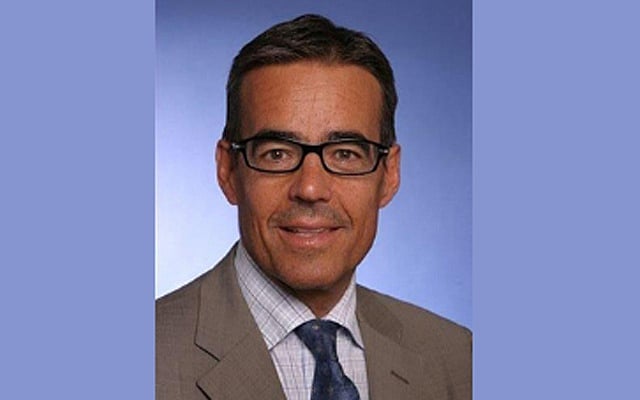
He said the Bangladesh economy is growing “impressively” as Bangladesh aims to become a middle-income country by 2021.
“As a development partner, Switzerland would like to assist Bangladesh in making this transition in a balanced and sustained manner,” he said.
“To sustain the current economic growth and to attain the economic goals, Bangladesh needs to diversify its economy and create more jobs. In this context, further strengthening of trade and investment cooperation between Switzerland and Bangladesh is one of the top priorities”.
“Switzerland will also assist Bangladesh with skills development and institutions building support which is also important for Bangladesh to make this transition,” he said.
Humanitarian assistance was the priority issue when the diplomatic relations began in the early 70s. Later, development aid was the main pillar of the relations. Annual grant contribution stands at around $25 million.
“As a wealthy and developed country, Switzerland has always lived up to its responsibility towards the less developed countries. It also has a vital interest in global stability and security,” the ambassador said.
“These two motives explain the fact that Bangladesh is a priority country of Switzerland for development cooperation”.
Switzerland is working on skills development, local governance and market development. It also works on gender equality and human rights issues. Migration is a new area of cooperation.
Two-way trade is also growing. In 2016, it posted 16 percent growth to CHF 591.5 million, compared to 2015. It has more than doubled since 2010.
But, he said trade potentials remained “largely untapped”.
All the main Swiss companies are present in Bangladesh. They have investments in pharmaceuticals, chemicals, agro-food industry and construction industries.
Swiss investments inflow to Bangladesh during the fiscal year 2015-2016 period stood at $29.9 million marking a 17 percent growth.
The ambassador said Swiss Small and Medium Sized Enterprises, SMEs, which are the backbone of its economy, are becoming gradually interested in Bangladesh.
He, however, said for these small companies, Bangladesh is “a difficult and challenging destination”.
“Bangladesh should address governance, infrastructure, and legal protection related issues to create a further business-friendly environment in the country.
“These areas must be improved to attract long-term foreign investments”.
He also suggested Bangladesh diversify its trade basket and place focus on new sectors such as leather, ceramic and IT.
Both countries are working “closely” on global issues such as migration.
Switzerland is supporting Bangladesh to update its laws and policies and make them more migrant worker friendly. At the multilateral level, two countries are also working on different platforms such as GFMD, and Colombo Process.
“The two countries have long-standing relations based on mutual respect, equal partnership and shared values,” the ambassador said.
A number of “positive developments” have taken place in recent years between the relations.
For example, he said rapid growth in bilateral trade and investments.
Bangladesh remains a priority country for Swiss international cooperation. “We have real collaboration with the government of Bangladesh, and I would like to see that this partnership continues”.
At the institutional level, he said political relations between the countries are robust now.
He said in Bangladesh’s transition towards a middle-income country, Switzerland can potentially become a provider of technological solutions to Bangladesh.
“New areas of economic cooperation to be identified such as hi-tech, clean-tech, renewable energy”.
“Promotion of human rights worldwide is one of the foreign policy objectives of Switzerland. This is another area where I would like to see closer cooperation between Switzerland and Bangladesh in the future,” he said.
The ambassador also stressed on the need to address the “root” of the rise of extremism in Bangladesh in the wake of Holey Artisan café attack last year on July 1.













