SPECIALWoes of Grameen borrowers
In 1976, Sufia Khatun of Jobra village took a small loan from Grameen Bank to beat poverty and the 'Bank for the Poor' took off.
bdnews24.com News Service
bdnews24.com
Published :
03 Dec 2010, 10:09 AM
Updated :
24 Apr 2022, 05:49 PM
Mintu Chowdhury
bdnews24.com staff correspondent from Chittagong
Chittagong, Dec 2 (bdnews24.com) —In 1976, Sufia Khatun of Jobra village took a small loan from Grameen Bank to beat poverty and the 'Bank for the Poor' took off.
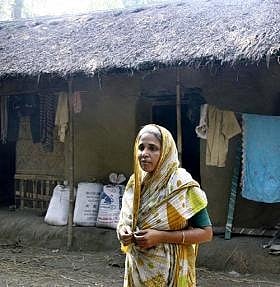
Thirty-five years on, little has changed for Sufia's family. The first borrower of Grameen Bank has died poor; her two daughters, Halima Khatun and Nurunnahar Begum — one a house wife and the other mentally challenged— live off peanuts.
A trip to Sufia's house in Jobra, under Hathazari Upazilla, Chittagong, on Thursday revealed that leaving a five-katha dwelling of Halima and Nurunnahar, the family has no crop land.
Ten years after Sufia died in 1997, the 'Banker to the Poor', Muhmmad Yunus, and his Grameen Bank earned Bangladesh the Nobel Peace Prize for battling poverty by lending out small sums of money to the poor. Grameen has splashed out billions of taka in loans, helping families out of poverty and rousing similar operations the world over.
'MORE LOAN'
Under Grameen Bank's microcredit scheme, Sufia . borrowed Tk 560 in two installments in 1976. This was the first loan under Dr Yunus' action research programme before Grameen Bank launched its official microcredit scheme.
In 2010, Nurunnahar, Sufia's youngest daughter, tells bdnews24.com, "Though my mother was the first borrower of microcredit scheme, though Yunus Sahib has earned name and fame highlighting my mother, we have remained poor till today."
Nurunnahar said that her mother had taken the loan to start a cane furniture business. But her business did not take off. Instead she got embroiled in the web of loans. As the interest rate continued to rise, Sufia was forced to take loan from a different source to repay Grameen Bank's loan, said Nurunnahar.
'Since then none from our family ever went to Grameen Bank to borrow money,"said Nurunnahar.
'BORROWERS OVERLOOKED'
Halima's son, Babul, a rickshaw-puller said that after Dr Yunus won Nobel Peace Prize, many journalists — both print and electronic — visited their village and took their photos.
"The local Grameen Bank officials showed the reporters the building next to our house as ours, and the journalists taking its photo went away." The building belongs to Sufia 's nephew Jebol Hossain, a migrant worker in Abu Dhabi.
Jebol, who was on a visit to his village home recently, told bdnews24.com that Dr Yunus has won Nobel Prize highlighting positive aspects of microcredit scheme. "He has visited foreign lands, given speeches lauding Grameen Bank activities. But no one has ever highlighted the conditions of the borrowers."
After winning the Nobel prize, Dr Yunus visited Jobra village, but no one from Sufia's family could meet him, said Nurunnahar and Jebol.
'NO TO FURTHER LOAN'
Another borrower from Grameen Bank who failed to improve his financial condition was Mohammad Hanif from Jobra village. Nurnnahar's neighbour Hanif borrowed Tk 2000 from Grameen Bank in 1986.
While talking to bdnews24.com, Hanif said that he bought a cow with the borrowed money. But failing to repay installment, he had to sell the cow. He repaid Tk 2800 with interest in seven months.
"Though microcredit scheme has been publicised as the way-out for the poor, it was hardly the case for many of us," said Hanif. These days Hanif leads a modest life living off cultivation.
'I never went for a second loan from the Grameen," said Hanif.
bdnews24.com/mc/sh/shk/am/bd/2228h