Published :
16 May 2011, 10:10 AM
Updated :
10 Aug 2022, 04:49 PM
Nurul Islam Hasib
bdnews24.com Senior Public Health Correspondent
Dhaka, May 14 (bdnews24.com)–A strain of bacteria that took a heavy toll on Bangladesh's export-oriented leather industry in 2010 has staged a comeback with the arrival of rainy season, researchers say.
The Institute of Epidemiology Disease Control and Research (IEDCR) that oversees human infection from the livestock disease has swung into action after two clinically confirmed cases of anthrax were reported in the north-western endemic district Pabna.
"A team comprising IEDCR scientists and livestock experts has rushed to the district," director Prof Mahmudur Rahman told bdnews24.com on Monday.
He urged people not to panic, but be aware of the disease. "Awareness at the beginning can stem its spread."
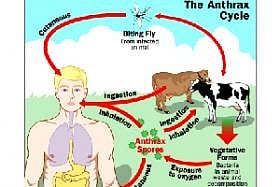
The bacterium can survive in harsh conditions for even centuries in the soil. Cattle get infected while grazing during rainy days when water brings the bacterium to the surface.
"The organism passes on to the human while handling sick livestock but person to person transmission does not occur," Rahman said.
Anthrax does not spread directly from one infected human or animal to another, but is spread through spores.
Humans can contract anthrax from handling diseased animals or eating infected meat.
He strongly recommended 'not to slaughter sick cattle.'
"We saw people especially in rural Bangladesh slaughter a cow or goat immediately after it falls ill. And they also distribute the meat among their neighbours and relatives.
"That gave a spike of human anthrax cases last year," he said.
More than 500 people were infected by anthrax in a major outbreak of the disease in humans and cattle in the country's dairy belt in September last year.
IEDCR has so far found human infections from different parts of Pabna, Sirajganj, Kushtia, Tangail, Meherpur, Manikganj, Satkhira, Lalmonirhat, Rajshahi, Narayanganj, Laxmipur, and Chittagong districts.
They started reporting in August 2009. And it was only 99 cases until June 17, 2010.
But after that the cases soared dramatically and the total number of cases jumped to 607 by October 2010.
No humans had died, but panicky people stopped buying meat that triggered downturn in meat sale.
Even the government declared a red alert on livestock during Eid holidays.
"A cheap vaccine can keep animals healthy from the bacterium, but the vaccination is not being carried out properly across the country," Prof Rahman of IEDCR observed.
Also a joint coordinator of One Health Bangladesh, Prof Rahman said coordination between human health and livestock departments over 'one health approach' was imperative to stem such bacterial zoonosis.
He said people should know how to dispose of dead animals. They usually throw dead animals either into the water bodies or in the open field.
"That helps the bacterium to stay on the surface," said the IEDCR director said and urged all to bury dead animals after wrapping them with plastic.
The team that rushed to Santhia, Pabna where Chand Ullah and Mirazul got infected 10 to 12 days after slaughtering and processing sick goat would look into news cases.
"Our doctors are better trained. Anthrax infection in skin is not life-threatening if detected early and there is treatment available," the IEDCR director said.
But it can be fatal if it goes into lungs and intestines.
IEDCR first records anthrax in 1986 in 19 tannery workers.
bdnews24.com/nih/bd/1552h