


Published : 23 May 2017, 11:56 PM
Updated : 19 Oct 2022, 03:36 PM


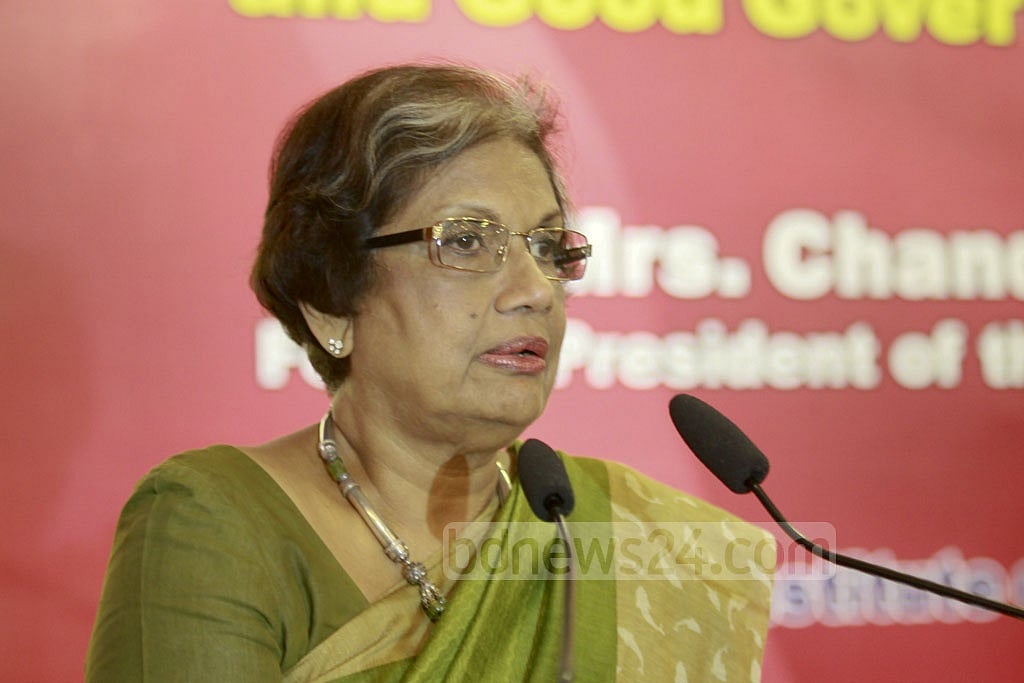
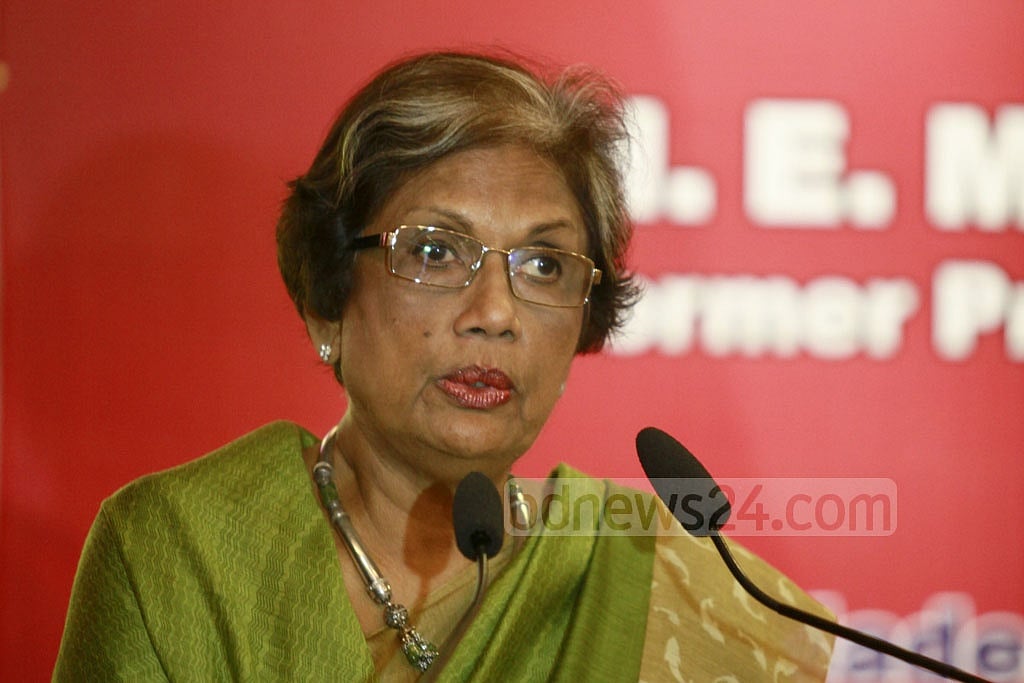
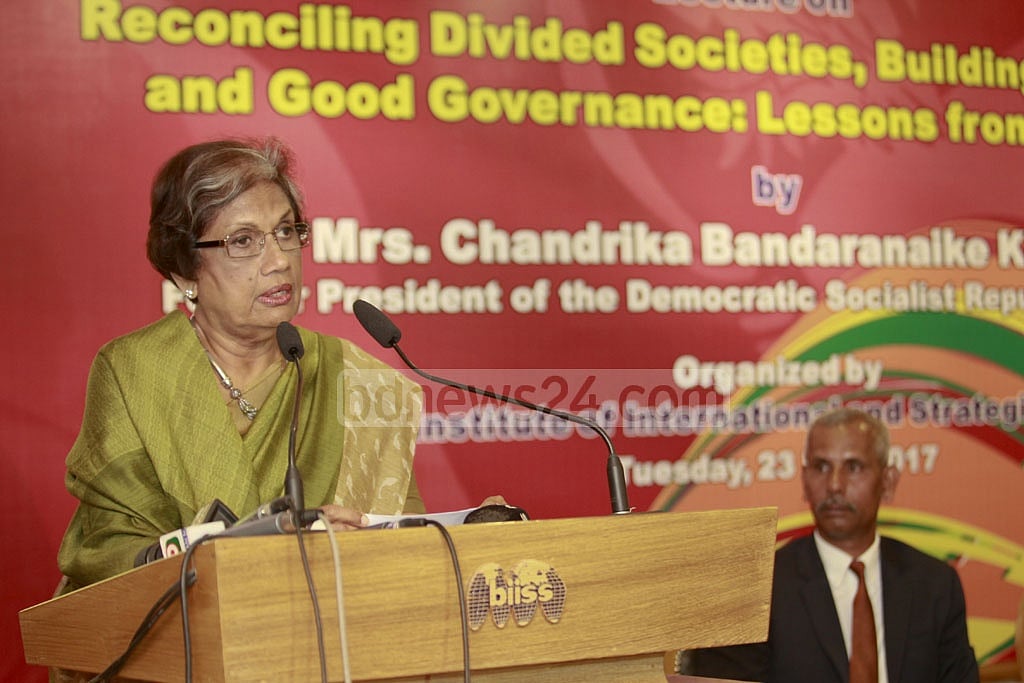
“Both regional organisations failed to resolve any political problems,” she said, delivering a lecture in Dhaka on Tuesday.
“I would say (the regional groupings) are inactive and ineffective,” she said.
During her time as Sri Lankan president, she attended a summit in the Maldives with her Maldivian counterpart Maumoon Abdul Gayoom and altered the language in the founding document of SAARC so that it could discuss bilateral or trilateral issues.
“But it has not been able to do anything to fix the political problems (of any member state).”
India-Pakistan tensions are seen as a stumbling block for SAARC and its mandate.
The Bangladesh Institute of International and Strategic Studies or BIISS organised the lecture on “Reconciling divided societies, building democracy and good governance: Lessons from Sri Lanka” on Tuesday.
Kumaratunga, who was president from November 1994 to November 2005, highlighted different aspects of Sri Lanka’s post- civil war reconciliation and peace-building.
Referring to the Tamil Tigers, she said: “I come from a country which has experienced the effects of terrorism for nearly three decades.”
She stressed the need for identifying the “deep-rooted” causes of terrorism.
Officials from different government ministries, diplomats from of different embassies, representatives from national and international organisations, and researchers from different institutes participated in the event.
BIISS Chairman Ambassador Munshi Faiz Ahmad and Director General Maj Gen AKM Abdur Rahman also spoke.













