


Published : 14 Apr 2022, 01:28 PM
Updated : 21 Oct 2022, 03:41 PM


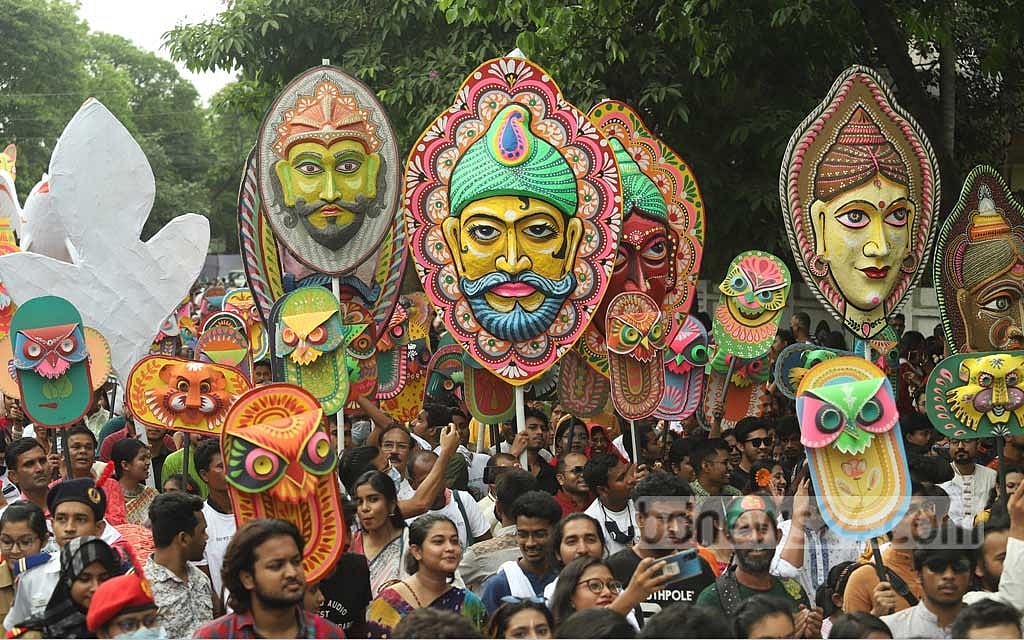
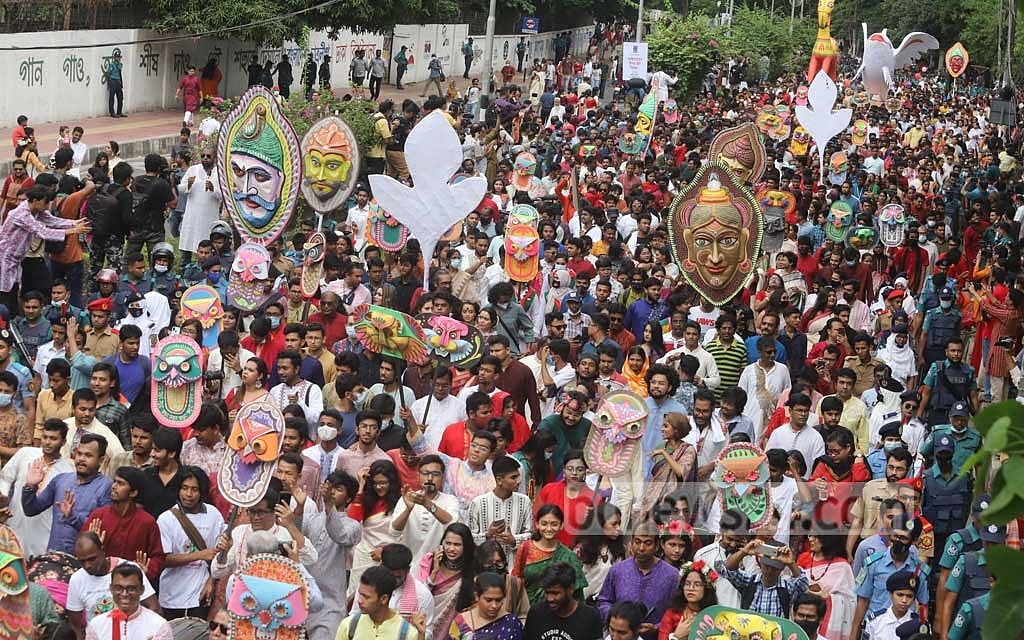
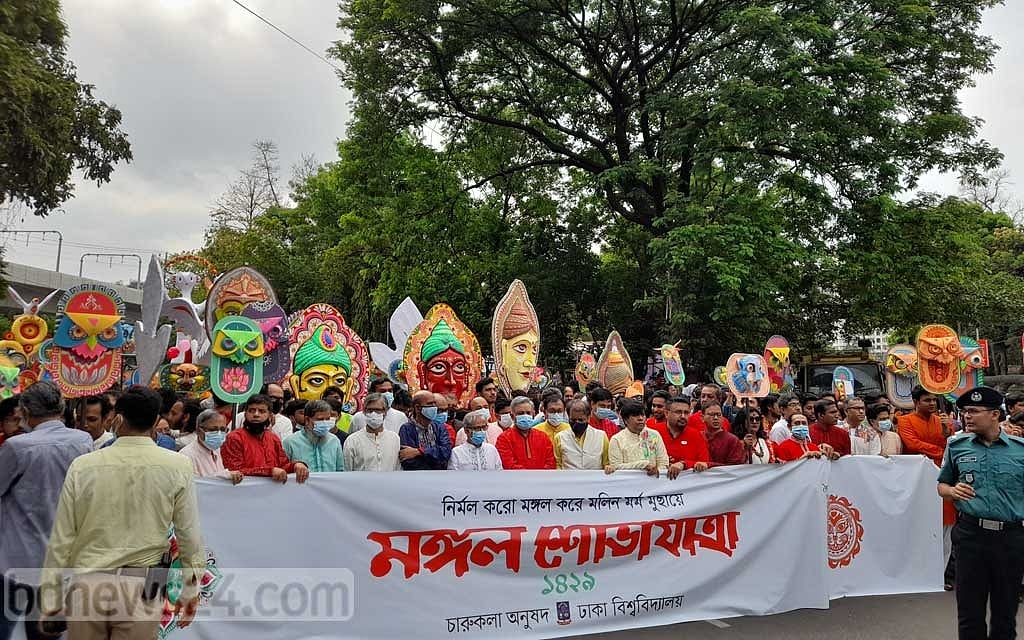
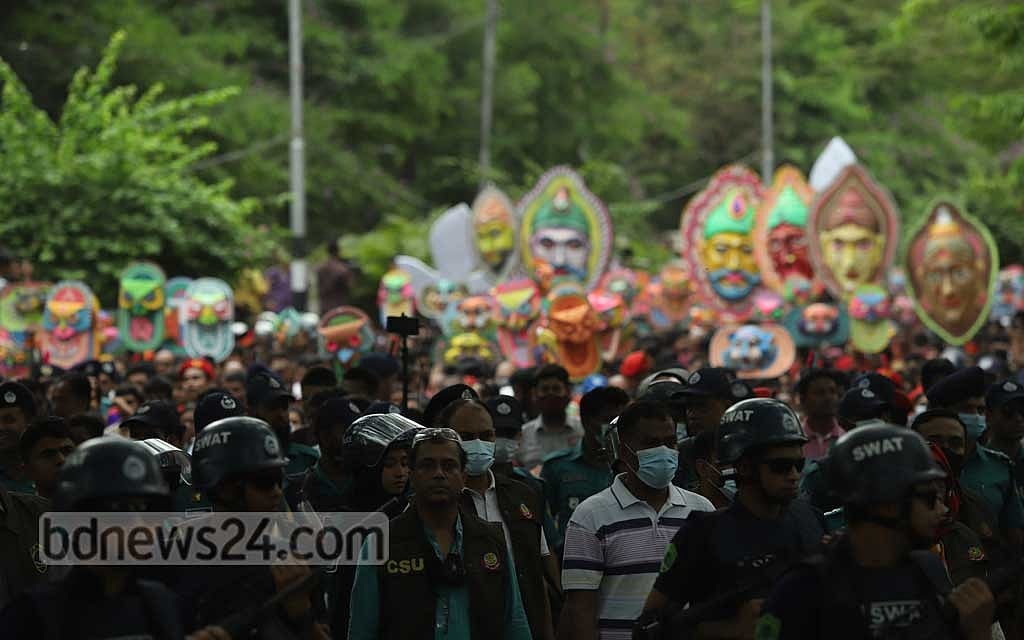
The parade kicked off from the Dhaka University TSC at 9:01 am following the conclusion of Chhayanaut’s flagship curtain-raising event at Ramna Batamul on Thursday.
The march was led by the university's Vice-Chancellor Md Akhtaruzzaman. It advanced from the TSC to Nilkhet instead of taking the usual Shahbagh-TSC route due to ongoing construction work of the metro rail.
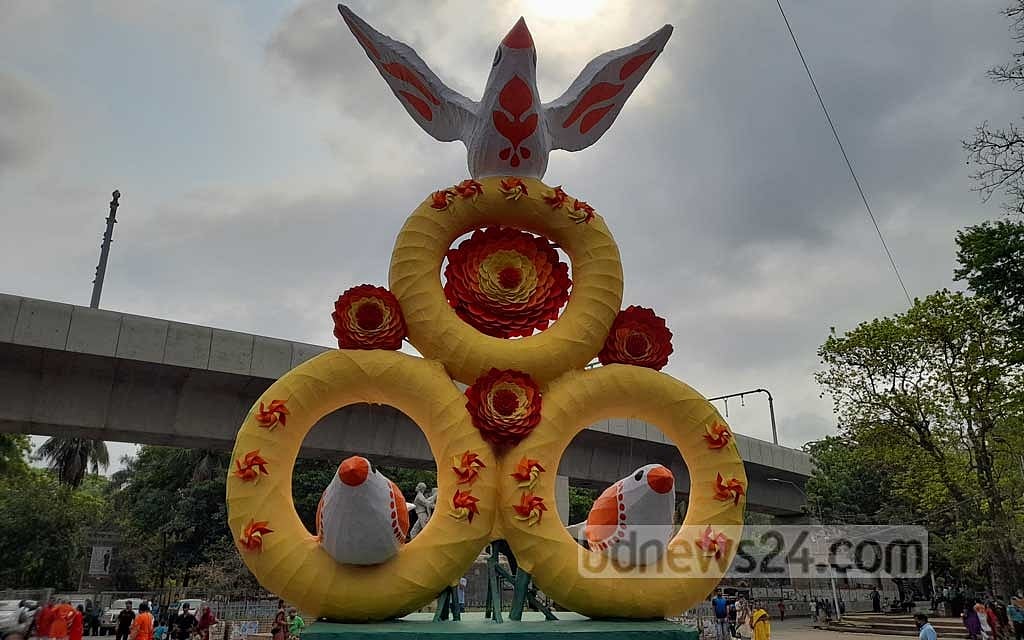
Dhaka University's Institute of Fine Arts welcomes Bangla New Year 1429 with the Mongol Shobhajatra on Thursday, Apr 14, 2022, two years after the traditional procession was suspended due to the coronavirus pandemic. Photo: Asif Mahmud Ove
This year's procession featured five motifs, represented by a large-scale replica of a horse alongside other handcrafted clay figurines and traditional artefacts, all of which were crafted by artisans under the guidance of students.
Mongol Shobhajatra was declared a UNESCO cultural heritage in 2016.
As several coronavirus restrictions have been lifted this time, people of all ages gathered in the Ramna and Dhaka University areas in the morning. The campus started to sparkle with an array of colours within a short period.
The procession was held under tight security as members of the police, RAB, APBn and SWAT set up security cordons at the front and back.
The Bangla New Year was introduced by the Mughals as a harvest calendar. With time, it turned into one of the biggest festivals in the region, upholding secularism and creating a sense of belonging among all Bengalis. It also inspired Bengalis to fight for their rights while nurturing their cultural heritage.
Since its inception in 1967, Chhayanaut has been celebrating Pahela Boishakh, the first day of the Bangla calendar, at Ramna Park, which gradually became the global centre of Bangla New Year celebrations.













