


Published : 05 May 2017, 11:04 PM
Updated : 19 Oct 2022, 03:34 PM


They hope the satellite will change the face of South Asia by expanding technologies for weather forecast, emergency communication during disaster, tele-education, tele-medicine, and other sectors.
Bangladesh, Afghanistan, Nepal, Bhutan, Sri Lanka and Maldives are the partners of India in this venture.
Pakistan has opted out.
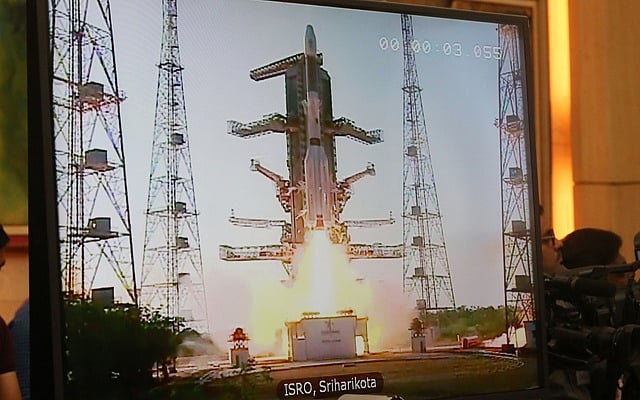
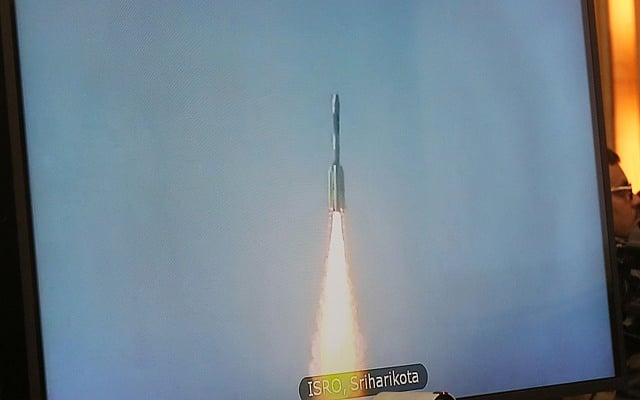
Indian Space Research Organization (ISRO) launched the satellite intended to serve economic and developmental priorities of South Asian nations.
It used its heavy rocket Geosynchronous Satellite Launch Vehicle (GSLV-F09) from the second launch pad at the Satish Dhawan Space Centre at the Sriharikota spaceport in Andhra Pradesh on Friday.
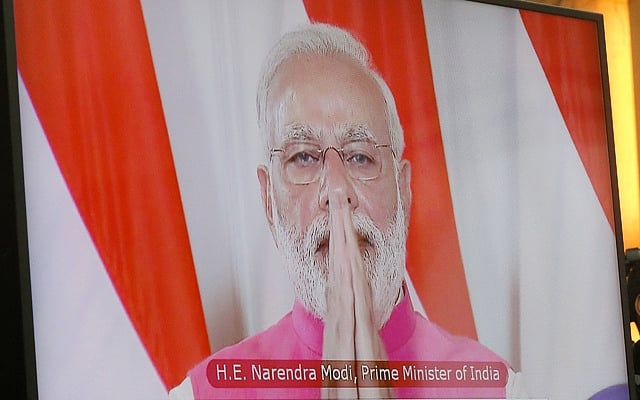
Indian Prime Minister Narendra Modi then informed Prime Minister Sheikh Hasina, Afghanistan President Ashraf Ghani, Bhutan Prime Minister Tshering Tobgay, Maldives President Abdulla Yameen, Nepal Prime Minister Pushpa Kamal Dahal, and Sri Lanka President Maithripala Sirisena about the successful launching in a video conference.
A documentary video on the launch was shown later.
Terming the day of the launching 'historic', Modi said, "With this launch we have started a journey to build the most advanced frontier of our partnership."
"With its position high in the sky, this symbol of South Asian cooperation would meet the aspirations of economic progress of more than one-and-a-half billion people in our region. And, extend our close links into Outer Space," he said.
He also 'deeply' appreciated the 'strong and valuable' support extended by the governments of the six other countries, without which, he added, this project 'would not have been possible'.
"It shows that our collective choices for our citizens will bring us together for: cooperation, not conflict; development, not destruction; and prosperity not poverty."
Costing around Rs 2.35 billion, the satellite was initially known as the Saarc satellite. But with Pakistan deciding to keep out, it is called the South Asia Satellite.
With a life span of over 12 years, its objective is to provide communication applications in Ku-band for the user nations.
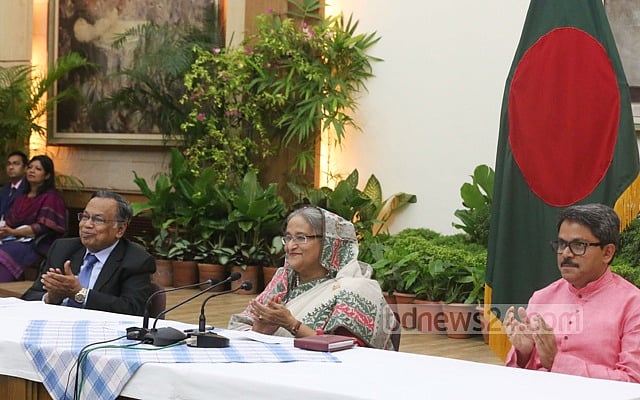
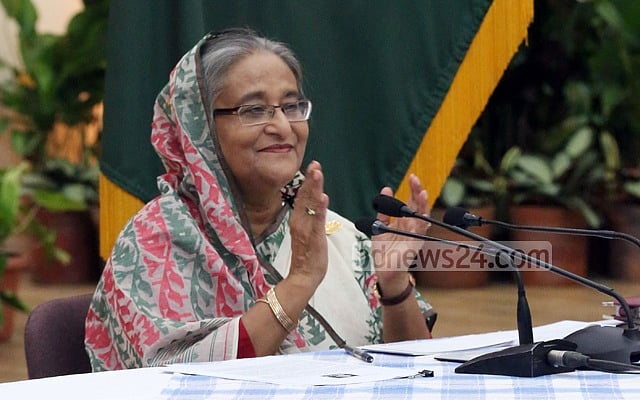
Prime Minister Hasina joined the video conference from the Ganabhaban.
She congratulated Modi and his government on the launch of the satellite.
"I strongly believe that the betterment of the people of South Asian region depends on fruitful engagement in various fields of cooperation between the countries of this region," she said.
"We want to cooperate with all countries for creating an area of peace in South Asia where we can live as good neighbours and pursue constructive policies for the benefit of our people," she added.
Hasina also said Bangladesh and India jointly achieved 'many successes'.
"With this (satellite), we have expanded our connectivity from land, water and air to space. I am sure that cooperation in space will definitely lead us to the ambitious technological enhancement for the benefit of the region," the prime minister said.
Before Hasina, Afghan President Ghani said, "Through this cooperation, we have to work for the poor and the deprived."
Bhutan Prime Minister Tobgay said, "Launch of the South Asia Satellite (is a) historic moment for the world, it ushers in a new era of regional cooperation."
Maldives President Yameen thanked India for sharing the achievement. "This launch is an example of India's 'neighbourhood first policy'."
Congratulating Modi and the Indian government for the launch of the satellite, Nepal Prime Minister Dahal said this would enhance connectivity.
Sri Lankan President Sirisena said it was an 'honour to congratulate' Modi on this 'historic' occasion.
Foreign Minister AH Mahmood Ali, Prime Minister's Political Affairs Adviser HT Imam, State Minister for Foreign Affairs Md Shahriar Alam, State Minister for Telecommunications Tarana Halim and Indian High Commissioner Harsh Vardhan Shringla were with Hasina at the Ganabhaban during the conference.













