Published : 08 Oct 2026, 07:13 PM
Updated : 08 Oct 2026, 07:13 PM


Bangladesh is seeking to rewrite its Ganges water-sharing deal with India before the 1996 treaty expires in December, with a guarantee for its dry-season share high on the agenda.
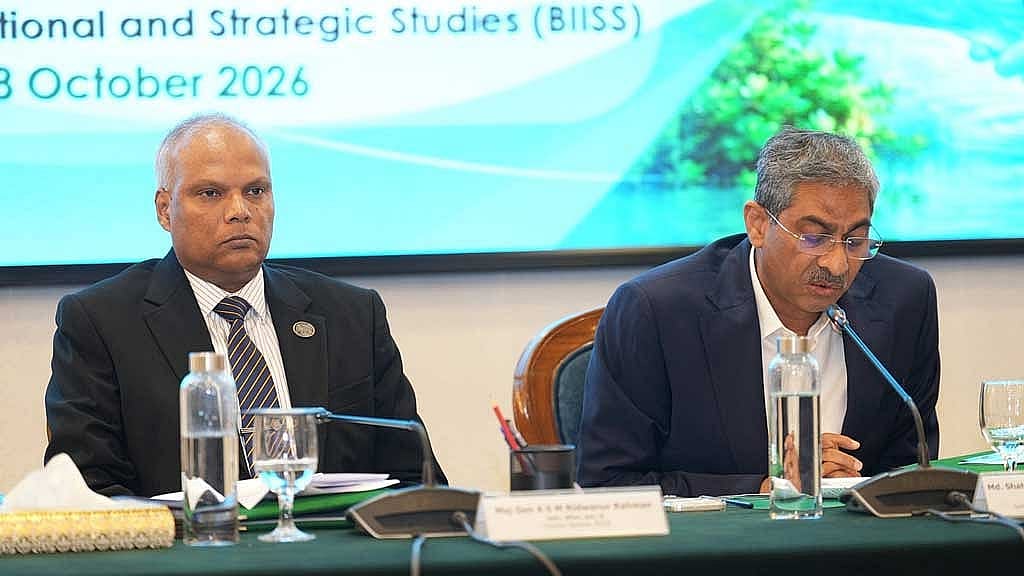
Water Resources Minister Shahiduddin Chowdhury Anee said Thursday that Dhaka was hopeful of completing a new or revised agreement before Dec 12, when the 30-year treaty expires.
Speaking after a seminar in Dhaka, he said talks were continuing through the Joint Rivers Commission.
“Our main priority will be to bring back the guarantee clause that was included in the 1977 agreement,” Anee said.
The 1977 agreement, signed for five years, contained a guarantee clause that was dropped when the current 30-year treaty was signed in 1996, he said.
“We want to make a new agreement so that its term can be extended for many more years, and the guarantee clause is included,” Anee said. “We are very active in ensuring that the agreement is given priority in the interests of the people and the country.”
He said technical teams from the Joint Rivers Commission had already been working on the matter, with a ministerial-level meeting to follow.
What the Guarantee Means
Water diplomacy analyst Malik Fida A Khan, executive director of the Centre for Science, Technology, Policy and Diplomacy, said the 1977 and 1996 agreements had different guarantee mechanisms, with the earlier one stronger for Bangladesh.
Under the 1977 provision, Bangladesh was guaranteed at least 80 percent of its scheduled share if Ganges flow fell below the agreed level during a 10-day period.
The 1996 treaty also provided guarantees during the key agricultural period from Mar 11 to May 10, with each country assured 35,000 cusecs during three of six successive 10-day periods.
Both agreements relied on historical flow data at Farakka from 1948 to 1973. Fida said future negotiations should look beyond Farakka and consider the entire Ganges basin.
“We have never considered the full volume of water in the entire Ganges basin. We have only considered the flow at Farakka and divided our share accordingly. So we need to discuss this,” he said.
“I’m not saying we can change everything right now, but we need to start discussions with India and others on this.”