Published : 07 Oct 2026, 01:50 PM
Updated : 07 Oct 2026, 01:50 PM


The impact of Bangladesh's much-discussed Agreement on Reciprocal Trade (ART) with the United States is beginning to show in its import figures.
Imports from the US have risen sharply under one of the key elements of the deal, which is aimed at narrowing the trade imbalance between the two countries.
An analysis of Bangladesh Bank's latest country-wise import data shows that Bangladesh imported nearly $1.9 billion worth of goods from the US in the first half of 2026, from January to June.
Imports stood at $605.6 million in the first quarter, from January to March. They more than doubled to $1.29 billion in the second quarter, from April to June.
That was 113.11 percent higher than in the previous three months.
According to central bank data, mineral fuels, oils and related products, including petroleum products and bitumen, accounted for the largest share of imports from the US in the April-June quarter.
Bangladesh spent $775.2 million on these products during the period, compared with $135.5 million in the first quarter.
The $639.7 million increase in imports of these products accounted for about 93 percent of the overall $685 million rise in imports from the US between the two quarters.
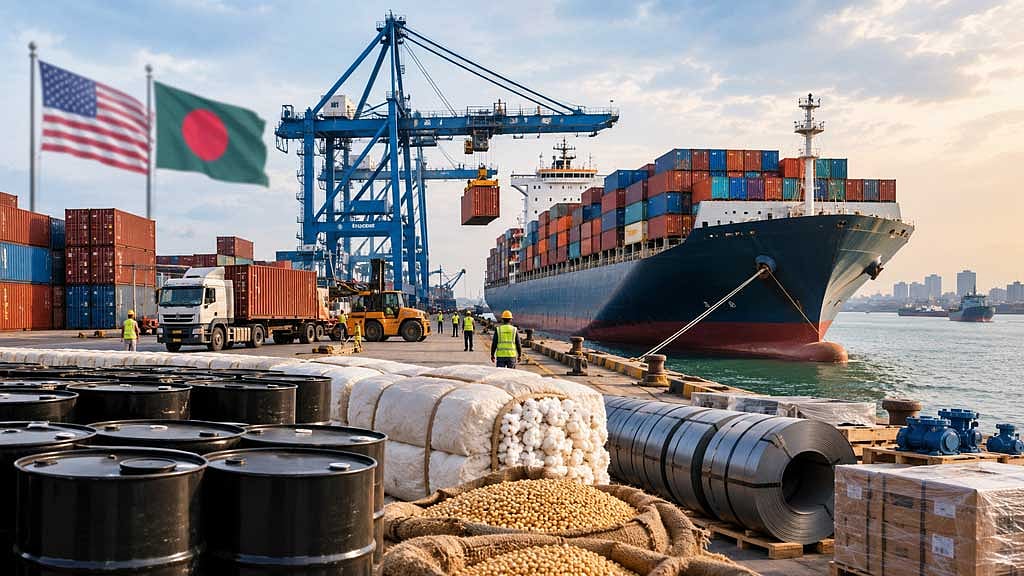
Other imports between April and June included $142.6 million worth of cotton, $104.1 million of iron and steel, $47.8 million of cereals, including wheat, and $72.9 million of soybeans and animal feed.
Bangladesh also imported $21.9 million worth of measuring and testing instruments, $19.1 million of electrical machinery and equipment, and $18.5 million of plastic products.
Aircraft Purchases to Push Import Bill Higher
Importers and economists say the trade agreement was bound to lead to higher imports from the US, while the import bill is expected to rise further once Bangladesh begins buying Boeing aircraft.
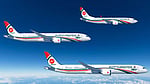
State-owned Biman Bangladesh Airlines has decided to buy 25 aircraft from US manufacturer Boeing, with two agreements already signed.
The first agreement, signed on Apr 30, covers 14 aircraft at an estimated cost of $3.7 billion, or about Tk 455.1 billion at an exchange rate of Tk 123 to the dollar.
Boeing is expected to deliver the aircraft in phases between 2031 and 2035.
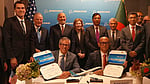
A second agreement for another 11 aircraft was signed in New York on Sept 24 on the sidelines of the United Nations General Assembly.
Neither side has officially disclosed the value of the second agreement.
Background to the Deal and Tariff Dispute
After returning to office for a second term, US President Donald Trump announced steep additional tariffs on more than 100 countries on Apr 2, 2025.
Bangladesh initially faced an additional tariff of 37 percent. Following negotiations, the rate was brought down to 20 percent, taking effect on Aug 1.
After nine months of negotiations, Bangladesh's interim government signed the ART with the US on Feb 9, just three days before the national election.
Under the agreement, the reciprocal tariff on Bangladeshi exports to the US was cut from 20 percent to 19 percent.
The deal also provided that garments made with US raw materials -- cotton and man-made fibres -- would not face reciprocal tariffs when exported to the American market.
In return, Bangladesh committed to buying $3.7 billion worth of US agricultural products, $15 billion in energy products over 15 years, 14 Boeing aircraft and military equipment.
Eleven days after the agreement was signed, the US Supreme Court ruled on Feb 20 that the tariffs imposed by the Trump administration were unlawful.
Although the ruling removed the legal basis for the tariffs, no move has yet been made to scrap the Bangladesh-US trade agreement.
What Importers Say
Mohammed Amirul Haque, managing director of Seacom Group and president of the Chittagong Chamber of Commerce and Industry, believes the agreement has played a major role in the increase in imports from the US.
Seacom Group is the second-largest importer of US products in Bangladesh.
"We are businesspeople. We will import from wherever it benefits us and the country," Amirul told bdnews24.com.
"We have increased imports from the United States as part of our effort to support the country."
He said US companies had a strong record of meeting their commitments and offered greater certainty over supplies.
"Most importantly, the quality of their products is comparatively better," he said.
"Because of conflicts, risks involving port access and uncertainty over supplies have increased when importing goods from several countries, including Ukraine. Taking everything into account, we are buying more products from the United States."
Amirul said Seacom Group imports a range of products from the US, including LPG and soybeans.
Asked about the higher prices of US products and the resulting cost to consumers, he said: "Yes, that's true. The prices are a little higher. But quality also has to be taken into consideration.
"The quality of American products is much better than products imported from Brazil or any other country."
Imports Over Six Years
Bangladesh Bank data show that imports from the US fluctuated relatively little between fiscal years 2020-21 and 2024-25, ranging from $2.26 billion to $2.85 billion a year.
But they jumped to $3.59 billion in the recently concluded 2025-26 fiscal year, up about 32.15 percent from the previous year.
M Masrur Reaz, chairman of private research organisation Policy Exchange Bangladesh, attributes the surge to the trade agreement.
"This was bound to happen," he told bdnews24.com.
"The agreement was signed in February. Goods are now being imported from the country under that agreement. The data we have up to June already show a substantial increase.
"What remains to be seen is what happens next, particularly once aircraft imports begin."
Masrur added that the US had used high tariffs as leverage to push Bangladesh and many other countries into trade agreements aimed at boosting American exports.
"But one thing has to be kept in mind. If our exports to the US market also increase alongside imports, then it will not be much of a problem. That is what we need to work on now."
He further noted that Bangladesh had to meet US conditions because it was a major exporter to the American market.
"As a result, imports are increasing at both the government and private-sector levels."
Bangladesh imports products including fuel, wheat, soybeans and aircraft parts from the US.
"These products used to be imported from other countries. Now they are being sourced from the United States instead. So the impact of the agreement is clearly visible in the import figures," Masrur said.