Published : 20 Aug 2022, 11:52 PM
Updated : 21 Aug 2023, 01:21 AM


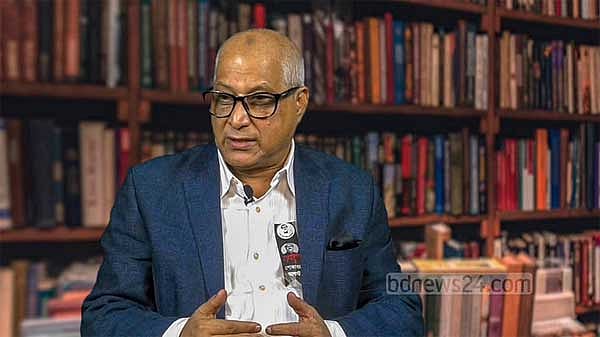
Nojib Ahmed, a former aide to Sheikh Hasina, was not supposed to go to Bangabandhu Avenue on Aug 21, 2004. Nearly two decades down the line, he is now happy that he did visit the venue where Hasina joined an antiterrorism rally. Had Nojib and others not formed a human shield on that day, history would have been different.
Hasina, the then leader of the opposition and the current prime minister, was targeted in a grisly grenade attack that shocked the world. She has many times expressed gratitude to the Awami League workers who saved her life.
THE DREADFUL AFTERNOON
It happened to be a Saturday. Party leaders began delivering their speeches from a makeshift stage erected on the back of a truck from 3 pm. Senior leaders took the stage at around 4 pm while Hasina arrived at the rally at around 4:30 pm. All of the leaders and activists were waiting eagerly for her speech.
Hasina and other leaders stood behind a table, used as the podium, on the right side of the truck as they spoke. The Awami League chief's bullet-proof Mercedes SUV stood close by.
Hasina started her speech at 5:02 pm and was about to finish it at 5:22 pm. As she was about to leave the microphone after saying “Joy Bangla, Joy Bangabandhu”, the attackers hurled the first grenade.
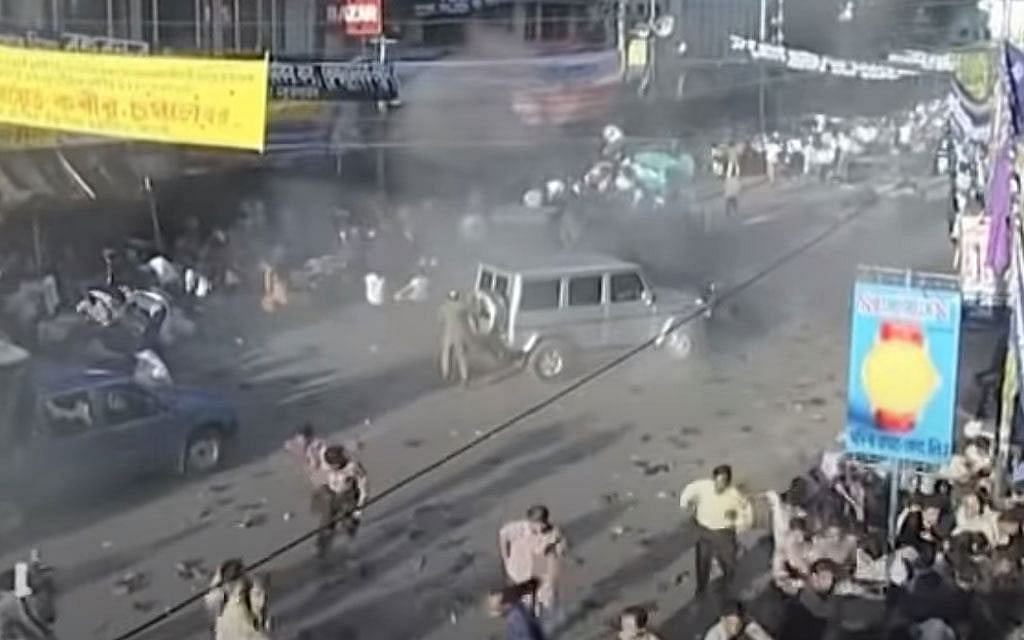
It was followed by three more explosions as smoke engulfed the entire area. Her security personnel and senior leaders shielded Hasina from the attacks.
Three more grenades went off around the truck as they started to evacuate Hasina to her car. A grenade then bounced off the back of the truck and exploded next to the vehicle as security personnel escorted Hasina. She was subsequently brought back onto the stage but the blast was believed to have cracked the truck's fuel tank to make matters worse.
Hasina's aides helped get her on her feet but she had lost her shoes and glasses. They took her to the car and made her sit in the front seat of the car as the sound of gunshots rang out amid the explosions.
The chaos continued. Dozens of people were lying on the ground, many of them dead.
“The first explosion occurred as I was about to keep the microphone down. Our leaders and activists made me sit just after hearing the explosion,” Hasina recalled in a past interview, remembering the role of Mohammad Hanif, retired Squadron Leader Abdullah Al Mamun, Nojib, Mofazzal Hossain Chowdhury Maya and others in saving her life.
“They surrounded me on the truck as around a dozen grenades were hurled.”
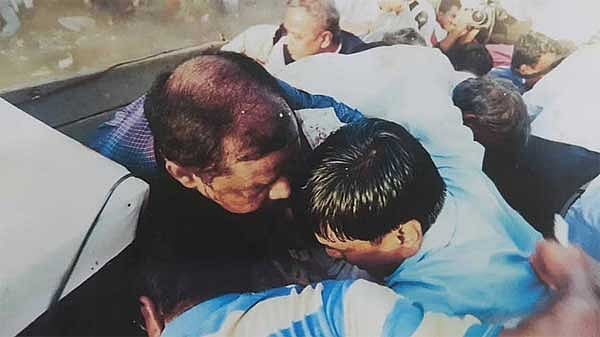
Nojib, a sports organiser involved with Sheikh Jamal Dhanmondi Club, is still carrying grenade splinters in his body. He still remembers the day.
“It was a miserable day. We have only one thing that gives us peace – we were able to save Sheikh Hasina with our blood and lives.”
Nojib, a distant cousin of Hasina, was one of the most trusted employees at the time. “I risked my life and shed blood to perform my duty,” 64-year-old Nojib, a cancer patient, said in an interview ahead of the anniversary of the grenade attack.
SHOCK, OBSERVATION
Nojib stood in front of the Awami League office on Bangabandhu Avenue that day. He was feeling unwell as it was a hot, summery day. At one point, he boarded the truck. As Hasina was wrapping up her speech, a grenade flew in.
“Suddenly I saw a dark object flying from the direction of the City Hotel. In a moment it exploded. Everyone started running for safety out of panic,” he said.
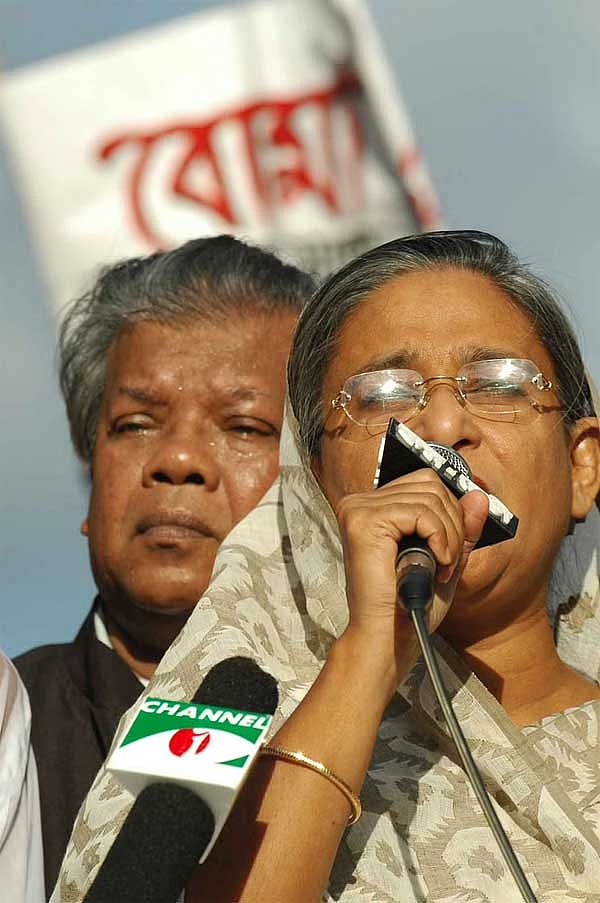
Nojib, one of the people tasked with ensuring Hasina’s security after her homecoming, immediately ran to her.
“I noticed another thing - generally, police took position on the top of the buildings on Bangabandhu Avenue when we organised a programme. But that day, I noticed none of our workers was allowed to the roofs of the buildings. Police didn’t take a position there either,” he said.
“We didn't take this seriously at the time, but we noticed it later.”
HUMAN SHIELD
By the time, Nojib reached Hasina, two to three explosions occurred. Mayor Mohammad Hanif was on the right side, retired Squadron Leader Abdullah Al Mamun was on the left, and party leader Mofazzal Hossain Chowdhury Maya was at the back of the truck.
“In front of her, there was something like a table with two parts. We tried to create a human shield, just like one made of sandbags, to save her,” Nojib said.
EVACUATION AS ATTACK CONTINUES
As party colleagues realised it was not a safe place for her, they decided to evacuate. At one point, they tried to help her down from the vehicle.
“But the killers attacked again. I don’t exactly remember where the grenade fell as I was focusing on taking her to safety,” Nojib said.

Hasina was led to the car under a human shield formed by her colleagues.
“We saw hundreds of leaders and activists in a pool of blood. Many of them were crying for help, but we had only one goal - to take her to a safe place. By the grace of Allah, we did it.”
At least 16 people died at the scene. Ivy Rahman, president of Bangladesh Mohila Awami League, died after a 58-hour fight for her life. Hanif, the first elected mayor of Dhaka City Corporation, succumbed to his injuries after one and a half years. The death toll from the grisly attack eventually stood at 24. Many of the injured suffered permanent physical deformities as they were maimed. Hasina suffered a hearing loss and was under treatment at home and abroad for years.
Among the casualties were Rafiqul Islam, adviser to the party’s Dhaka Metropolitan unit, and retired Lance Corporal Mahbubur Rashid, a member of Hasina’s security team.
The other victims are Awami League’s central sub-committee Deputy Secretary Mostak Ahmed Sentu, Women Awami League leaders Sufia Begum and Hasina Mamtaz, Madaripur Jubo League leader Liton Munshi, Ratan Sikdar from Narayanganj, Dhaka Mohanagar Rickshaw Shramil League leader Md Hanif, Nazrul Islam College student Mamun Mridha, Jubo League leaders Aminul Islam, Atik Sarkar and Shamsuddin Abul Kalam Azad, Swechhasebak League leader Razia Begum and activist Abdul Kuddus Patwari, Shramik League activists Nasir Uddin Sardar, Abul Kashem, Jahid Ali, Momin Ali and Ishaq Miyah.
Dhaka’s Speedy Trial Tribunal sentenced 19 people to death, 19 others to life in prison and penalised another 11 with varying jail terms in 2018 for their roles in the massacre.
Those who received the death sentence included Lutfozzaman Babar, the then state minister for home, and Abdus Salam Pintu, a former deputy minister of the BNP-Jamaat-e-Islami government.
Tarique Rahman, acting BNP chief and son of then prime minister Khaleda Zia, was sentenced to life in prison over the attack.
NOJIB IS STILL HAPPY
The presence of splinters in his body is an occasional source of pain.
“I need MRI tests sometimes, but I can’t undergo the tests due to the splinters inside my body. It’s very painful. But by the grace of Allah, we have only one thing that gives us peace – we were able to save Sheikh Hasina,” he said.
“We performed our duty properly and never left her alone. This is the biggest achievement in my life.”