


Published : 02 Sep 2020, 02:52 AM
Updated : 17 Oct 2022, 11:12 AM


He was happy with the reduced cost of travel but fears of a surge in coronavirus infection were bugging him because there was little physical distance between the passengers.
Nasir said the seat next to his had remained empty in the three months when the government made it compulsory for the transporters to run on half the capacity to ensure physical distancing, a key approach in reducing the risk of infection.
The bus operators had also been charging 60 percent extra to offset the losses.
“Now they [transporters] are seating passengers on every seat. I won’t be able to do anything if I catch coronavirus from the passenger seated next to me,” said Nasir, as the government eased the restrictions and restored the fares to pre-pandemic rates from Tuesday.
The operators are still barred from transporting passengers standing while masks are already mandatory outdoors.
Complaints over extra fare were few on the first day of the new normal, but the passengers expressed concerns over health rules.
Most of the drivers, conductors and their helpers, and many of the passengers did not wear masks in Dhaka. Some had their masks on their chins exposing their mouths and noses.
“It feels hot to wear masks all day along. My nose and face itch. And I can’t call the passengers with my mask on. They don’t hear what I say through the mask,” said ‘Hridoy’, helper of a Rajanigandha Bus.
Commuters also scrambled to get on the buses.
“It’s true fares have returned to normal. But no one is following the health protocols,” said ‘Tuhin’, a commuter travelling by an Akash Paribahan bus from Sadarghat to Uttara.
“In fact, it’s not possible for all of us to do it. Even I can’t follow the rules. It's putting the elderly and those with underlying health conditions at risk,” he added.
Chattogram and other cities had a similar restart to public transit systems.
In the port city, bus operators even took passengers standing.
“We are monitoring the situation,” said Kalim Ullah, the finance secretary at the Chattogram Bus, Minibus, Human Hauler Owners Association, admitting that some operators were taking extra passengers.
He claimed many passengers get on buses forcefully even when all the seats are occupied.
“I must travel by bus to save my livelihood,” said Akash Jamal, who works at a book shop in the port city.
Public health expert Mushtuq Husain said the authorities should launch special public transport services for the elderly, women and people suffering from diseases considering the coronavirus health risks.
“There should be services for those who want to travel by following the health rules. Even if the fare is up by 60 percent,” he said.
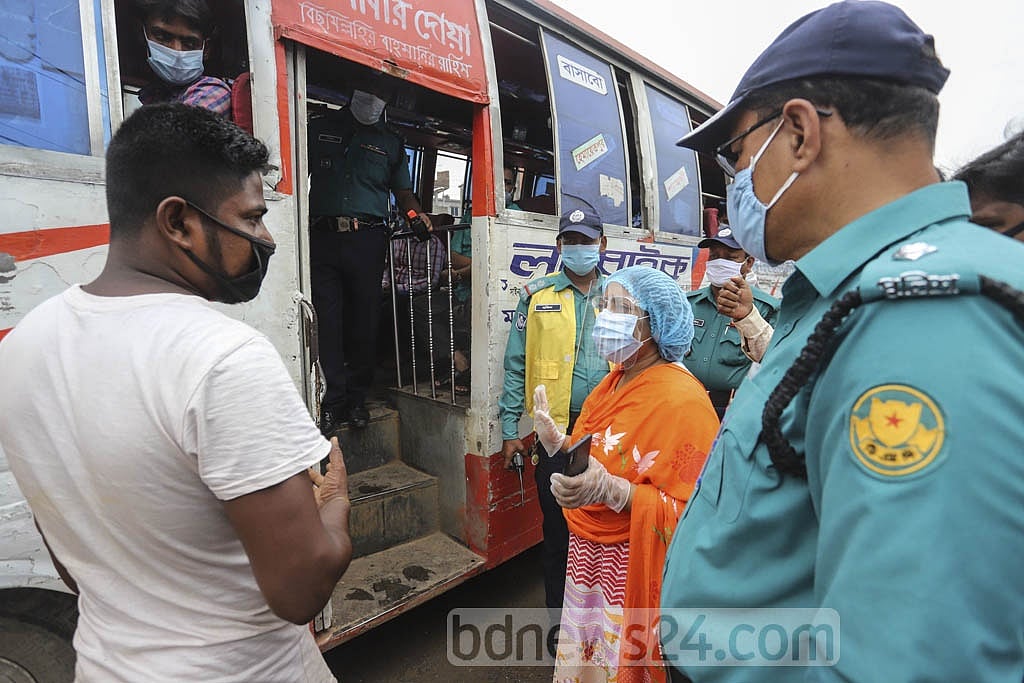
The authorities conducted mobile court drives in Dhaka and Chattogram to watch the situation.
Md Hasan Ali, executive magistrate in Chattogram, said a number of bus operators were warned for taking extra passengers.
Some were also fined for different reasons, including charging extra fare, he said.













