


Published : 07 Mar 2015, 10:29 AM
Updated : 23 Apr 2022, 12:27 PM


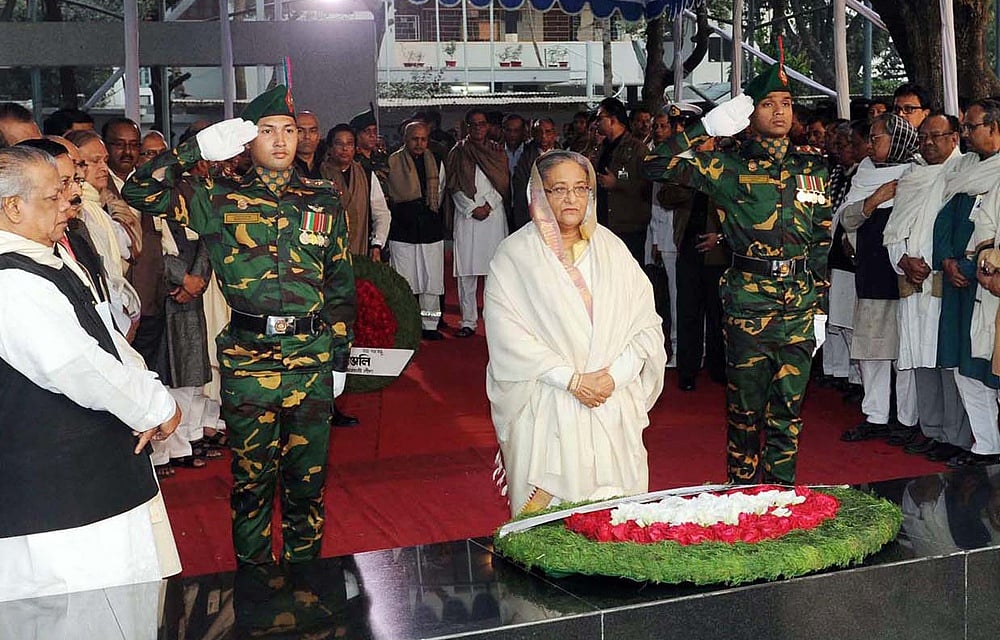
She placed wreaths at the portrait of the Father of the Nation in front of the Bangabandhu Memorial Museum in Dhaka’s Dhanmondi at 7am on Saturday.
Hasina along with the Cabinet members stood in silence for a while after paying respect.
The Awami League president then accompanied by party leaders placed another wreath at Bangabandhu’s portrait.
On Mar 7, 1971, Bangabandhu in his fiery address at Dhaka’s Race Course Maidan – now Suhrawardy Udyan – had given the clarion call for independence from Pakistan.
“Ebarer sangram amader muktir sangram, ebarer sangram swadhinatar sangram” (This time the struggle is for our freedom. This time the struggle for our independence) was what the architect of Bangladesh’s independence said that day.
That pushed the Bangalis on course of a bloody struggle for freedom.
After the brutal genocide on the night of Mar 25, Bangabandhu declared the freedom of the nation in the first hours of Mar 26, and the armed struggle for liberation began.
The nine-month war, in which the country sacrificed three million lives, ended on Dec 16 in victory.
The Awami League, keeping with past years, has lined up a series of events to mark the historic day.
The national and party flags were raised in front of the Bangabandhu Bhaban and the party headquarters in the morning.
The party will also hold a rally at the Suhrawardy Udyan at 3pm.
Electronic media outlets are airing special programmes and newspapers have published special supplements on the occasion.
President Md Abdul Hamid and Prime Minister Sheikh Hasina have released separate messages marking the day.
They described the day as a ‘glorious chapter of our history’.
The president in his message said the March 7 speech of Sheikh Mujib was the charter of freedom for the Bengali nation.
He said the speech ‘will remain a perennial source of inspiration for the nation’.
Hamid said Mujib’s proclamation that ‘our struggle this time is the struggle for our independence’ was in fact a call for independence of the country.
In a sequel to the proclamation, he declared the independence on Mar 26, 1971, the president added.
The prime minister in her message said the popular aspirations of Bengalis were echoed in Bangabandhu’s speech ‘at the final stage of the struggle for independence’.
After the address ‘the entire nation’ joined the Liberation War, she added.
Describing the address as one of the world’s best political speeches, she said it was a source of strength and its appeal was still undiminished.













