


Published : 24 Jan 2019, 05:28 PM
Updated : 08 Apr 2022, 01:59 PM


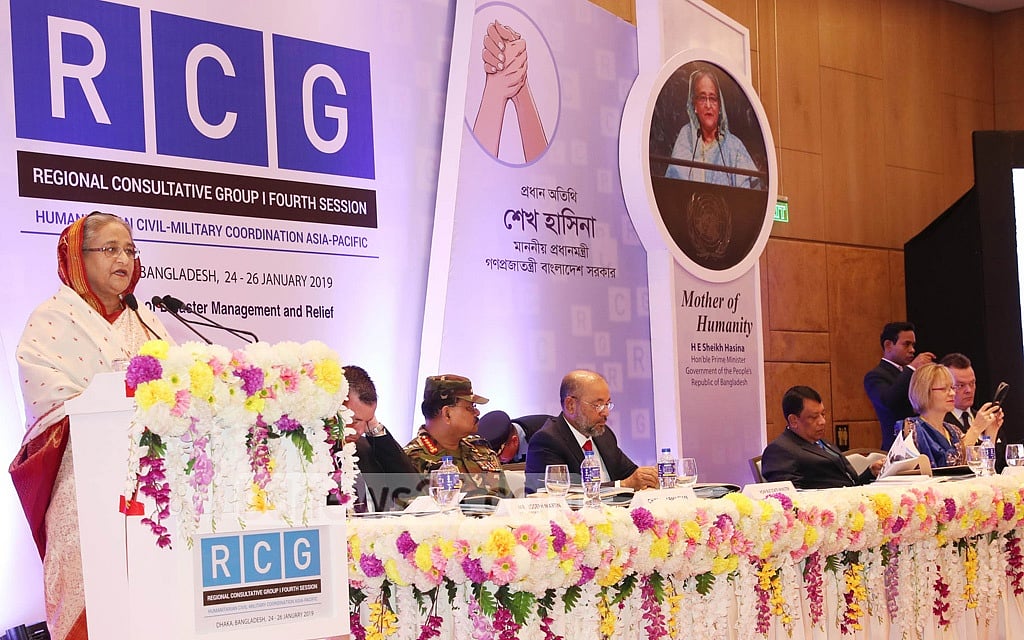
Death rates tied to natural calamities in Bangladesh have decreased considerably compared to the previous years, Hasina said speaking at the inaugural ceremony of the fourth session of the Regional Consultative Group (RCG) on Humanitarian Civil-Military Coordination for Asia and the Pacific at the Hotel InterContinental in Dhaka on Thursday.
“With undertaking of various measures, including improvement of early warning generation and dissemination, establishment of cyclone shelters and active engagement of dedicated CPP volunteers to the preparedness and response activities, the mortality from disasters has drastically been reduced in the recent times,” she said.
Hasina also emphasised cooperation among neighbouring countries in an effort to reduce the total amount of damage due to major disasters.
“We would not be able to prevent natural disasters. But we can reduce the extent of damage through our prudent work. In Bangladesh, we are also putting emphasis on mitigation programmes. Collaboration and cooperation among the nations, especially among neighbours, is very crucial in facing the damage of greater magnitude,” said Hasina.
According to the Global Climate Risk Index, Bangladesh is in the ninth position among 10 most-affected counties. The index of 2014 and 2015 ranked Bangladesh sixth.
“Although we have very nominal contribution to climate change but Bangladesh is one of the most-affected countries by the impacts of global climate change owing to its geographical location. It is highly prone to natural disasters such as cyclone, flood, landslide and earthquake.”
“Now we are replicating the CPP model for other disasters. This paradigm shift has helped us adapt with the changes of global policy instruments such as Sendai Framework, Sustainable Development Goals and Paris Agreement on Climate Change in 2015. As a result, Bangladesh is now known as the role model of disaster management and now moving towards building resilience.”












