


Published : 08 Dec 2015, 05:04 PM
Updated : 23 Apr 2022, 01:21 PM


He was speaking at a seminar on Tuesday on the 31st SAARC Charter Day where India-Pakistan relations were seen as a stumbling block in the collective development of the grouping of South Asian countries.
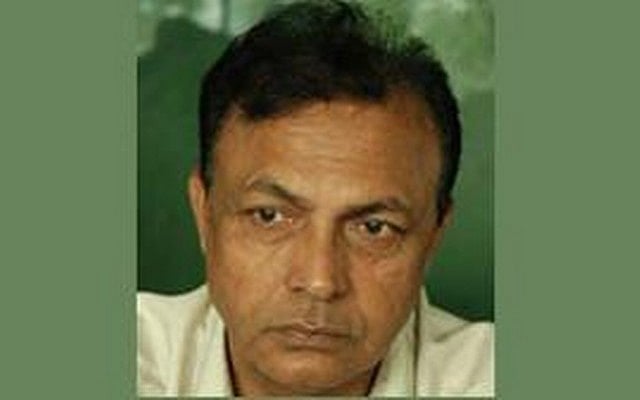
Harun-Ar-Rashid, who also served as high commissioner of Bangladesh in Australia, New Zealand and Fiji, said, “SAARC member states cannot interfere in the internal affairs of one another.”
But Pakistan has done that, he said referring to Islamabad’s recent comment on the war crimes trial in Bangladesh.
Bangladesh won independence from Pakistan in 1971 after nine months of bloody war in which three million people were killed and hundreds of thousands of women were violated.
In 2010, the government started trying those Bangladeshis who had committed crimes against humanity in collaboration with the Pakistani occupation forces.
But Islamabad reacted sharply when the war criminals were executed.
It summoned the Bangladesh High Commissioner and rejected the “insinuation of complicity in committing crimes or war atrocities”.
“Nothing could be further from the truth,” it said in a statement.
The former general said Pakistan had “not only interfered in Bangladesh’s domestic issue but also hurt our sentiment”.
“Pakistan is creating instability in Bangladesh and threatening our national security,” he said.
Dhaka University’s History Professor Syed Anwar Hossain termed Pakistan’s role “quite disturbing”.
The SAARC charter signed on Dec 8 in 1985 has stimulated regional cooperation in South Asia.
But with the intra-regional trade at about $28 billion, SAARC is still known as the least integrated region of the world.
Political mistrust and security concerns, mostly related to Pakistan, prevail strongly.
Analysts often deride the association as a ‘talking shop’ as leaders have failed to live up to their decisions.
Ambassador Munshi Faiz Ahmad, chairman of the Board of Governors of BIISS, said SAARC would not flourish unless India takes its “rightful leadership place”.
“It should accept this leadership. But this (leadership) has responsibility. India must ensure that they will develop equally (with SAARC countries). Only then we can make real progress for the development of South Asia,” he said.
He identified India-Pakistan relations as the “main stumbling block” to SAARC’s progress.
He said the SAARC motor vehicle agreement and railway agreement could not be signed due to the prickly India-Pakistan relations.
Former foreign secretary Farooq Sobhan suggested that big countries like China, Japan and the US, who are observers now, be made dialogue partners of SAARC so that they could play an “effective” role.
“I often receive complaints that they (China, Japan and the US) are allowed only to give speeches at the summit or the foreign ministers’ meet,” he said.
“It’s time to borrow the idea from the ASEAN to have a dialogue partner,” he said. The grouping of the South East Asian countries have dialogue partners like China.
Earlier, State Minister for Foreign Affairs Md Shahriar Alam inaugurated the seminar and urged South Asian leaders to rise above politics in SAARC.
He appealed to them to recast its role in light of the changing global realities to make this grouping “people-centric”.













