


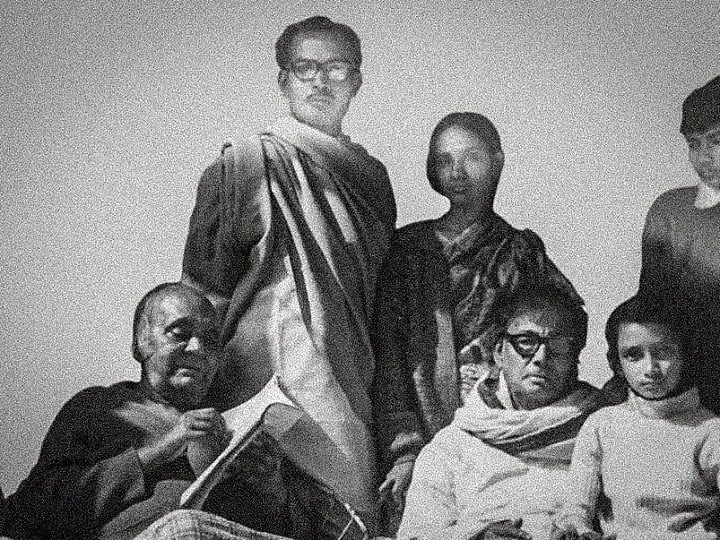
Published : 27 Aug 2013, 03:49 PM
Updated : 09 Aug 2022, 11:03 AM


Numerous social, political and cultural organisations in Dhaka and outside have arranged for programmes to commemorate the celebrated poet.
Bangla Academy, Shilpakala Acedemy and Nazrul Institute have all planned separate ceremonies to observe the day.
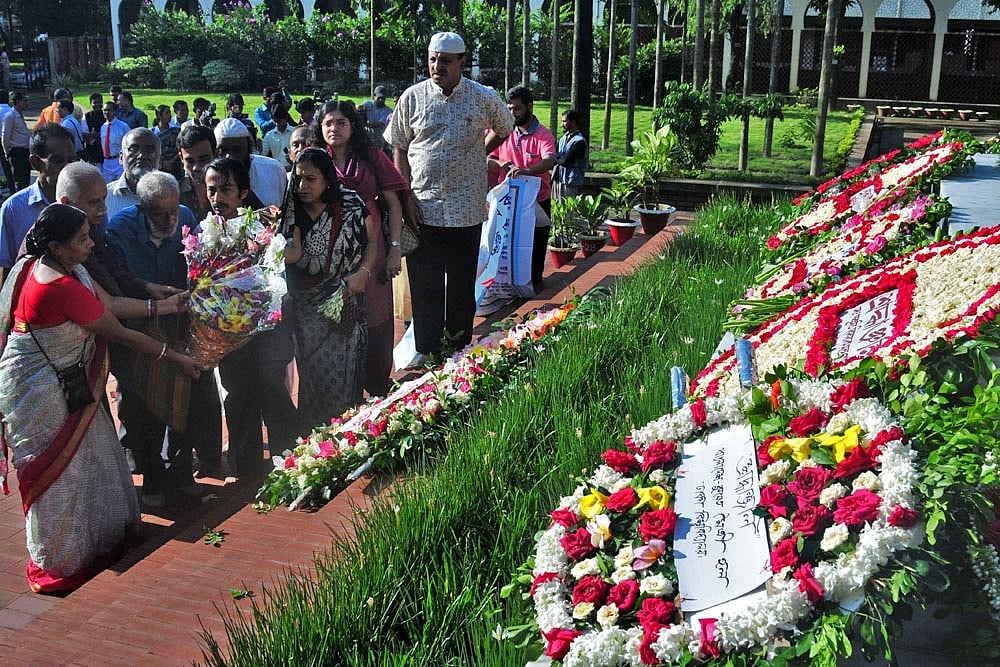
Kazi Nazrul’s granddaughter Khilkhil Kazi paid respect at her grandfather's grave on behalf of his family in the morning.
She urged all to 'internalise' Nazrul’s enduring ideals to go forward.
Minister for Cultural Affairs Abul Kalam Azad on behalf of the government and Foreign Minister Dipu Moni, Post and Telecommunication Minister Shahara Khatun and State Minister for Home Shamsul Haque Tuku paid respect to the great poet.
Dipu Moni said, “Efforts for women’s rights and social equality that Bangabandhu Sheikh Mujibur Rahman initiated were inspired by Nazrul’s ideals. The present government is continuing those efforts.”
The Minister addressed the country’s youth saying one will have to strive towards the path of ideals set by Nazrul no matter what the obstruction.
Abul Kalam Azad said, “We must learn from the life of Nazrul and use that to enlighten our politics so we can survive this current crisis our country faces."
BNP Standing Committee member and former minister Rafiqul Miah paid tribute at the poet’s grave on behalf of his party.
He said, “Kazi Nazrul Islam, the poet for humanity and equality struggled all his life to establish the rights of the people. We must take example from this life and ideals to combat the current crisis in our country.”
Dhaka University teachers and students headed by Vice-Chancellor AAMS Arefin Siddiqui came to Nazrul’s grave to pay his respect.
Nazrul’s fiery songs and poems provided strength and hope during to Bangladesh during its War of Independence, the V-C said.
The new generation of Bangladesh must also take Nazrul as their inspiration, he said.
Various other organisations followed to pay respect by placing floral wreaths to the poet on his death anniversary.
Kazi Nazrul Islam was born in May 24, 1899 in Churulia or Bordhoman, presently a part of West Bengal.
Nazrul who began to write when he was 22 took the Bengali literary world by storm with his moving poetry and lyrics.
'Agnibina', 'Sanchita', 'Dolan Chanpa', 'Chhayanaut' are some of his enduring contribution for posterity.
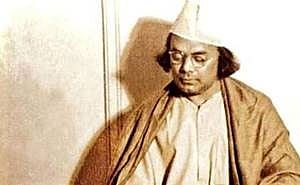
Nazrul reached the peak of fame with the publication of "Bidrohi" in 1922, which remains his most famous work, winning admiration of India's literary world with his description of the rebel, whose impact is fierce and ruthless even as its spirit is deep.
The British, upset by what he wrote, imprisoned him in September, 1922.
Not to be subdued by the British oppression, Nazrul used his year in prison to turn out poetry that fuelled the anti-British movement.
Some of that was banned by the British.
Nazrul also was shaken by the death of Rabindranath Tagore, and afterwards Nazrul himself fell seriously ill and lost his speech.
His behaviour became erratic, and, spending recklessly, he fell into financial difficulties.
Nazrul's health seriously deteriorated over the years and he grew increasingly depressed. In 1972, the newly independent nation of Bangladesh obtained permission from the Government of India to bring Nazrul to live in Dhaka and accorded him honorary citizenship.
He was announced Bangladesh’s national poet few days after that.
Despite receiving treatment and attention, Nazrul's physical and mental health did not improve.
In 1974, his youngest son, Kazi Aniruddha, an eminent guitarist died, and Nazrul soon succumbed to his ailments on August 29, 1976.
In accordance with a wish he had expressed in one of his poems, he was buried beside a mosque on the campus of the University of Dhaka. Tens of thousands of people attended his funeral; Bangladesh observed two days of national mourning and the Indian Parliament observed a minute of silence in his honour.












