


Published : 14 Oct 2018, 04:32 PM
Updated : 19 Oct 2022, 02:21 PM


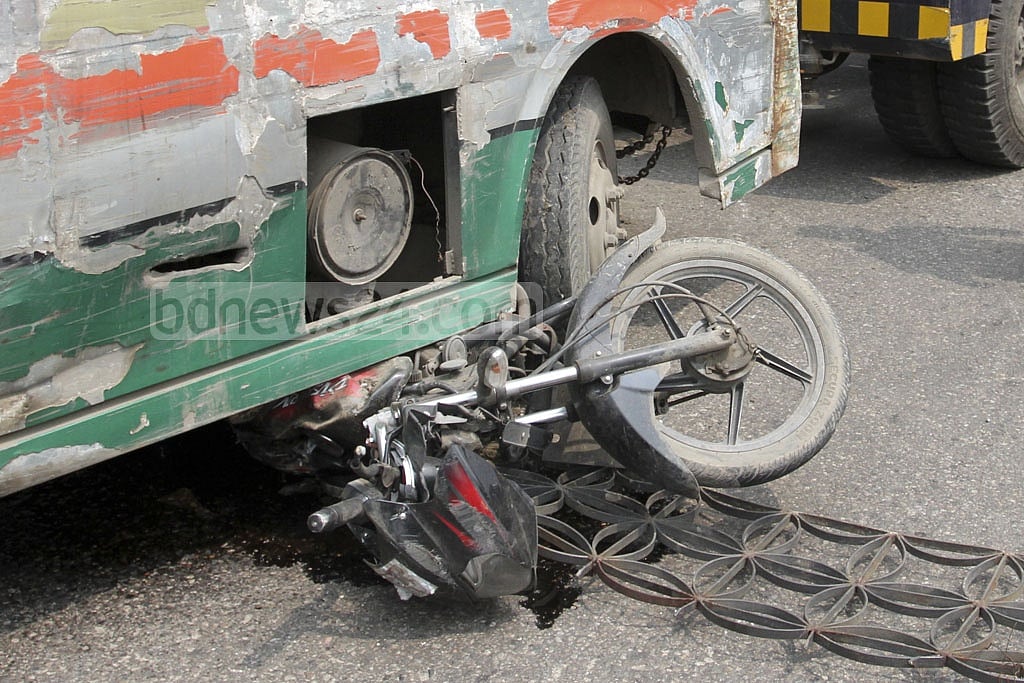
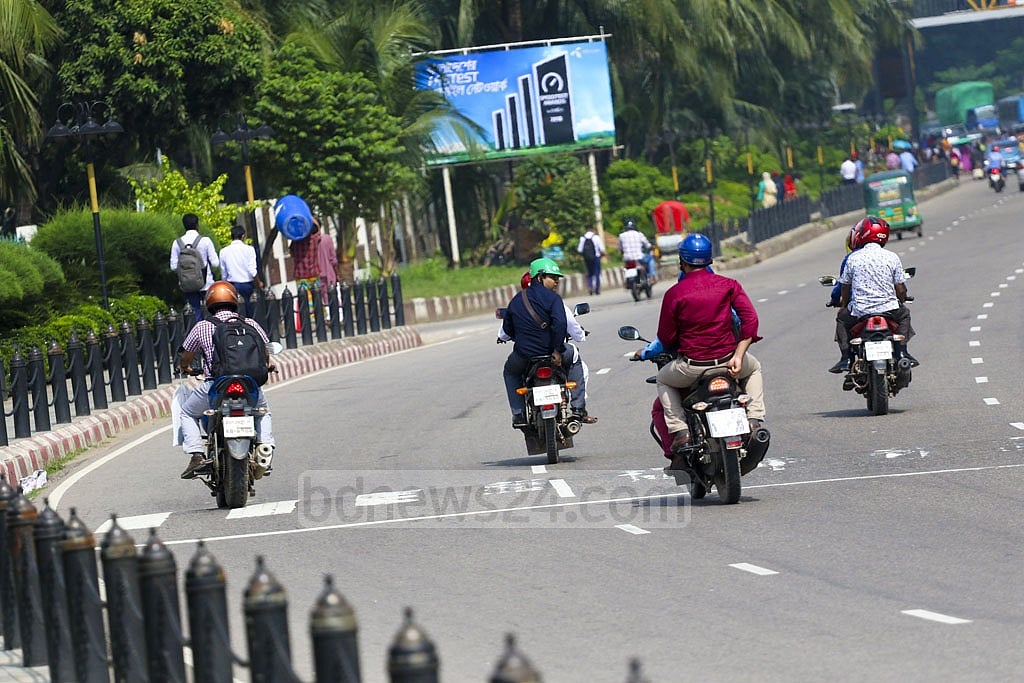
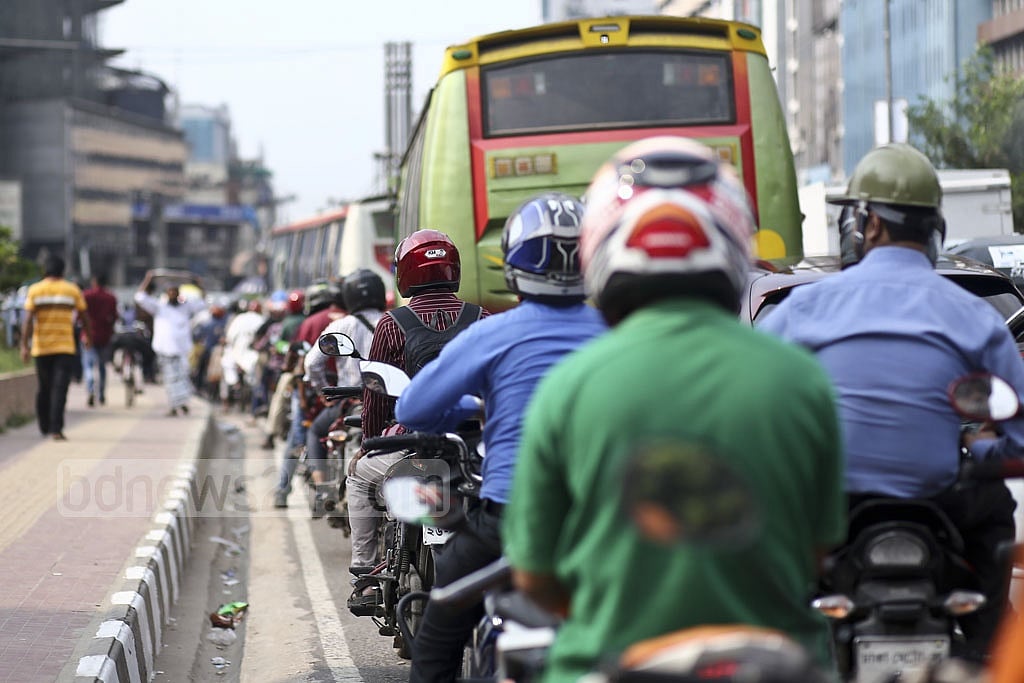
Though these motorcycle ride-sharing services have provided some relief to the public transport crisis in the city, the number of road accidents in Dhaka has also increased since their introduction.
There is no information about any direct link between the motorcycles used by ride-sharing services and the accidents, but those in the field say they have contributed to the rise in accidents. Experts say that unskilled riders, tendencies towards speeding, neglect of safety regulations and incorrect conceptions of the roads have contributed to the increase in accidents.
MOTORCYCLES ON THE RISE
The rise in motorcycles on Dhaka roads can be seen in information provided by the Bangladesh Road Transport Authority or BRTA.
The BRTA Dhaka office registered 53,738 motorcycles in 2016 and 75,251 in 2017. As of August this year, 65,332 motorcycles have been registered.
This means that about 206 motorcycles were registered in Dhaka per day in 2017. This year the average has risen to 267 per day.
But the motorcycles used by ride-sharing apps are often registered in districts outside Dhaka.
ACCIDENTS ON THE RISE
According to BUET’s Accident Research Institute, or ARI, 53 people were killed and 19 injured in 48 motorcycle accidents in Dhaka in 2017.
Between January and August, there have been 42 motorcycle accidents, leading to the deaths of 47 and the injuries of 37.
Many of the dead are riders for ride-sharing services or their passengers.
On Sept 17 a motorcycle accident in Khilkhet resulted in the death of passenger Lafizur Rahman. On Sept 3 an accident resulted in the deaths of Ripon Sikder and Jane Alam Gazi in the Motijheel area.
Sohel Parvez was killed on Aug 20 when his motorcycle was hit by a truck. Nazmul Hassan was killed on Jul 6 near the Dhaka airport. On Mar 6 a motorcycle passenger named Kazi Maruf Hassan was killed near a Tejgaon checkpoint.
UNSKILLED RIDERS, LACK OF SAFETY KNOWLEDGE
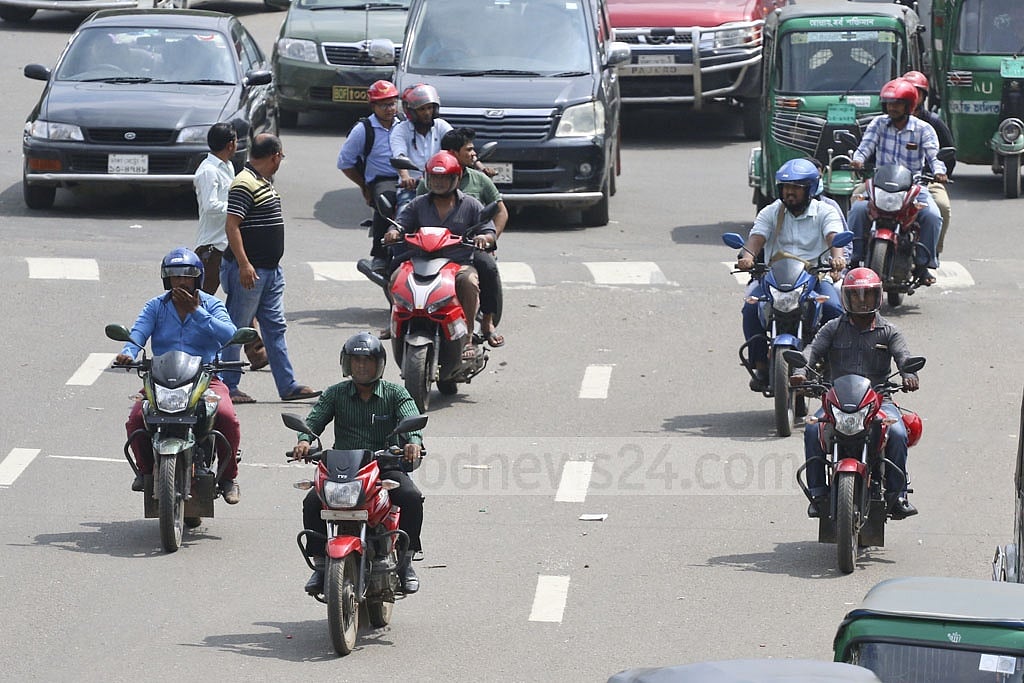
Besides motorcycle drivers, pillion riders are also getting aware about the need to wear helmet in Dhaka. This photo was taken from Kazi Nazrul Islam Avenue on Sunday. Photo: Mahmud Zaman Ovi
“Firstly, the number of motorcycles has increased due to these ride-sharing services and this has resulted in more accidents,” he told bdnews24.com. “The second problem is that riders do not use helmets. Nearly all cycle riders are non-professions. They have rarely undergone formal training. Many of them are reckless. And even those who are skilled often lack knowledge regarding safety practices.”
“Motorcycles are light vehicles. But compared to a rickshaw there is a higher risk of death when they get into accidents with one or two cars. Riders also have an incentive to make quick trips and end up speeding. This raises concerns about accidents.”
There is proof that unskilled riders are taking to the roads. Some ride-sharing riders have been employed after only an hour of training. Mafizul Haque, from Narayanganj’s Araihazar, is one such rider.
Haque, who has worked as a rider for six months, says that he had known how to drive a car, but not how to ride a motorcycle.
“I bought the motorcycle six months ago. Another person rode it to my house. That day I underwent an hour of training and have been a Pathao rider since then.”
Nazmul Hassan, from Noakhali’s Begumganj, used to run a small business. Now he is working as a rider after getting a learner’s licence.
“It’s been three months since I received a learner’s licence,” he said. “I still don’t have the real thing. I ride my motorcycle with my learner’s licence. There are no problems. It’s not just me, many Uber and Pathao riders use learner’s licences. The registration for learner’s licences was on hold for some time after there was a bad accident, but they have started issuing them again.”
RIDE-SHARING COMPANIES SHARE THE BLAME
“Many have taken up ride-sharing as an occupation,” he said. “Many people migrate from the villages to become riders. Ride-sharing companies approve anyone with a licence. They manage the paperwork and start working on the roads. There is some concern that the lack of experience will lead to accidents.
The higher fare per distance set by the BRTA for motorcycles has encouraged more people to enter the market, Kashem said.
“At the start I proposed a fare of Tk 8 per kilometre, but the BRTA set the fare at Tk 12 per kilometre, which naturally increases the income earned. This has encouraged bikers. Some have even taken it up as their permanent occupation. The riders attempt to speed through their trips in order to make more money. But if the fare was set at Tk 8 per kilometre, people would share their rides and there would be no issue of speeding.”
Pathao CEO Hussain M Elius says they are also partially responsible.
“The responsibility is also partially ours. But everyone has to work together to bring order to this sector. As we are working together on the matter, it will eventually bear fruit.”
Asked why people with learner’s licences were allowed to work as riders, he said: “Having a licence doesn’t mean they know how to drive. We have, however, thought about introducing new regulations on the matter. We are no longer allowing anyone to offer rides if they only have a learner’s licence. We are also considering whether we can provide additional training to riders.”
Pathao has distributed 10,000 helmets so far as part of a safety initiative, Elius said.
Uber responded to a request for comment with a written statement, saying that an Uber motor partner was absolutely required to have a driving licence and a registration certificate for their vehicle.
The company said that the Uber Excellence Programme was also training riders by developing their skills and increasing their awareness of road safety.













