


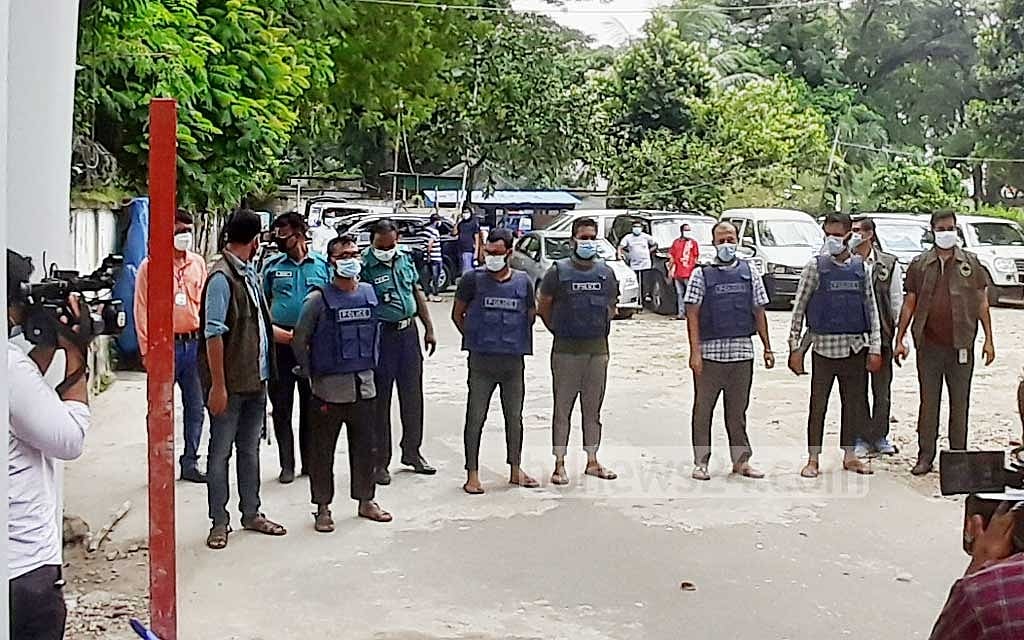
Published : 17 Aug 2020, 04:33 AM
Updated : 03 Aug 2022, 02:42 PM


Police have admitted that the militants are trying to scale up their activities, but said they are incapable of carrying out attacks.
Monirul Islam, the chief of police’s Counter Terrorism and Transnational Crime Unit or CTTC, says law enforcement’s capability in suppressing militancy has increased, but members of the public need to stay alert.
The militants in Bangladesh first announced their presence with simultaneous bombings on Aug 17, 2005.
Later, investigations revealed militant connections to attacks on Udichi’s function, Chhayanaut’s Pahela Baishakh programme, and rallies of the Communist Party of Bangladesh or CPB and the Awami League.
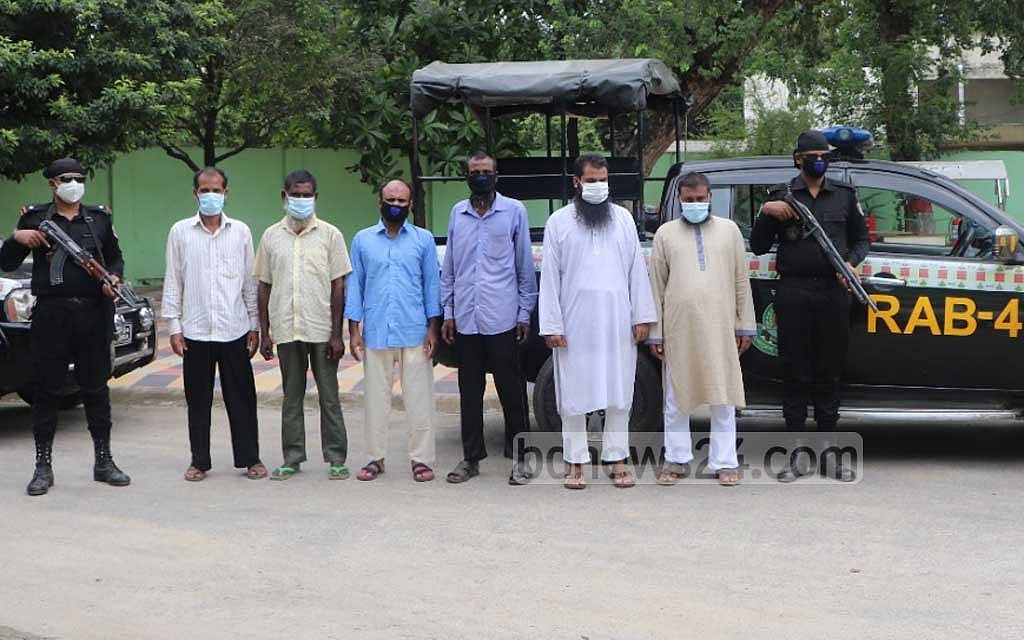
File Photo: RAB said the people arrested in Savar's Bhatpara last month were members of JMB.
Al-Qaeda receded after the death of Osama bin Laden in 2011, but the militants in Bangladesh had a new outfit to fall for - the Islamic State of Iraq and Syria or ISIS.
Neo-JMB, a revived faction of JMB that followed ISIS, made international headlines by killing 22 people, including 17 foreign diners, in the Jul 1, 2016 attack on the Holey eatery in Dhaka’s Gulshan.
The law-enforcing agencies killed at least 66 suspects, including top leaders of the newly organised militants, in a crackdown after the unprecedented attack.
Since the ISIS‘s annihilation by the Western forces in the Middle East, no major militant action has been visible in Bangladesh in past few years.
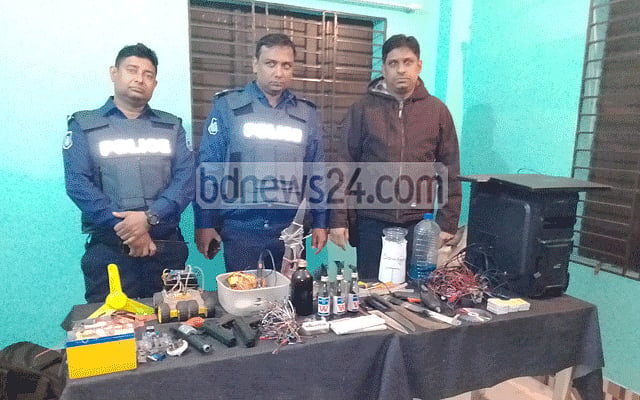
File Photo: Police recovered bomb-making materials in a drive on a house in Ashulia in January.
Months after the Gulistan attack, a bomb was exploded near LGRD Minister Tajul Islam’s car at Science Laboratory and a police vehicle near their Special Branch office while bombs were found near traffic police boxes at Khamarbari and Paltan.
‘INCAPABLE’
Militancy is back in discussions in recent times when police were asked to remain alert ahead of Eid-ul-Azha and August, the month of national mourning to mark the anniversary of Bangabandhu Sheikh Mujibur Rahman’s assassination.
Last week, police arrested five suspects in Sylhet a case over planting of a bomb on a traffic police sergeant’s motorcycle in Dhaka.
The suspected members of Neo-JMB were planning an attack on saint Hazrat Shahjalal’s shrine, police said. The law enforcers also said some members of the Neo-JMB cell were in hiding.
Asked whether the militants were trying to reorganise, police’s CTTC unit chief Monirul told bdnews24.com on Sunday: “The militants have the intention and are trying [to carry out attacks], but they don’t have the capability.”
His advice to the people is to “stay alert and not to panic”.
Suspect Salauddin Salehin’s name recently came as the new chief of JMB. Monirul said they believe Salehin was hiding somewhere in India.
He described the JMB’s 2005 series blast as a “successful” attack.
“I call it successful because they were able to carry out blasts in 63 districts simultaneously. I‘m not aware of any such incident elsewhere in the world. The JMB succeeded in drawing the global media’s attention,” he said.

File Photo: Explosives used in a bomb attack on a traffic police box in Chatogram a few months ago.
Monirul thinks those who have radical views now have lost the organisational capability to carry out such an attack.
Md Moniruzzaman, an additional deputy inspector general who heads the police’s Anti-Terrorism Unit, said the militants are trying to recruit new members through online campaigns, but cyber surveillance by police are foiling their bids.
“Their organisational base has weakened. The situation is almost under control,” he said.
He said the ATU also works to build awareness across Bangladesh, especially in madrasas and other educational institutions.
REHABILITATION
The law-enforcing agencies also rehabilitated a number of militants during the crackdown after the Gulshan attack.
Monirul said police have helped 50 militants to go back to normal life.
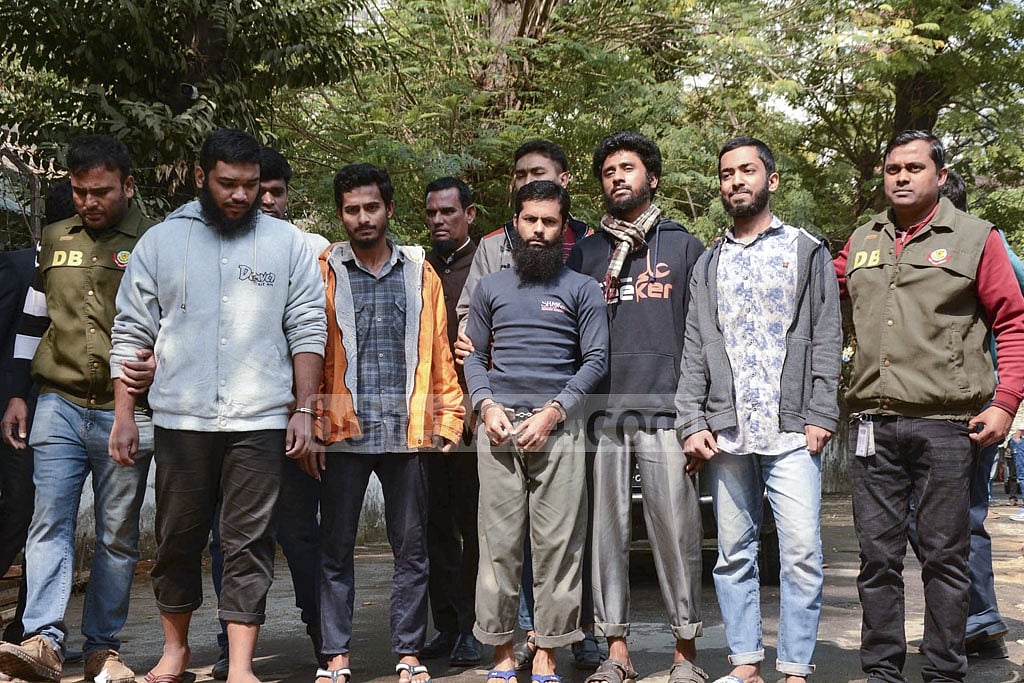
File Photo: Police are working to rehabilitate young militants.
Some have been helped to get job while some others have been given support to change their radical views.
“We helped some through the local public representatives so that the people of their community don’t misunderstand them,” Monirul said.
The RAB has rehabilitated five militants.
“Besides these, we are monitoring those who are getting out after serving jail terms. We are motivating them in different ways to prevent them from returning to militancy,” Monirul said.













