


Published : 17 Oct 2016, 03:49 PM
Updated : 08 Aug 2022, 03:54 PM


>> Sheikh Hasina said she believed Bangladesh would be a middle income country by 2021 and a developed nation by 2041.
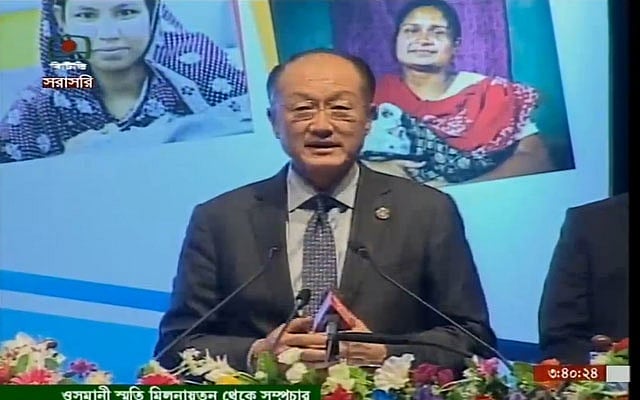
>> Jim Yong Kim said in just a year 100 million people came out of extreme poverty globally.
While he recognised the numbers as impressive, the WB chief spoke of Bangladesh's "impressive record" and hoped "lessons of Bangladesh can spread to other countries".
"Innovation is extremely important in eradicating poverty and Bangladesh recognised that very early."
He referred to handling of diseases like diarrhoea, creating "an army of women health workers".
"Investments in people is just as important as investments in hard infrastructure," he said.
"These investments occurred despite many challenges."
>> Annette Dixon, vice president for South Asia, highlighted Bangladesh's successes in education, women's empowerment, anti-poverty programmes and achievement of MDGs.
>> Paul Romer, the Bank's chief economist and a senior vice president, said the economy in general needs "less government but 'countries such as Bangladesh lacked the kind of government needed' to boost economist activities.
Romer, the keynote speaker, stressed investments on education but said quality was the key.
He advocated "pursuing growth via equality" and asserted there was no alternative to that.
"We must move quickly," Romer said, every day of delay would be very costly when it came to ending poverty.
>> Finance Minister AMA Muhith referred to resolution taken decades ago to end "the curse of poverty on human race" and said Bangladesh had come a long way towards the goal -- bringing the poor from 75 percent to 20.6 since Independence.
Muhith, who gave the welcome address, spoke of the nation's commitment to carry forward the agenda and vowed to reach tougher sustainable development goals by 2030.







