Published : 19 Nov 2015, 09:22 PM
Updated : 23 Apr 2022, 01:17 PM


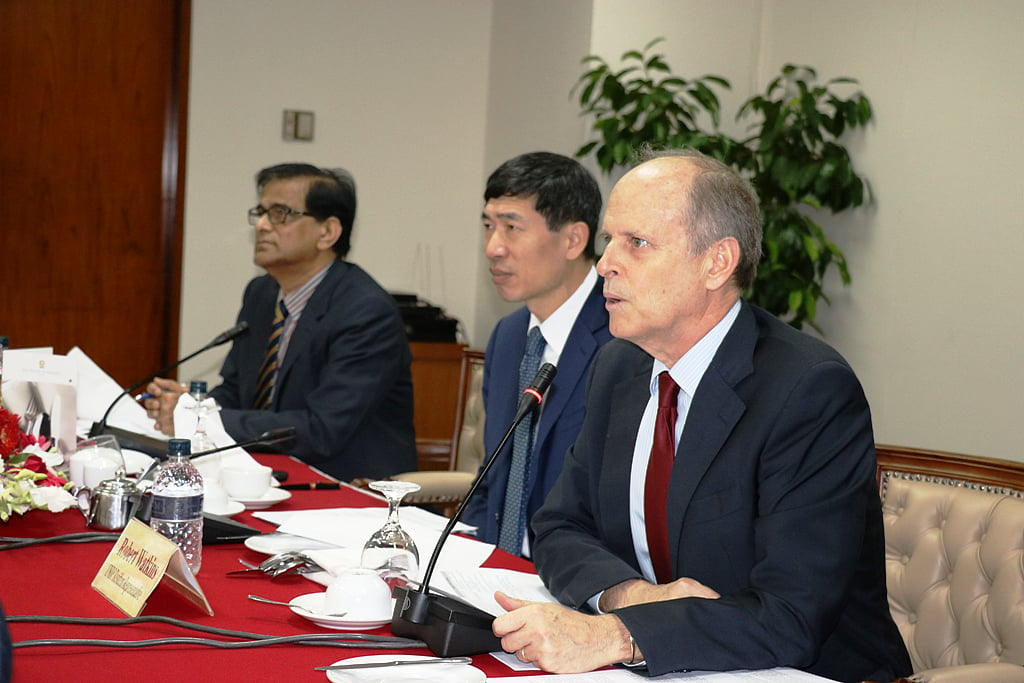
The Thursday conference, organised by the United Nations Development Programme (UNDP), was chaired by visiting UN Assistant Secretary-General and Chair of UN Development Group Asia-Pacific Haoliang Xu.
Government representatives, civil society leaders and development practitioners were present at the discussion on the challenges and opportunities for Bangladesh after transitioning to the SDGs.
This new development agenda, which will come into effect from January, contains 17 ambitious goals with 169 targets to promote shared economic prosperity, social development, and environmental protection.
Mobilising internal resources is the key to financing.
A UNDP statement says the roundtable emphasised on Bangladesh’s need to adopt and promote an “integrated and interconnected whole-of-government” approach both at national and local levels to implement the SDGs.
It was also stressed that “it is crucial to leverage and harness the resources and capacities available in the public and private spheres including civil society to effectively pursue the SDGs”.
UN Assistant Secretary-General Xu praised Bangladesh’s success in achieving MDGs and said, the new SDGs were “confronting the most pressing global challenge and aims for achieving the target of leaving no one behind”.
The SDGs are “ambitious and implementing them means that we have a lot of work ahead”, he said.
Dr Ahsan Mansur of the Policy Research Institute pointed out the difference between MDGs and SDGs.
He said many of the SDGs were “beyond the traditional MDG domain which means that we need the active support and participation of the private sector to achieve the SDG goals”.
General Economic Division member Dr Shamshul Alam, and UN Resident Coordinator Robert Watkins were among those present at the conference.