Published : 04 Nov 2026, 02:46 AM
Updated : 04 Nov 2026, 02:46 AM


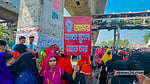
Garment workers across industrial hubs have taken to the streets over low wages and rising living costs, often without union direction.
Protests have spread from Mirpur and Gazipur to Savar, Ashulia and Narayanganj, as workers join after seeing nearby factory employees demonstrate.
In Fatullah’s Shibu Market, Metro Knitting and Dyeing Mills workers joined a road blockade after lunch on Tuesday, following employees of a neighbouring factory.
Rezaul Karim said they joined after seeing others protest. Management did not stop them.
Workers cite rising prices, stagnant wages, a delayed wage board, unpaid salaries, blacklisting, alleged workplace abuse and higher rents.
In Mirpur, they are demanding a minimum monthly wage of Tk 30,000. Protests began there on Thursday, followed by three consecutive days of road demonstrations from Sunday.
At least two factories were vandalised in Mirpur on Monday.
Mohammad Moazzem Hossain, security supervisor at Sirajganj Fashion, said 100 to 150 people attacked, smashing windows and machinery. The factory’s human resources chief blamed outsiders.
Workers said unfamiliar people had thrown stones near the Kalshi Flyover, but insisted their protests were about wages, not vandalism.
In Ashulia, they questioned demonstrations after dark near three factories. Labour leader Khorshed Alam questioned who was protesting. New Web worker Yasmin Akter said outsiders had disrupted their movement.
In Gazipur, thousands blocked highways at Chandra, Palli Bidyut, Safipur, Mouchak, Konabari, Naojor and Bhogra bypass on Monday and Tuesday, prompting clashes with police. Abdul Hakim said rents had doubled, with further increases of Tk 500 to Tk 1,000 signalled.
Established labour leaders are not directing the protests.
Narayanganj labour leader MA Shaheen said workers came out suddenly after lunch without coordination or instructions, and urged them to give the wage board time.
IBC General Secretary Salauddin Swapan said unions had demanded Tk 32,000 but it was too early to protest, as the board had just been formed. He said a wage structure could take effect in January.
Other labour leaders support the demands. Garment Workers Trade Union Centre General Secretary Sadekur Rahman Shamim backed the Tk 30,000 demand but said unions were not leading the movement.
Taslima Akhter alleged a group was trying to divert the protests and obstruct the wage process.
Claims of political interference are disputed. BGWS Federation President Rafiqul Islam Sujon alleged political activists were posing as workers and redirecting marches.
BGMEA Vice-President Rizwan Selim said the garment sector was being used. Its crisis-management chief accused labour leaders of encouraging protests on Facebook.
Mosharrefa Mishu warned against reducing the unrest to a political conspiracy. She cited blacklisting, wage arrears, excessive workloads and low pay, saying Tk 12,500 was not enough to live on.
BGMEA said disruption had prevented factories from operating for seven days and feared further closures when wages were due.