


Published : 10 May 2017, 01:45 AM
Updated : 11 Apr 2022, 09:05 PM


He made the comments at a programme on Tuesday, a day after Prime Minister Sheikh Hasina contested his comments questioning about the judiciary's independence in Bangladesh.
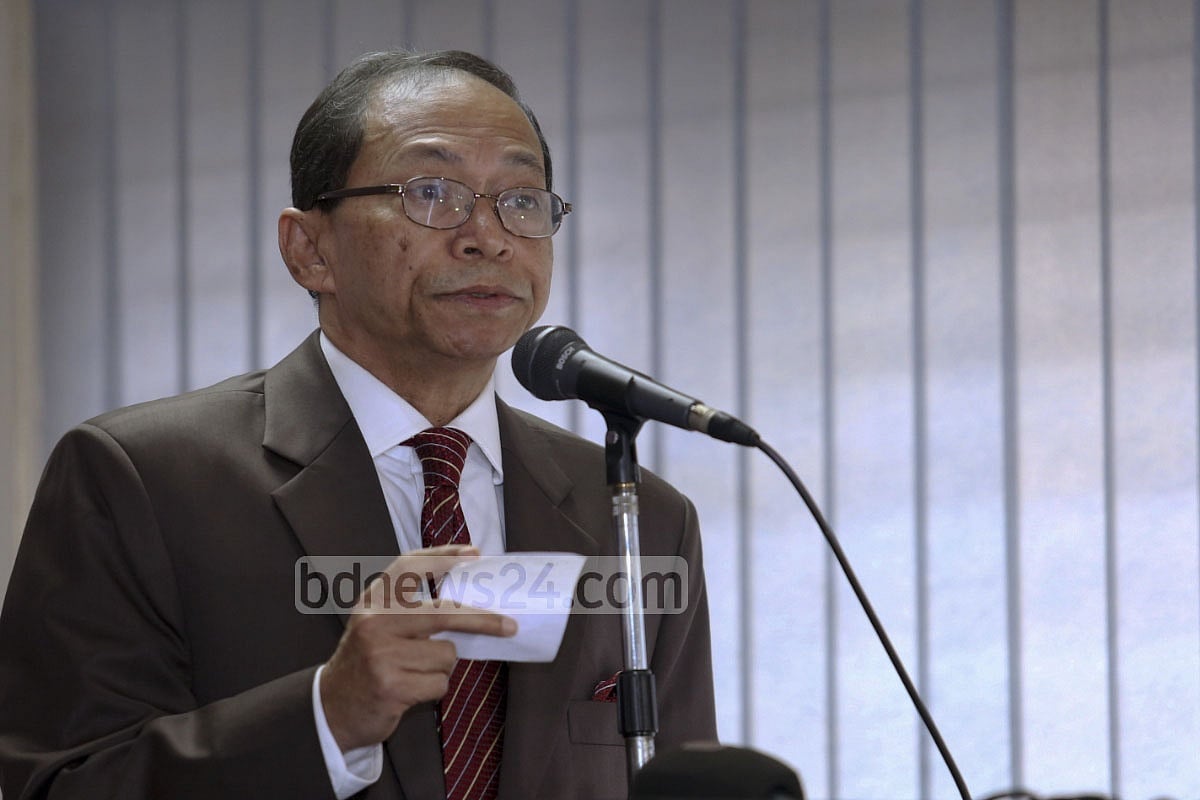
"When two organs of the state fail to perform their duty, the judiciary cannot play the role of a silent spectator," Justice Sinha told the closing of a workshop for subordinate or lower court judges at the Supreme Court Auditorium.
The prime minister earlier stressed coordination among the judiciary, the executive and the legislative branches of the state.
Chief Justice Sinha in March said he was sidetracked while important decisions regarding the judiciary were taken. The remarks came amid a tussle over a court order to the government to issue a gazette on rules regarding the appointment of lower court judges.
Meanwhile, Law Minister Anisul Huq said chief justices of other countries 'do not talk too much publicly'.
In reaction to Huq's comments, Justice Sinha told a programme that Bangladesh was lagging behind its neighbours in establishing the rule of law.
The chief justice's comments were discussed also in Parliament.
On Monday, the prime minister told Parliament: "I don’t know how our chief justice was able to say that there is no rule of law here and the judiciary isn't free."
Speaking at the workshop on Tuesday, the chief justice said, "The Supreme Court always stood as the main guardian of the Constitution within the remit of law."
Elaborating on the freedom of judiciary, he said, "Judicial freedom means judges can use their powers without any influence or interference."
"The basic and traditional meaning of freedom of judiciary is - judges' collective and individual freedom from the political branches of the government, especially the executive wing.
"The elements of a judge's full freedom as an individual are: personal freedom, freedom of surroundings, and internal freedom.
He said the judiciary needs the government's support and cooperation by the other organs of the state to work independently.
"The court is doing the duty of a watchdog of the legislative and executive through judicial review and it is doing it effectively," he said.
The chief justice said an independent judiciary does this duty under a constitutional system. "One of the main contributions of the Supreme Court is to uphold the Constitution by outlining the roles of the three organs of the state correctly," he said.
The Supreme Court, Commonwealth Secretariat, and Commonwealth Magistrates' and Judges' Association organised the three-day workshop.
The chief justice hoped that the governments of the Commonwealth nations would establish a Commonwealth legal research judicial academy.
Australia's Queensland Chief Magistrate Ray Rinaudo, British judge Shamim Qureshi, Commonwealth Secretariat Legal Adviser Mark Guthrie, and Supreme Court Registrar General Syed Aminul Islam, among others, spoke.












