November 20, 2026

It will be Eid without Humayun

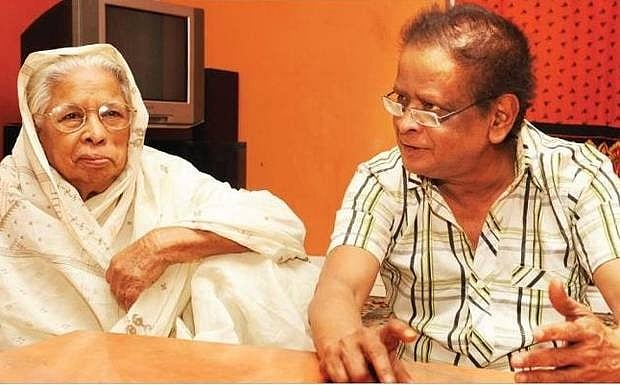
It will be a different Eid this year for Ayesha Fayez, 83.

Suliman Niloy Suliman Niloy

and Ashik Hossain

bdnews24.com

Published : 19 Jul 2013, 11:21 PM

Updated : 20 Oct 2022, 03:37 PM

Also Read:

Humayun Ahmed dies

“Every year, he would come to me to spend time during Eid. But he won’t be coming anymore…,” sighed Fayez, mother of Humayun Ahmed, Bangladesh's most popular writer.

The mother, who lost her husband during the 1971 Liberation War, lives with her eldest son ever so real in her memories.

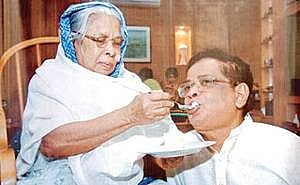
“They (Humayun and his siblings) lost their father very early. Humayun played a fatherly role for them his whole life. That’s why he is so important to each member of the family,” she says.

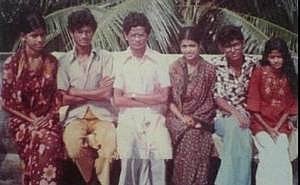
Humayun, his two brothers and three sisters, had always spent the Eids at their mother’s. But this year, Ayesha finds it hard to come to terms with the fact that Humayun will not be there any more.


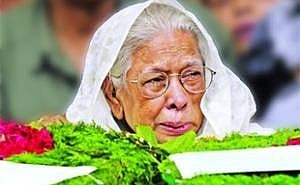
The author, playwright and filmmaker died on July 19, 2012, in a New York hospital after battling colon cancer for nine months, bringing down the curtain on a brilliant career spanning nearly four decades. On July 24, he was buried at Nuhash Palli at Gazipur, his favourite sanctuary he had himself built and named after his eldest son. Before going to the US for treatment, Humayun spent one Eid at his own home, Dakhina Hawa, at the capital’s Dhanmondi. “He could not spend Eid with me if he was busy. But he would come with my grandsons and granddaughters at the slightest opportunity,” remembered Ayesha Fayez. ”But, it's true that I won’t see Humayun’s face anymore…” Born in 1948, the legendary writer had drawn attention of the critics with his writings when still a university student. The rest, as they say, is history. The country's publishing industry is grateful to his books for helping in its advancement. As in novels, Humayun had excelled as a dramatist and a director of stage productions and movies. He had longed to establish a specialised cancer hospital but the dream remained unfulfilled. ”He wanted to start work on this hospital after returning from America to make the best of cancer treatment available here so that no one would be forced to go abroad for treatment,” Ayesha said. She has read almost all the three hundred novels her 64-year-old son had written. “He used to give me a copy every time a book of his was published. I liked reading books,” she said, her eyes glistening. She said she was supposed to accompany Humayun to the US but could not make it, as she herself fell ill. Ayesha recalled that many of his admirers came to take his photographs before he left. And a rather surprised Humayun had said: ”Do you think I will never come back alive? I will. I was born here and will die here too.” But her son was unable to keep that promise. “I would like to live for a long time,” the ailing author had said. Ayesha wants ‘Nuhash Palli’ to remain the way it was built by her son. ”We have not made any decision about it. Not a single thing has been changed there since my son left us. It will remain the same as it is now.” ”He (Humayn) used to say that he would not make it another Shantiniketan or a grave. People will come and visit it,” she said. She believes that if the property is ever divided among the members of his family, it will be only on the paper. Humayun had said ‘Nuhash Palli’ will never be sold.
Related Stories